
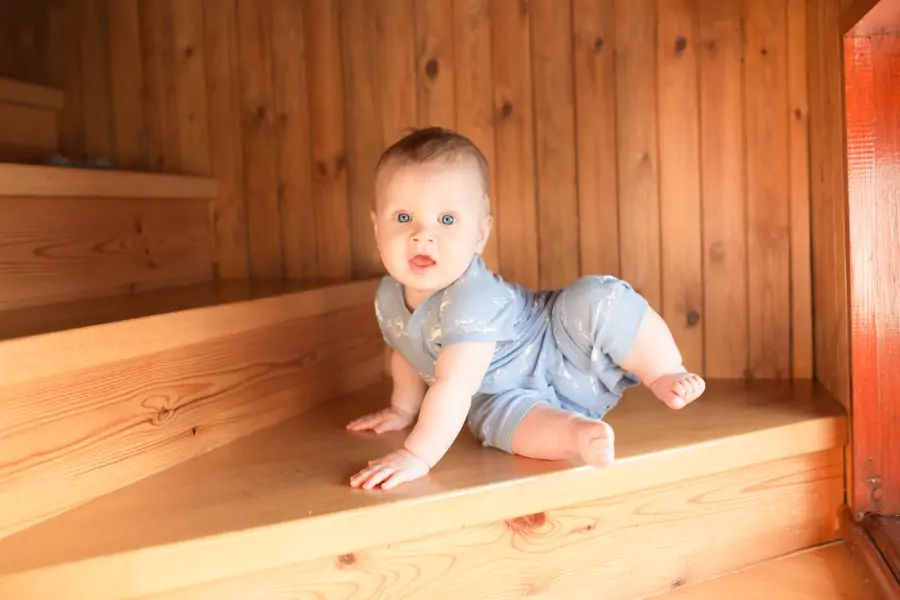
For many families, home is their “safe space”, where they can relax and spend time together. However, for those with young children, it is also where accidents are most likely to happen. Around 2 million children under 15 are taken to A&E in the UK each year due to accidents which take place in and around the home, with kitchens and staircases being the most dangerous spaces.
From staircase slips to burns and scalds, loose fittings and falling furniture, there are many threats within the home environment that can be easy to overlook. Whilst some accidents might be minor mishaps that children bounce back from, others are more serious, with lasting consequences.
It’s during school holidays or rainy weekends where kids tend to spend more time than usual at home indoors; and with this comes a greater risk. So, to help, we’ve teamed up with household and parenting experts to share practical, easy-to-follow advice for parents and caregivers.
Lindsay Snow, coach and child safety expert at Understanding Kids, Georgina Shepherd, cleaning expert at Housekeep and our very own Lucie Levesley, director, here at Jackson Woodturners have shared their top tips to help reduce risk and allow families more freedom to enjoy their homes.
Why accidents happen
It’s easy to assume that baby proofing is a one time job, but safety needs will evolve as children grow and develop. It is reported by The Royal Society for the Prevention of Accidents (RoSPA) that the most at-risk age group is 0–4 years, who are more likely to suffer serious injuries at home. However, all ages are vulnerable. Toddlers, preschoolers and school-age kids continue to explore, climb, and test boundaries as they get older, often in new and sometimes unexpected (and unwanted) ways.
Busy routines, distractions, and the added chaos of school holidays can mean that supervision isn’t as tight as we’d like it to be from time to time. On top of that, many homes, particularly older ones, were never designed with child safety in mind. Staircases can be steep, furniture heavy and unsecured, and gaps in spindles or window access can be easily overlooked. That’s why preparation and environment design matter just as much as supervision.

Lindsay Snow, a parenting coach and behaviour specialist at Understanding Kids, who works with families across South Yorkshire and the UK recommends,
1. Control the environment, not the child
“If we want kids to follow our instructions when it comes to safety, we need to cut down the background noise of constant “be carefuls” and “don’ts.” Kids quickly learn to tune out these warnings, or test whether we truly mean them. By creating a safe space, you can have fewer rules, and the ones you do have are more likely to be respected and followed.”
2. Skill your kids up
“Whatever child safety measures you have in place, they will probably fail at some point. Someone will inevitably leave the stairgate or a usually-locked cupboard open. Coaching kids in the correct behaviour before they need to know it will decrease the risk to them of our mistakes. So if you don't live in a home with a staircase or yours is very steep, find a shallow, short staircase for your baby or toddler to practise going up and down on. If your kid is going through the cupboard opening and closing (and emptying!) phase, take a few trips to kitchen showrooms so that the novelty wears off as they master this skill and move on to their next curiosity.”
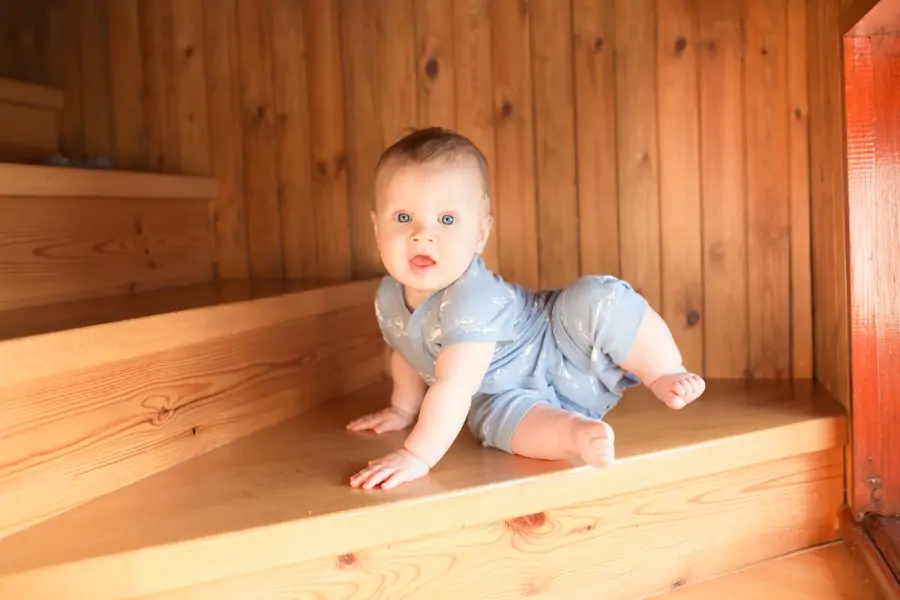
Source: One in five parents find staircases one of the hardest areas of the home to child-proof.
Staying safe indoors
Staircases and high-traffic areas
Stairs can be a dangerous place for young children in the home, with over 1 in 5 parents saying this is the most difficult area to child-proof. Falls remain the most common cause of non-fatal injury for children aged 0-19, and things like missing or faulty safety gates are often to blame. Lindsay comments,
“Baby gates are a useful tool to support care givers and reduce risk around the staircase, however, it is when instructions aren’t correctly followed when installing these gates, or when people try to overcomplicate things that it can become even more of a hazard. I’ve seen parents double up, putting one gate on top of another before, thinking that this means double the safety. However, that’s just not true! Collapsing gates that fall from a greater height can cause greater harm.”
If your staircase is steep, lacks a secure handrail, or has wide or climbable spindles, it’s worth reviewing your setup. Handrails should be securely fixed and easy for both adults and children to grip.
In addition, UK Building regulations are in place to protect children, Lucie Levesley mentions that spindles should be expertly fitted to ensure that spindles are close enough together to avoid little limbs and bodies squeezing through. She said,
“Spindles should be no more that 100mm apart, a 100mm sphere should not be able to pass between spindles at any point to ensure child safety. In addition, handrail heights should be at 900mm for both stairs and landings.”
“Many people don’t realise that traditional “Ranch style” staircases are actually illegal and a category 1 hazard in the UK, as they can be used as a ladder by children, who climb up and over them or slide off them easily. If you have one of these styles, you should upgrade your staircase to avoid accidents in the home.”
It’s also worth paying attention to what’s underfoot. Loose rugs on landings can easily lead to slips. While a shiny floor polish might look great, it can also increase the risk of falls; especially for little ones running around in socks.
At Jackson Woodturners, we understand how important staircase design is. Not just in terms of looks, but safety too. We offer a range of handrails, balustrades, and spindles that are sturdy, reliable, and built to meet modern standards.
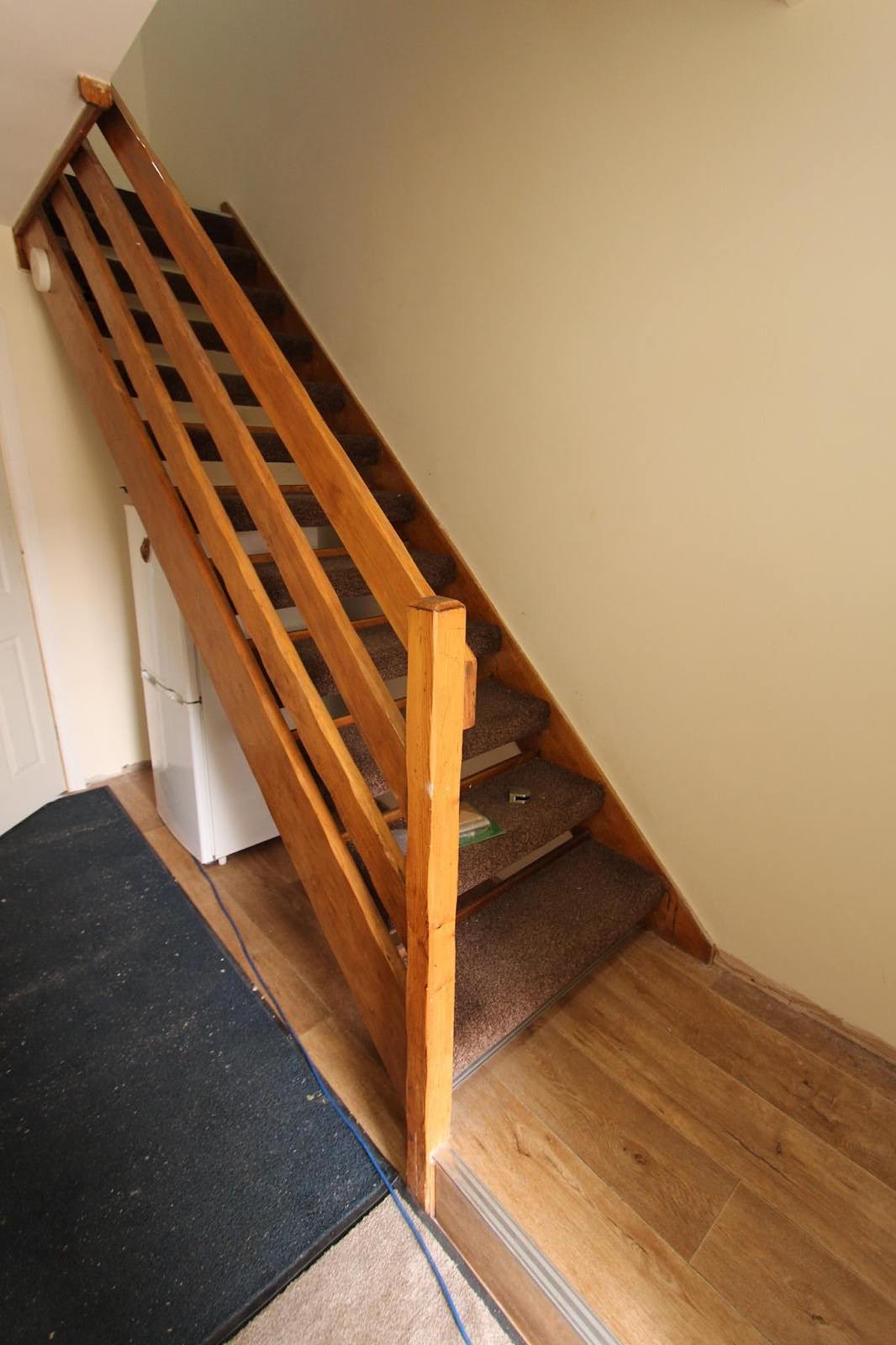
Image credit: Staircases by Andy Fenton
It’s also worth paying attention to what’s underfoot. Loose rugs on landings can easily lead to slips. While a shiny floor polish might look great, it can also increase the risk of falls; especially for little ones running around in socks.
At Jackson Woodturners, we understand how important staircase design is. Not just in terms of looks, but safety too. We offer a range of handrails, balustrades, and spindles that are sturdy, reliable, and built to meet modern standards.
Windows, doors and furnishings
Windows in upstairs rooms should be fitted with restrictors to prevent children from falling out, and doors benefit from stoppers to protect little fingers from being trapped.
Loop cords or strings on blinds remain a serious risk; in the last 15 years, at least 30 children in the UK have died after becoming entangled in blind cords (According to the Child Accident Prevention Trust, CAPT). Opting for cordless designs, or using cord cleats to tie them out of reach, is a small change that could save a child’s life.
Kitchen hazards and appliance awareness
The kitchen is one of the busiest rooms in the house, and can also be one of the most dangerous. Hot drinks, oven doors, boiling pans and exposed appliance cables all pose hazards for curious children. CAPT estimates that 70% of all children treated annually for burns or scalds are under 5 years old. Keeping hot pans on the back burners, turning handles inwards, and using hob guards are all easy ways to minimise risk, alongside adult supervision.
Other common household items such as fridge magnets, utensils, cleaning sprays and dishwasher tablets are often stored within arm’s reach, so it’s worth reassessing what’s stored where. Keeping anything which could be a choking hazard or danger to children safely stored.
Radiators and portable heaters should also be positioned where children can’t easily fall against them. Children’s skin can be more sensitive to heat, so things like radiator covers offer a helpful buffer (just in case!).
Furniture and fixtures
Lucie Levesley notes that heavy furniture should always be fixed to the wall, particularly tall items like chests of drawers, bookcases, and TV units. Children can easily pull out drawers or attempt to climb them, causing the weight distribution to change and topple over. It takes only a few minutes to fit anti-tip, anchoring straps or brackets, but doing so can prevent serious and in some cases, fatal injury.
In addition, while it’s tempting to allow a bit of bed or sofa-jumping to blow off steam, keep in mind that furniture is not designed for it. Falls from items like these can result in a range of bumps, bruises, breaks or even head injuries. Our experts recommend setting boundaries early, and trying to redirect high-energy play to safer areas of the home.
Cleaning best practices
Georgina Shepherd, cleaning expert at Housekeep recommends that adults store cleaning products up high or in locked cupboards, even for those labelled as ‘natural’ or ‘eco-friendly’. She adds that, “bright packaging is especially attractive to toddlers”.
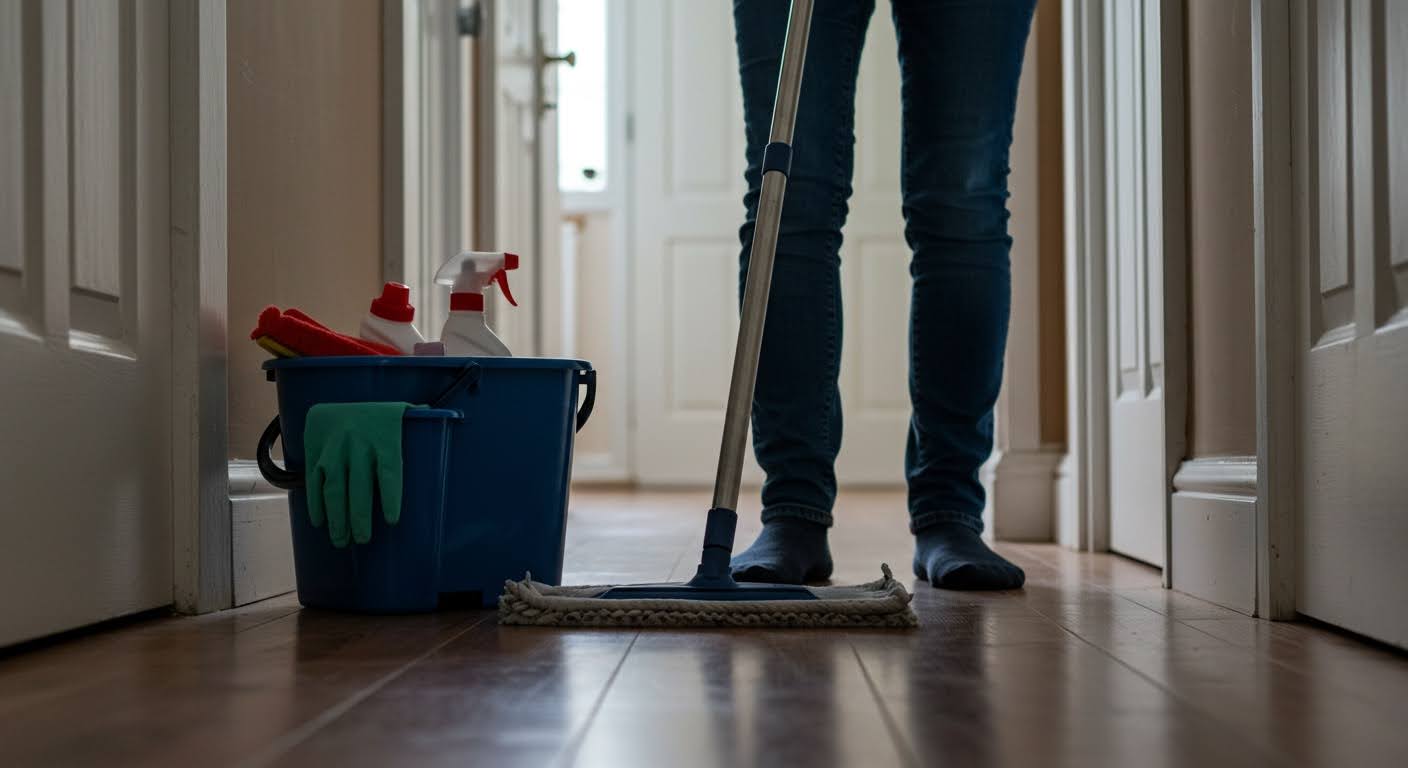
When doing a deeper clean, avoid leaving buckets, sprays, or open containers unattended, even for a short time. It only takes a second for a curious child to start playing with them, which could lead to skin irritation, burns or worse, they might ingest the chemicals. In fact, according to RoSPA, over 28,000 children are treated for accidental poisoning each year in the UK, much of it involving everyday household products.
After using stronger products like oven cleaners or drain unblockers, rinse thoroughly and ventilate the room before letting children back in. Residual chemicals or fumes may linger, and crawling toddlers are particularly vulnerable to low-level exposure. If you can, switch to gentler alternatives like soapy water, bicarbonate of soda, or white vinegar. These are often just as effective for everyday cleaning and come with fewer risks.
Lindsay Snow concludes,
“Childproofing your home isn’t about eliminating every possible hazard, that’s neither realistic nor helpful. However, by understanding where the biggest risks are and taking practical steps to reduce them, you can make a real difference.
“Start with a room-by-room check. Look at the way your children interact with their environment and think about how that might change as they grow. Skill them up, involve them in the process, and make safety part of everyday family life.”
You can find more advice on home safety from trusted sources like RoSPA and the Child Accident Prevention Trust (CAPT).
…And, if you're thinking about upgrading your stair parts or fixing loose fittings, explore our brochure and blog for stair safety products and inspiration articles to help make your home that bit safer, whilst remaining stylish.


