
Choosing a handrail bracket might seem like a simple choice after so many complex decisions throughout the staircase building process. However, there are still many options to choose from such as style, material, and finish. This guide breaks everything down so that you can choose the perfect stair handrail bracket. But first things first, what are stair handrail brackets?
Wall mounted handrail brackets for stairs are designed to attach either standard ungrooved handrails or mopstick handrails to a wall. Handrail brackets are available in multiple styles and materials so you can achieve the look you want for your staircase.
Read on to find out more about how to choose a handrail bracket for stairs, how to install them, how many you’ll need, and much more.
Wall mounted handrail brackets are designed to attach either standard ungrooved handrails or mopstick handrails to a wall. Handrail brackets are available in multiple styles and materials so you can achieve the look you want for your staircase.
Below we take a closer look at:
- What are handrail brackets?
- How do I choose a handrail bracket?
- How many handrail brackets you’ll need
- Where do I secure a bracket?
- What are handrail kits?
- How high should stair handrail brackets for stairs be?
- FAQs
What are handrail brackets?
Stair handrail brackets are the metal arms that attach the handrail to the wall. They provide stability and safety to the handrail, while also holding it in the optimal height and position. They can also be aesthetic, with some ornate and highly decorative brackets available too.
Handrail brackets come in many different styles and materials to fit any staircase design. No matter what your staircase style choice, there will always be a handrail bracket to suit.
How do I choose a handrail bracket?
Handrail brackets are a small feature on your staircase that can make a big impact by bringing the overall look of the space together. Finishes range from contemporary-style metals such as chrome to more classic choices like brass.
Below we break down the benefits of each type of metal available for staircase handrail brackets.
Chrome
Chrome is a plated metal where a thin layer of chromium is applied to the surface of metal to prevent corrosion and to provide a dazzling, highly reflective surface.
Although chrome has been a staple for fittings in bathrooms and kitchens for years, the popularity of this shiny metal means that it’s now a common feature in other areas of the home, including the stairs.
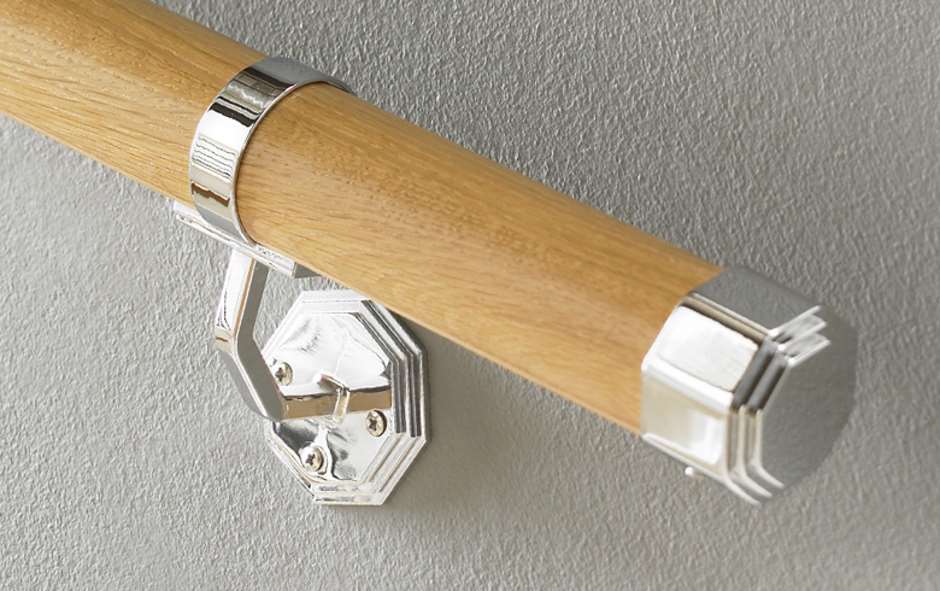
Chrome handrail brackets for stairs are a great choice for modern stairways as the metal has a sleek and refined look that works well with the clean lines of modern stair parts. Chrome works particularly well when teamed up with pale wooden handrails, such as oak or pine.
View and buy a complete range of chrome handrail wall brackets here.
Brass
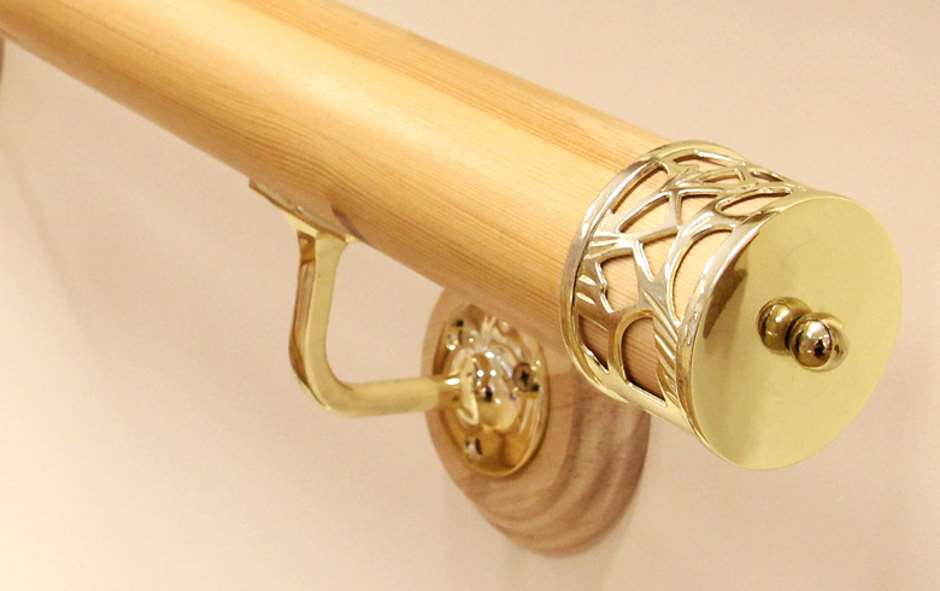
Brass brackets are the perfect choice for a traditional staircase that requires elegance and decoration. Brass brackets will often come with an ornate design such as this antique brass petal wall bracket, the perfect way to complete a traditional staircase design.
Brass can be used with a shiny or antique finish for different purposes. Antique brass will work better with traditional staircases, while modern staircases might better suit a shiny brass bracket.
View our full range of brass wall brackets here.

White coated
White coated brackets are made from metal that is sprayed white.. These are popular choices for a minimalist staircase and works great alongside brighter wood such as pine.
View our white coated wall bracket here.

Black coated
Black coated wall brackets are great for modern staircases and pair well with either dark coloured wood for a traditional style, or bright coloured wood to add contrast to your staircase.
Nickel
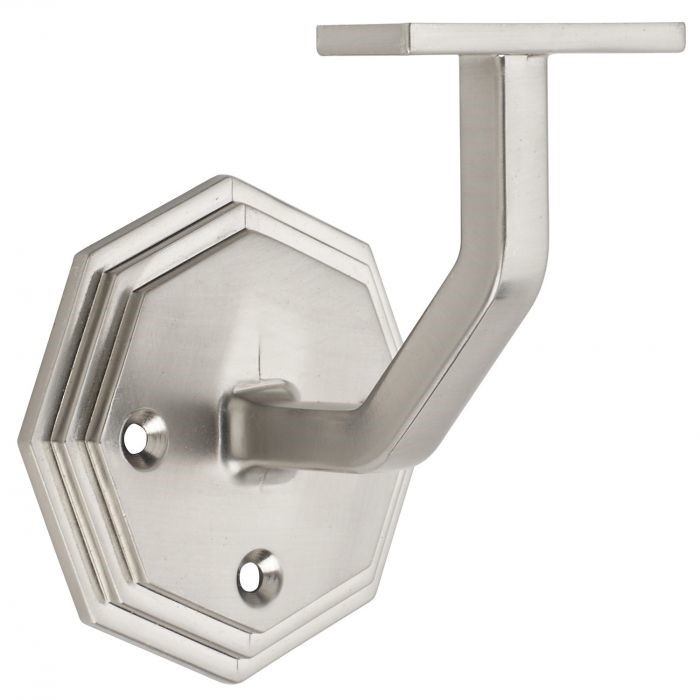
Nickel is one of the most popular options for stair handrail brackets, with a range of styles and finishes. These are available as standard or in brushed nickel, and work great with all types of wooden handrail.
View our full range of nickel handrail brackets here.
Pewter
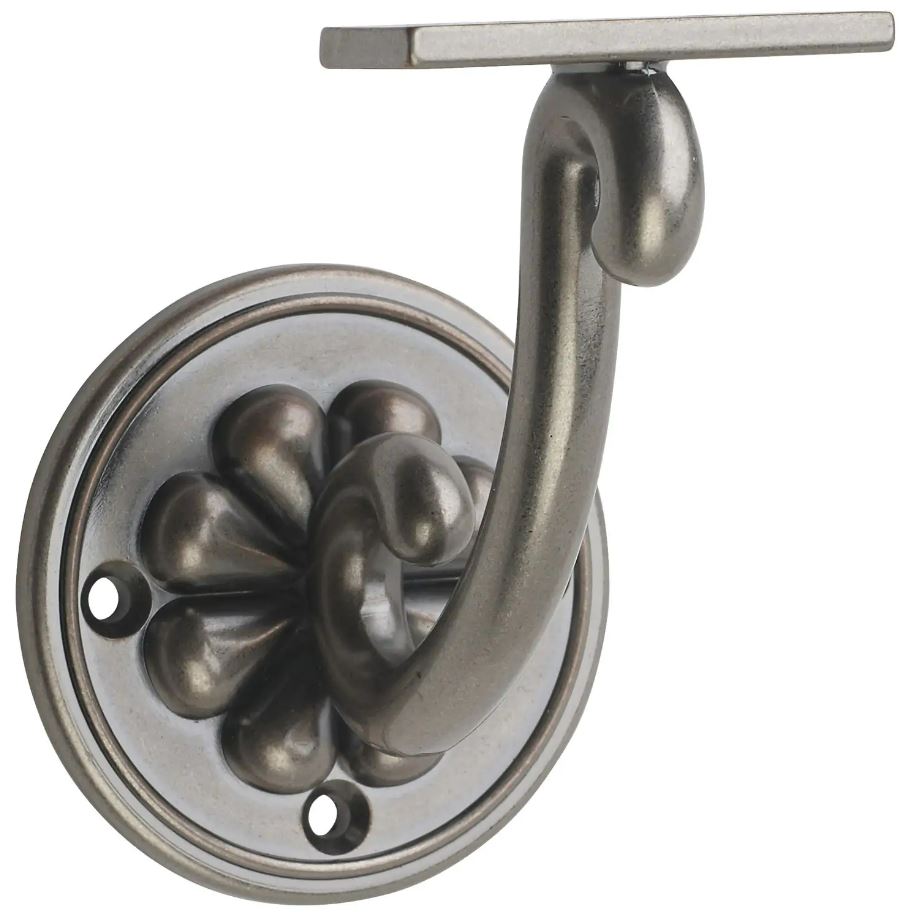
The pewter petal handrail bracket is a great way to add a decorative finish to your handrail. This pairs well with traditional styles such as dark wood, but it also suits a modern staircase to add a sense of class.
What style of handrail bracket should you get?
On top of the material, handrail brackets for stairs are also available in a range of shapes and styles. Different styles will suit different staircases, so it’s important to choose the right one for your project.
Mopstick Handrail Brackets
Mopstick handrail brackets such as this forge wall mounted mopstick handrail are designed to fit with a mopstick handrail such as the oak round mopstick handrail. These can not be used for any other style of handrail.
Flat Handrail Brackets
Flat handrail brackets such as the chrome wall bracket are the perfect all-rounders. These will fit on most handrails and provide a sleek and simple look that goes well with a modern staircase. These will also fit with most mopstick handrails as long as the handrail has a grooved or flat edge.
Petal Handrail Bracket
The petal wall bracket features a rosette design which is suited to more traditional properties. This can be paired with a dark hardwood handrail for a contemporary look.
Octagon Handrail Bracket
An octagonal wall bracket, such as the chrome octagonal wall bracket is designed for modern staircases and has a futuristic look that stands out from the crowd. We recommend pairing this with a dark hardwood handrail to create a contemporary look that’s full of contrast.
How many handrail brackets will I need for a staircase handrail?
Although there are no official guidelines for how far apart stair handrail brackets need to be, when you’re installing a handrail it’s a good idea to fit the brackets no more than one metre apart.
Fitting enough brackets will ensure your handrail is safe and secure. For a standard 3.6m handrail you’ll need four brackets.
Starting from the bottom of the stairs:
- Fit one bracket 30cm from the bottom end of the handrail (this should roughly align with the edge of second stair tread up from the bottom of the stairs)
- Fit the second bracket 100cm along from the first one
- Fit the third bracket 100cm along from the second one
- Fit the fourth bracket 100cm along from the third one (this should roughly align with the edge of the second riser down from the top of the stairs)
This should mean that the fourth handrail bracket is roughly 30 cm from the top of the handrail.

Where do I secure the brackets on a handrail?
You can fasten most handrail brackets onto the underside of the handrail as this is usually a flat surface. Once you’ve measured where the brackets should go on the handrail (see above), you can then screw the brackets in place. Most handrail brackets for stairs come with screws provided.
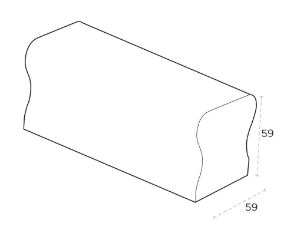
HR handrail profile
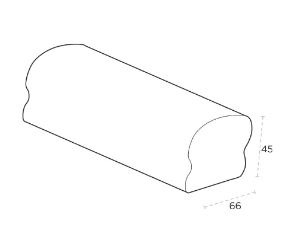
Cottage loaf handrail profile
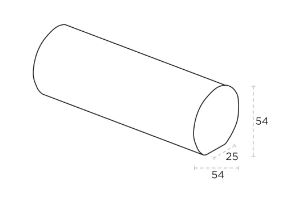
Mopstick handrail profile
What are handrail kits?
What are handrail kits?
Handrail kits come with everything you need to install a new handrail in your home, including the handrail, brackets/connectors, and screws.
The handrails in handrail kits are designed only to work with the brackets provided, such as the handrail kits in the Fusion stair part range. Unlike most stair handrail brackets, which fasten to the underside of a complete handrail, the brackets in these kits connect sections of handrail together. The end result is a highly contemporary, wall-mounted handrail.
The below images show the Fusion pine handrail kit with chrome connectors. You can buy this handrail kit here.
Some handrail kits, such as the Axxys ‘Rail in a Box’ range also contain patrices, as well as connecting brackets. Patrices are circular, wall-mounted wooden plaques that you screw the brackets into.
How high should stair handrail brackets for stairs be?
You should fit a handrail between 900mm and 1000mm above the pitch line of the stairs. You’ll need to bear this in mind when fitting your stair handrail brackets and ensure you install them at a height where the overall height measurement of the handrail falls between 900mm and 1000mm above the stairs.
You can find out more about handrail height with our guide, What height should a staircase handrail be?
Handrail brackets should come with all the components you need to fit them to the wall and your handrail. To find out more about handrails, visit the page Your Guide to Handrails.
Handrail Bracket FAQs
Where should handrail brackets be placed?
Stair handrail brackets should be connected on the underside of the handrail and start roughly 300mm from each end of the handrail. You should include multiple brackets along the length to ensure that it’s adequately supported.
How far apart do handrail brackets need to be?
You should place each handrail bracket around one metre apart to ensure that the handrail is well supported and won’t put too much pressure on the wall. We recommend not going over one metre between each handrail, however if your handrail length isn’t standard and requires adjustment to the one metre guide, it’s better to reduce the space rather than extend it to ensure the handrail is secure.
How many brackets for handrail?
Usually, the standard handrail is 3600mm (3.6m). For this size, you’ll need to start 300mm away from the end of the handrail, and place another bracket every 100cm until the last one is 300mm away from the other end.
This means that you’ll need a total of four handrail brackets per 3.6m handrail.
How to install stair handrail brackets?
Start by marking your measurements for where the handrail brackets will go onto the handrail. You can then hold this up to its position on the wall and copy the markings onto the wall. You should also mark a line to show the angel that you want the handrail to sit.
You can then fit the brackets onto the wall on the markings created. Ensure that you angle the brackets so that the part that’s connecting to the handrail is parallel with the handrail line you drew on the wall. Once complete, simply place the handrail on top of the brackets and screw into place.


