
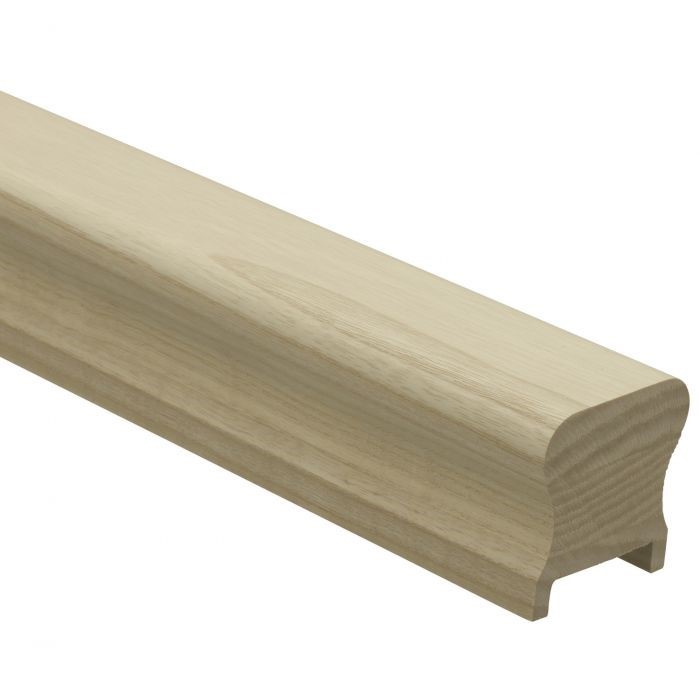
If you’re renovating your staircase, you might come across two different types of handrails - grooved and ungrooved. It can be challenging to know which handrail you should use for your staircase. So, what is a grooved handrail and what makes it different from an ungrooved handrail?
Grooved handrails are designed to be fully integrated on top of spindles, or glass panels. Ungrooved handrails, on the other hand, are designed to be fitted to metal or wooden spindles, or to glass panels via brackets and clamps. When designing your staircase, your choice between grooved and ungrooved handrails will depend on the materials you want to use and the size of your spindles or glass panels.
In the rest of this article, we go into more detail on what grooved handrails are and their potential uses. We also help you to choose the right style handrail for your staircase, and outline the different types of grooved handrails we have available.
Click on a link to jump to each section:
- What is a grooved handrail?
Learn more about what grooved handrails are. - What are the different uses for grooved handrails?
Read the different uses for grooved handrails. - What sizes do grooved handrails come in?
Understand the most common sizes of grooved handrails. - How do you choose the right size groove?
Read our guide to choosing the right size handrail groove. - Using non-grooved handrails
Find out more about how non-grooved handrails can be used. - What to consider when choosing a grooved handrail
Find out what to consider when choosing the right grooved handrail for your staircase. - How to care for your grooved handrails
Read our guide on caring for wooden handrails.
What is a grooved handrail?
A grooved handrail is often just referred to as a handrail as it’s the most standard option. Grooved handrails have a groove which is designed to house spindles or glass panels depending on the size of the groove. When choosing your grooved handrail, you’ll need to ensure that the groove is the correct size for your wooden or metal spindles or glass panels.
What are the different uses for grooved handrails?
Grooved handrails have two main uses - they can either be used with glass panels or with metal and wooden spindles.
Glass grooved handrails
Glass grooved handrails are designed to be used alongside glass panels. They have a narrow, deep channel running along the full length of the handrail into which the glass panel slots. Usually, clear silicone is used to help secure the glass in place. The grooved handrail eliminates the need for any metal brackets to connect the glass panels to the handrail. Many people like the contemporary appearance of seamless, uninterrupted glass panels which create a sense of bright airiness.
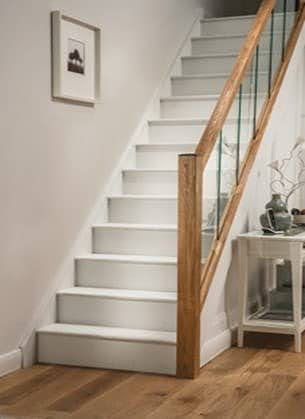
An example of glass grooved handrails being used to house glass panels. (Jackson Woodturners - Stair Parts Range Brochure page 14).
Using glass panels in your staircase creates an ultra-modern and sleek design that looks right at home in contemporary properties or creates a bold statement in more traditional environments.
Grooved handrails for wooden spindles
Grooved handrails with wide, shallow channels are designed to be used primarily with wooden spindles. The groove must be the same width as the spindles you intend to use to achieve a secure fit. The groove runs along the full length of the handrail so that spindles can be spaced as often as necessary. Timber infill, also known as spacer or filler, is normally provided with these types of grooved handrails. It is worth noting that although Jackson Woodturner's handrails and base rails will come with infill, you will need to buy PVA glue separately.
What sizes do grooved handrails come in?
At Jackson Woodturners, we offer a wide range of grooved handrails with a range of groove sizes to suit different-sized spindles or glass panels. Our 32mm and 41mm grooved handrails are designed to be used with 32mm or 41mm spindles. The overall size of these handrails is the same, but the measurement refers to the width of the groove which should match the width of your chosen spindles. They're available in a range of different wood varieties to match your other chosen wooden stair parts.
We also offer 8mm Grooved Handrails for Glass which are designed specifically for use with glass panels.
How do you choose the right size groove?
If using a grooved handrail with glass panels, check the width of the glass panels and look for a handrail with a groove of the same depth. For example, our 8mm grooved handrails are compatible with the following glass panels, which are 8mm thick:
Our Immix glass panels are also 8mm thick, but they should only be used with other Immix stair parts to ensure a secure fit and unified finish. You should therefore choose one of our Immix Oak Handrails which are available in 2400mm, 3600m and 4200m lengths.
When using grooved handrails with wooden spindles, check the width of your spindles and choose a handrail with a groove of the same width. Our 32mm grooved handrails fit all of our 32mm spindles, including the Forge range of brushed nickel spindles. Our 41mm grooved handrails are compatible with our 41mm wooden spindles.
Using non-grooved handrails
Ungrooved handrails are designed to be used alongside metal spindles. The spindles are attached directly to the handrail, so there is no need for a groove. When using metal spindles with ungrooved handrails, a spindle foot can screw directly into the rail.
You can also use non-grooved handrails with glass panels, provided that the panels are designed to be suitable for this type of handrail. The panels should have holes drilled into them where glass bracket clamps can be attached to fix the panels directly to the handrail. Our Fusion and Clarity ranges of glass stair parts are both suitable for use with ungrooved handrails.
Mopstick handrails are also an example of ungrooved handrails, but these are usually designed to be attached directly to the wall rather than to form a balustrade.
Choosing the right grooved handrail
In addition to size, you'll also want to consider style, material and price when choosing the right grooved handrail.
All of our 8mm glass grooved handrails have a simple and modern square design with a curved top. They match the clean, contemporary feel of glass staircases well. Our 32mm and 41mm grooved handrails for wooden spindles are also available with this modern square design, or you could choose HR or Cottage Loaf designs which are more traditional and can give your balustrade a classic and somewhat ornate finish.
Appearance
Grooved handrails are available in a wide range of wood varieties to suit your tastes and preferences. Lighter shades of wood such as pine, ash and hemlock can help to brighten up a dark or dull hallway. Darker colours like walnut and dark hardwood can create a more dramatic staircase. White primed handrails are a handy choice if you plan to paint your stair handrail a solid colour rather than waxing or varnishing.
Softwood vs hardwood
Softwoods such as pine and hemlock are more susceptible to scratching than hardwoods like oak, walnut and ash. However, softwoods can be painted more easily so they may be a better choice if you plan to paint your handrail.
Price
When it comes to price, pine, hemlock and white primed handrails are more affordable than oak, ash and walnut. If you love the traditional look of walnut you could consider a dark hardwood handrail instead, which is more affordable and imitates the rich, deep hue of walnut. However, if durability and strength are your priorities when looking for a handrail – we recommend investing more in an oak grooved handrail.
Take a look at some of our most popular grooved handrails below.
Pine Cottage Loaf Handrail - 32mm Groove with Infill
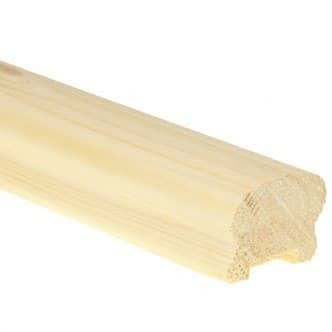
- The Pine Cottage Loaf Handrail - 32mm Groove with Infill is from our great range of quality pine stair parts.
- The cottage loaf handrail is designed with a 32mm groove, which allows all 32mm spindles to be fitted into the groove. A length of infill/spacer comes pre-packed in with the product at the same length as the handrail.
- Pine stair parts are supplied unfinished. They can be left plain, for a natural finish, but we recommend finishing them by either painting, varnishing or waxing for an enhanced look and to help protect them for longer.
- Handrail dimensions: 66mm x 45mm, with 32mm groove with infill.
- Available in 1200mm, 1800mm, 2400mm, 3600mm and 4200mm lengths.
Oak Cottage Loaf Handrail - 32mm groove with infill

- The Oak Cottage Loaf Handrail - 32mm groove with infill is from our superb range of high-quality white oak stair parts.
- The HR handrail is designed with a 32mm groove, which allows all 32mm spindles to be fitted into the groove. A length of infill/spacer comes pre-packed in with the product at the same length as the handrail.
- Oak stair parts are supplied unfinished. They can be left as is, for a natural finish, but we do recommend finishing them. They can be finished by either painting, varnishing or waxing for an enhanced look, which will also help to protect the wood.
- Handrail Dimensions: 66mm x 45mm, with 32mm Groove & Infill
- Available in 1800mm, 2400mm, 3600mm and 4200mm lengths.
How to care for your grooved handrails
Since our grooved handrails are all made from wood, they can be cleaned and maintained fairly easily. All of our handrails are provided unfinished so that you can wax, varnish or paint them to your liking. Once finished, they can simply be polished with suitable wooden furniture polish and a microfibre cloth to remove dust and dirt.
How to refinish your grooved handrails
Wooden stair parts such as handrails may require periodic refinishing over time to keep them looking their best. Applying a fresh coat of wax may be enough if you treated the wood with wax during installation. If you varnished or painted the handrail, you may have to sand it down before repainting or revarnishing. Check out our guide on finishing spindles for woodcare advice that can be also applied to your grooved handrails.
If you choose one of our white primed grooved handrails, it's important to note that these are designed to be painted with a suitable solvent-based topcoat. This should be done as soon as possible to protect the wood. Painted handrails can usually be simply polished or cleaned with a very mild detergent, but it's important to check the care guidelines of your chosen paint topcoat.
Wooden handrails and finishes by Jackson Woodturners
Jackson Woodturners provides the largest selection of contemporary and traditional stair parts in the UK. We offer a comprehensive selection of high-quality handrails, including grooved handrails, ungrooved handrails, mopstick handrails and pigs ear handrails, as well as a selection of handrail brackets, end caps, fittings and wall-mounted handrail kits. You can view our full range of handrails on our website.
If you need help choosing the right grooved handrail for your home or are unsure if a grooved handrail is the right choice for your renovation, please get in touch with our team. We’ll be happy to answer any questions you may have and give you any advice you need. You can call our staircase experts on 0114 272 1228 or email [email protected]
Grooved Handrail FAQs
What wood types are best for grooved handrails?
The best wood type for a grooved handrail will depend on various factors, including your designed appearance and the budget of your renovation project. Here are a couple of the most popular woods for grooved handrails:
- Oak grooved handrails. These are one of the most popular options because of oak’s strength, durability and timeless appearance. Oak can be more expensive than softwoods, such as pine.
- Pine grooved handrails. These are a budget-friendly choice, so they’re perfect if you’re renovating your staircase on a budget. Pine is a softwood which means it won’t be as durable as hardwood and your handrail might not last as long.
- Hemlock grooved handrails. Hemlock is a softwood that’s known for its gorgeous straight grain and affordability. It can also be finished with a wide range of finishes, including paint.
- White primed grooved handrails. These handrails come already primed, so they’re ideal if you’re planning on painting your handrail. White primed handrails can be painted in a wide range of colours, so they can work with any interior design scheme.
The team at Jackson Woodturners are happy to give you any advice you need and help you choose the best wood type for your grooved handrail. Get in touch if you need any assistance.
How do I know which groove size I need?
The groove size you need will depend on the size of your wooden spindles or the thickness of your glass panels. You’ll need to choose a handrail with the correct width groove so that your spindles or glass panels can be installed correctly. At Jackson Woodturners, our 32mm and 41mm grooved handrails are designed to be used with 32mm or 41mm spindles while our 8mm Grooved Handrails for Glass are designed specifically for use with our glass panels.
Can I use a grooved handrail for both spindles and glass panels?
Yes, grooved handrails can be used with both spindles and glass panels. However, you’ll need to ensure that you choose the correct size of groove. Typically grooved handrails for glass panels have a narrower groove (our Grooved Handrails for Glass have an 8mm groove) than those designed to be used with spindles. You’ll need to check the width of the groove matches the width of your glass panels or spindles.


