
When it comes to staircases, we can all agree that safety and security are paramount. In this article, we’ll explore a range of practical tips, innovative solutions and best practices to help you increase the safety of your staircase. From simple modifications to comprehensive renovations, we’ll cover everything you need to know to create a staircase that provides peace of mind for you and your loved ones. So, how do you increase your staircase safety?
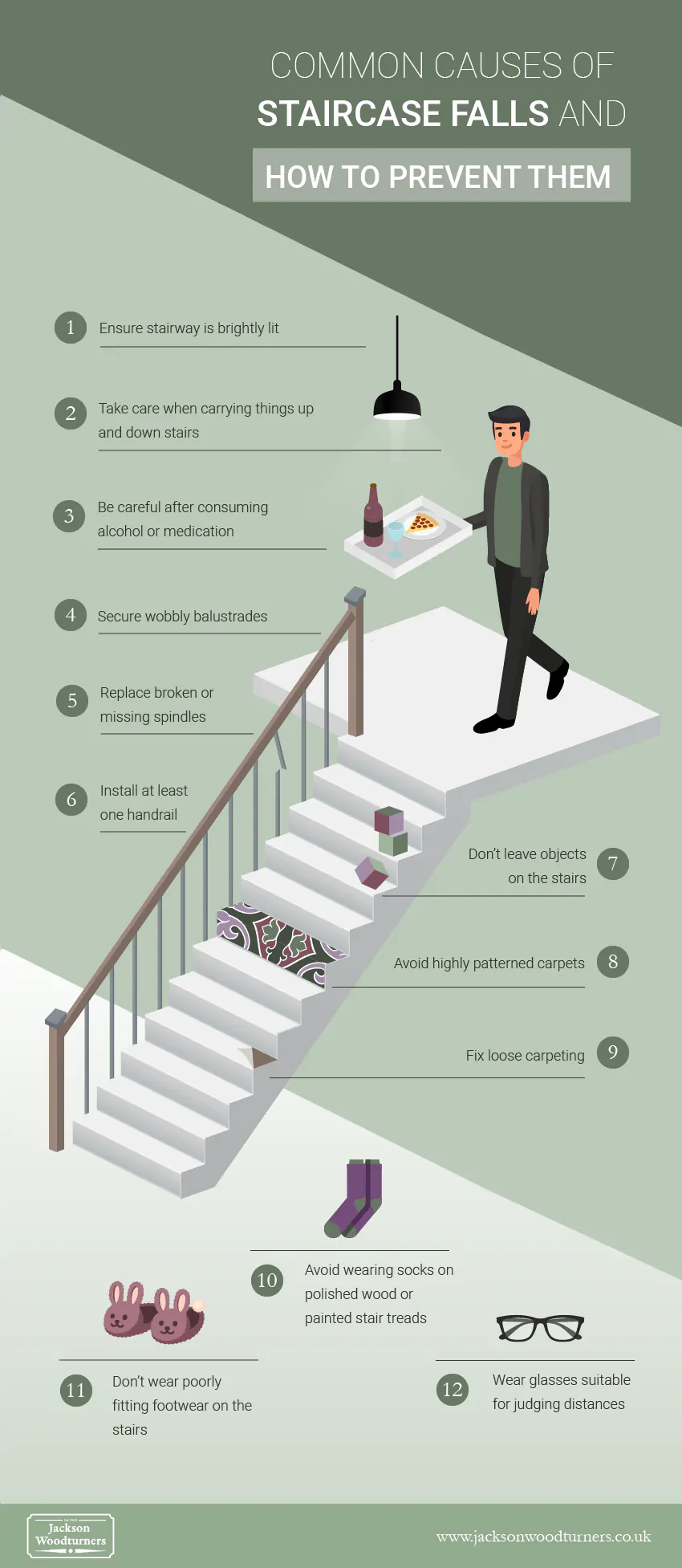
In our opinion, some of the best ways to increase staircase safety include:
- Installing handrails
- Adequate lighting
- Securing carpets and rugs
- Clearing clutter
- Installing safety gates
- Repairing loose steps or handrails
- Anti-slip treatments
- Educating your family
Keep reading to learn more about each of these factors in more depth.
Staircase Safety
An integral part of many homes, the staircase receives constant traffic throughout the day. However, because we generally view it as little more than a practical route from A to B, we tend not to give much thought to its condition, until someone suffers an accident on them.
Unfortunately , the staircase is a common place for slips and trips. Poor maintenance and improper use can pose serious health and safety risks, as evidenced by these statistics collected by the Safety and Health Practitioner:
- Every 90 seconds someone in the UK falls on the stairs.
- The lack of a handrail doubles the chance of a fall.
- 58,000 children have accidents on stairs every year.
- Each year, 100,000 elderly people are treated for injuries after a fall on stairs.
- Falls on stairs account for around a quarter of all falls in the home.
- Accidents are most commonly caused by objects left on stairs, or by carrying difficult objects up or down stairs.
- It’s nearly twice as likely for accidents to occur on straight steps with no windows or on stairs with a pitch of over 42 degrees.
But, the good news is that most dangers can easily be addressed with a bit of common sense, as the following advice explains.
How to increase your staircase safety
First things first, staircases must be properly installed in the first place. As stated by Kevin Underwood, technical director at the British Woodworking Federation (BWF):
“There are many elements that need to be adhered to when it comes to correctly installing timber staircases and a single mistake or missed fixing could render a stair unsafe.”
The BWF’s recent Stair Scheme Installation Guide offers comprehensive advice on fitting staircases, giving homeowners the confidence that their staircases are installed to the highest standards. So, let’s take a look at some of the best ways to increase the safety of your staircase:
Installing handrails
Installing handrails to your staircase provides essential support and stability while ascending or descending the stairs, especially for those with limited mobility or balance issues. Remember to choose handrails made from sturdy materials such as wood or metal and ensure that they are securely fastened to the wall or staircase structure. On top of this, handrails should be an appropriate height and diameter for comfortable gripping and comply with local building regulations.
Lighting is key
Effective lighting plays a pivotal role in the safety and functionality of any staircase. Quality staircase lighting can prevent accidents by improving visibility and also contributes to the overall ambience of the space. At Jackson Woodturners, we recommend that you install bright overhead lighting fixtures or wall-mounted lights to illuminate the entire staircase and landings. If it’s easier, you could also consider using motion sensor lights that automatically turn on when someone approaches the staircase for added convenience and energy efficiency.
Securing carpets and rugs
Covering stairs with carpets or rugs has long been the go-to solution when it feels unsafe going up or down stairs. This is because carpets and rugs add traction and reduce slipping hazards. But, it’s imperative you make sure they are securely fastened to prevent tripping. We recommend that you use double-sided carpet tape or adhesive strips to firmly attach the carpets or rugs to each step, ensuring they lie flat and do not shift or bunch up. For optimal safety, remember to choose low-pile or tightly woven carpets with non-slip backing.
Whilst carpets and rugs are a great way of increasing the safety of your staircase, they can be a pain to keep clean. Carrying the hoover up and down the staircase is not ideal. If you’d rather avoid this altogether, consider installing carpet stair treads. These will provide you with just enough cushion and grip to help you feel secure, without the hassle of difficult cleaning.
Clearing clutter
Whilst this sounds like a rather obvious point, many people do in fact struggle to keep their staircase tidy. Keeping the staircase and adjacent areas free of clutter prevents tripping hazards.
We recommend that you:
- Encourage family members to store shoes, toys, bags and other items in designated storage areas rather than leaving them on or near the stairs.
- Consider installing baskets or shelves near the staircase for easy organisation and storage of frequently used items.
Installing safety gates
Safety gates are essential for preventing young children or pets from accessing the stairs unsupervised. It’s best to choose safety gates that are adjustable to fit the width of your staircase and are equipped with sturdy locking mechanisms. We recommend that you install the gates securely at the top and bottom of the stairs using mounting hardware provided by the manufacturer.
Repairing loose steps or handrails
It’s important that you regularly inspect your staircase for signs of wear and tear, such as loose or damaged steps, handrails or balusters. Repairing or replacing loose or damaged components promptly will prevent accidents, ensuring that your staircase maintains its structural integrity. Remember to tighten loose handrail brackets and secure wobbly balusters to prevent them from becoming dislodged.
For more information, take a look at our insightful article, ‘How Safe Is The UK When It Comes To Staircase Safety?’
Anti-slip treatments
Applying anti-slip treatments to the surface of stairs will improve traction and reduce the risk of slipping, especially on smooth or polished surfaces. Options include adhesive non-slip treads, non-slip paint or coatings, or non-slip rubber mats that adhere to each step. Remember to make sure that any anti-slip treatments used are compatible with the material of your stairs and provide long-lasting traction.
Educating your family
Teach family members, especially children about staircase safety rules and encourage them to follow good safety practices. Emphasise the importance of holding onto handrails while using the stairs, walking (not running) on stairs and using caution when carrying bulky or heavy items. It’s best to lead by example and demonstrate safe stair use behaviours to reinforce good habits among family members.
Revamp your staircase with Jackson Woodturners
Prioritising staircase safety is not just about preventing accidents; it's about ensuring the well-being of everyone who uses them. By implementing the tips and strategies outlined in this article, you can create a safer environment for yourself, your family and anyone who enters your home.
At Jackson Woodturners, prioritising staircase safety is paramount. Our team is dedicated to providing expert advice on stair safety and assisting you in selecting the ideal staircase for your unique needs. Reach out to our friendly team today to learn more and ensure the safety of your staircases!
Staircase safety FAQs
What are some common hazards to watch out for on staircases?
We suggest that you keep an eye out for:
- Loose of damaged steps
- Uneven or slippery surfaces
- Lack of handrails
- Poor lighting
- Overcrowded or cluttered stairs
How often should I inspect my staircase for safety hazards?
We recommend that you inspect your staircase at least once a month for any signs of wear and tear. Additionally, we suggest that you perform a thorough inspection after any renovations or changes to the staircase area.
Are there any specific building codes or regulations for staircase safety?
Yes. Building codes typically outline requirements for stair dimensions, handrail height and placement, tread and riser dimensions and more. Bear in mind that these codes vary by location, so it's important that you consult your local building authority for specific regulations.
How can I make my staircase more accessible for individuals with mobility issues?
Installing a stairlift or ramp can provide accessibility for individuals with mobility impairments. Additionally, ensure that handrails are sturdy and at a comfortable height for support.
Is it necessary to have a professional inspect my staircase for safety?
While regular self-inspections are essential, consulting a professional inspector, especially before major renovations or changes, can provide valuable insights and ensure that your staircase meets safety standards.
Is there a weight limit for staircases?
Staircases are typically designed to accommodate normal human weight loads. However, if you have concerns about the structural integrity of your staircase or anticipate heavy loads, consult with a structural engineer to ensure it can support the intended weight safely.


