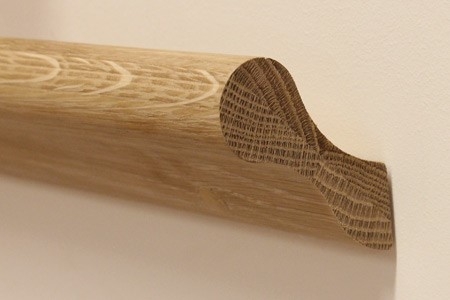
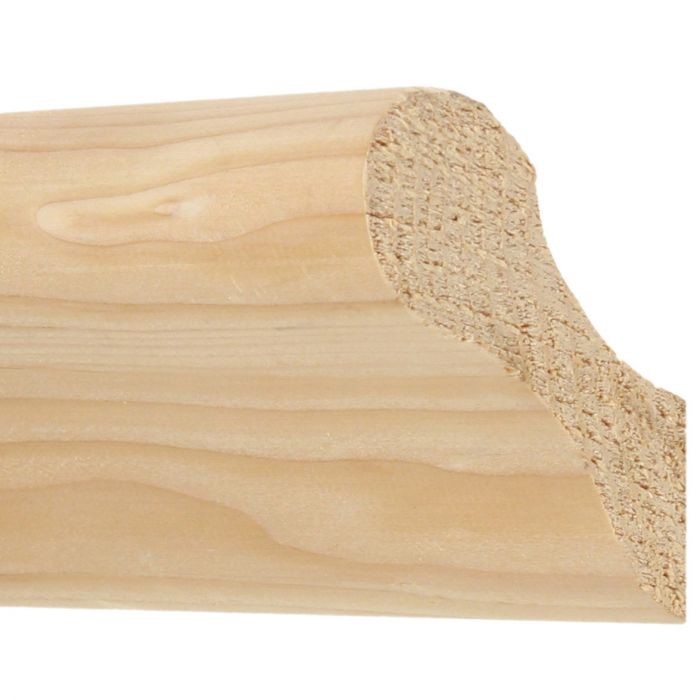
Aside from their simple appearance, flexibility and cost, pig's ear handrails are a very popular choice of handrail because of their affordability and versatility. Pig's ear handrails can be made from a variety of different kinds of woods. One of their key advantages is that they do not need brackets to be attached to the wall, which saves a lot of space. So, how should you fit a pig’s ear handrail?
To fit a pig’s ear handrail, you first need to measure the length of your staircase to check you have the correct size handrail. Then you need to screw the pig ear’s handrail directly into the wall between 900mm and 1000mm above the stair line. You can use cross grain pellets to fill the holes and hide the screws.
If you're considering buying a pig's ear handrail for your staircase and need to know how to fit the handrail to a wall, we're here to help. Keep reading for a more detailed description of how to fit a pig’s ear handrail and exactly what is required.
Click on a link to jump to each section:
- How do you fit a pig’s ear handrail?
Discover the best way to fit your new handrail - How to measure for a pig’s ear handrail
Find out how to accurately measure and choose the right length of pig’s ear handrail - What is a pig’s ear handrail used for?
Find out more about the uses of a pig’s ear handrail - How do pig’s ear handrails compare to mopstick handrails
Both handrails have their benefits, but which style you prefer depends on whether you want your handrail to attach directly to the wall and whether you have a narrow staircase - How do you choose the right pig’s ear handrail?
There are various different elements to consider when choosing the perfect handrail for you - Caring for your grooved handrails
Here are some various items that can help your handrails maintain their finish for longer
How do you install a pig's ear handrail?
One of the many benefits of pig's ear handrails is that they don't need accessories such as brackets like mopstick handrails. They can screw directly into the wall, using cross grain pellets to fill the holes and hide the screws.
To install a pig’s ear handrail, you’ll need the following tools:
- Pencil
- Tape measure
- Spirit level
- Chalk line
- Stud finder
- Electric drill
- Saw
- Pig’s ear handrail
- Screws
- Cross grain pellets
Follow our staircase experts' instructions to install your pig’s ear handrail correctly:
- Use a tape measure, spirit level and pencil to mark the correct height on the wall where you want to install your pig’s ear handrail. It should be between 900mm and 1000mm from the stair line. Mark the height above both the bottom and top steps.
- Using a chalk line, run the line through both marked areas. This will act as a guide when it comes to installing your pig’s ear handrail.
- Use a stud finder if necessary (for example, if you’re attaching the handrail to drywall) to locate where it is safe to attach the handrail.
- Place the handrail on the wall and mark where you want the handrail to end. You can then cut your pig’s ear handrail to the desired length.
- Place the handrail back on the wall and mark the rail for the screw holes.
- Use an electric drill and suitable fixings for your wall type to attach your handrail.
What height should a pig’s ear handrail be?
UK building regulations state that a handrail should ideally be fitted between 900mm and 1000mm above the stairs. Once fitted, your handrail should be sturdy and secure, and shouldn't be loose. If you’d like more information, have a look at our blog ‘What height should a staircase handrail be?’. If you are still unsure, or you would like a professional opinion, get in touch with us today.
How to measure for a pig’s ear handrail?
Before installing a handrail, you should measure the length of your staircase to check the size you require. You should use a tape measure to measure the length between the top and bottom newel post, ignoring any newel post caps. For more information on measuring your staircase, check out our video guide ‘How to measure your staircase’. If you're still not sure how to measure for a pig's ear handrail, make sure to get in touch with our expert team at Jackson Woodturners for support.
If you’d like more in-depth information about pig’s ear handrails, check out our helpful guide to choosing pig's ear handrails.
What is a pig's ear handrail used for?
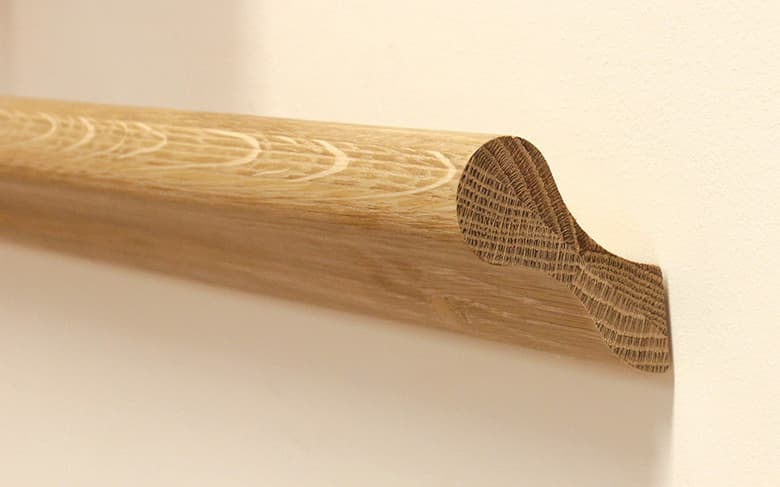
A pig's ear handrail is wall-mounted and is ideal if you have a narrow staircase. Pig's ear handrails do not need handrail brackets and can be installed directly on the wall, saving time and money. If you have a narrow staircase, pig's ear railings are a particularly good option to consider. They have a distinctive style and shape, and can be used to complement a variety of different interior styles.
How do pig's ear handrails compare to mopstick handrails?
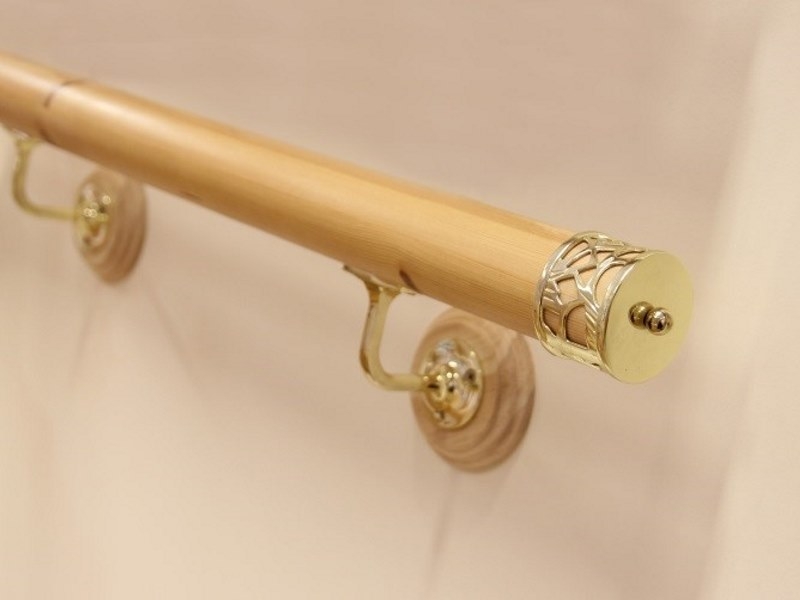
Mopstick handrails are attached to the wall with the help of wall handrail brackets, making them a popular option for buyers searching for a handrail that might be more ornamental.
When installing a mopstick handrail, you'll need to select some handrail brackets that are complementary to your handrail's style and finish. Mopstick handrails also often require accessories, such as end caps and wall patrices – so pig’s ear handrails can save you time and money in this sense.
How do you choose the right pig's ear handrail?
When choosing between pig's ear handrails, it is important to consider the different sizes available, as well as the material of the handrail, your desired budget and cross grain pellets.
If you don't have a large budget, consider opting for a more cost-effective wood such as pine. This way, you can still achieve a classic wood finish without having to compromise on price. Although pine is one of the cheaper options, other wood types such as hemlock can also make a stunning statement in your home. If you have the budget to spare, oak is a premium choice that can bring elegance to your staircase.
You can browse our full collection of oak handrails and accessories here.
At Jackson Woodturners, we offer pig’s ear handrails in a wide range of materials, including:
- Pine
- Ash
- Dark Hardwood
- Hemlock
- Oak
- Walnut
You can view our full range of pig’s ear handrails on our website.
Caring for your pig’s ear handrail
Properly maintaining your handrail is critical to ensure that it will withstand the test of time. No matter which material you go for, you can help maintain the wood by treating your handrail with a base coat of Treatex Hardwax Oil. The use of Treatex is also essential to bring out the inherent beauty of your wood while also preserving it and keeping it looking new.
You can shop our full Treatex range here.
Pig’s ear handrails from Jackson Woodturners
At Jackson Woodturners, we offer the largest selection of contemporary and traditional stair parts in the UK, including a wide range of high-quality pig’s ear handrails.
Ordering from us means you’ll have access to our incredible customer service and a large range of pig’s ear handrails and cross grain pellets at competitive prices. At Jackson Woodturners, our team aims to offer you a service that goes above and beyond when helping you pick out your new pig’s ear handrail. So, make sure to browse our website today and get in touch with our expert team for more advice and support. You can call our staircase experts on 0114 272 1228 or email [email protected]


