

A staircase handrail’s main purpose is to offer safety and stability, but that doesn’t mean that it can’t also be a grand and welcoming centrepiece when guests walk through your front door. If you want your handrail colours to match your home’s interior and showcase your style, you may want to consider painting your handrails. Or, perhaps you’ve bought a new handrail and want it to match the colour of the rest of the staircase. So, what’s the process of painting wooden handrails?
First, you should prepare the handrail by cleaning it with a degreaser and sanding it with 220-grit sandpaper. Fill any holes with wood filler. Apply painter’s tape to the wall around the handrail and put down a drop cloth. Finally, prime and paint your handrail in your chosen colour.
In the rest of this blog, we take you through everything you need to know about painting a wooden handrail and provide answers to some of the most common queries.
Click on one of the links below to jump to that section:
- • Tools and materials required for painting a wooden handrail
Understand the tools and materials required for painting your handrail.
- • Painting a wooden handrail in 6 steps
Find out everything you need to know about preparing, priming and painting your handrail.
- • How to remove paint from a wooden handrail
Learn how to remove old paint from an existing handrail to refinish it.
- • What kind of paint should you use on a wooden handrail?
Find out what type of paint is required for use on a wooden handrail.
- • What colour should you paint a handrail?
Read our guide to choosing a paint colour for painting a handrail.
- • Should you paint or stain your handrail?
Learn if painting or staining is the best option.
- • Frequently asked questions
We answer common queries on painting a wooden handrail.
Tools and materials required for painting a wooden handrail
If you’re planning to paint your staircase handrail, it’s best to prepare the tools and materials you’ll need beforehand. Here’s an overview of everything you’ll need:
- • Cleaner
- • Degreaser
- • 220-grit sanding block or sponge
- • Paint scraper (if there’s existing paint)
- • Sealing primer
- • Bristle paint brushes
- • Wood filler
- • Paint Tack
- • Cloths
- • Stir sticks
- • Protective gear such as goggles and a dust mask (for sanding)
Painting a wooden handrail in 6 steps
If you need to paint a wooden handrail, follow these steps to ensure a stunning and durable finish.
1. Prepare the handrail to be painted
Painting stair handrails your desired colour can ensure your handrails match up to your preferred aesthetic and home interior; however, sanding and preparing the wood is an essential part of this process. You will need to take extra care to make sure this is done to a high standard, to ensure that no colour comes through in the finished result.
Firstly – clean the handrail with a cleaner and degreaser to remove any grease and grime left behind. You can then rinse the handrail with clean water to remove any cleaner residue.
2. Sand the handrail
Next, scrape the wooden handrail with a paint scraper to remove any bubbled, loose or chipped existing paint, if applicable. We’ve got a more in-depth explanation of how to remove existing paint from a handrail later on in this blog.
You can then sand the surface of the handrail with a sanding sponge to remove any areas of old paint left behind by the scraper. Use a 220-grit sanding sponge, paper or block to smooth the surface, and then wipe the bannister handrail with a clean tack cloth.
3. Fill any flaws with wood filler
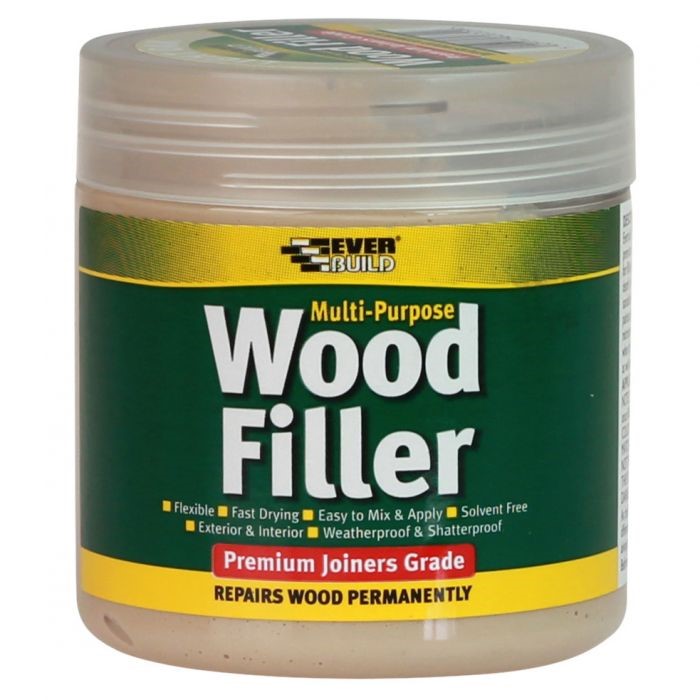
Fill any flaws or dents in the handrail with wood filler. You can shop our range of wood fillers in our finishings range to find the suitable filler for your wood.
Pine Wood Filler 250ml
Delivery Available
- This pine wood filler is ideal for filling small imperfections (max 5mm in depth) in wood.
- Fast drying and ready mixed for immediate use. This wood filler is waterproof so can be used on both internal and external wood.
- Once dry the filler can be stained, painted or varnished.
- Prior to use, ensure that surfaces are clean, dry and free from dust. Stir well and apply with a spreader or knife.
4. Protect your surroundings
If the handrail touches the wall, apply painter’s tape to the wall to protect the wall from paint. Spread a drop cloth along the stairs beneath the handrail to protect your stairs or carpet.
5. Apply a sealing primer
Next, apply a sealing primer to the handrail with a 2-inch trim paintbrush, and let it dry for 24 hours before painting. Stir the primer with a stir stick brush and then apply it to your handrail. Paint in the direction of the grain working in long strokes. If you have any intricate details on your handrail use a finer brush to ensure they’re covered fully.
The purpose of a sealing primer is to block stains from bleeding through the paint and provide the paint with better adhesion. Using a sealing primer will ensure a more attractive appearance and help your paint to last longer. After applying the primer, sand the primed surface with a new 220-grit sanding sponge, and wipe the handrail with a clean cloth.
6. Paint your handrail in your chosen colour
After taking the above steps – you can now paint your handrail your desired colour. Use a wider brush for the flat areas and a finer brush for intricate details. Make sure to paint in the direction of the wood grain.
Let the first coat dry completely, before adding a second. If you’re covering a dark colour or wood with a light paint colour, you might have to apply a third coat to ensure the colour doesn’t show through.
Make sure you use painter’s tape to get a clean finish where the handrail meets the spindles or walls. Remove the tape before the second coat completely dries. If you’re also painting your spindles, make sure the handrail is dry to the touch before beginning.
For more information about caring for wooden handrails, read our comprehensive guide.
How to remove paint from a wooden handrail
Painted handrails can tie your whole staircase together, but over time they can start to show wear and tear, especially if they haven’t been painted properly. If your existing painted handrail is starting to peel and crack, it’s best to remove the old paint before repainting for the best results.
Here’s what you’ll need to remove paint from your staircase handrail:
- • A paint scraper with a comfortable grip and a sharp edge
- • A heat gun if you have stubborn or multiple layers of paint
- • A chemical paint stripper is a good alternative to a heat gun and can be especially useful for removing paint from intricately designed handrails
- • Sandpaper of varying grits
- • Safety goggles, dust mask and gloves
There are a couple of different methods you can use to remove paint from your handrail:
- • Use a paint scraper and sandpaper. This is best suited for smaller handrails as it can be a labour-intensive process. Apply firm pressure with the paint scraper while moving in the direction of the grain. Once most of the paint is removed, use sandpaper to remove the final traces of the old paint. Start with a coarse grit and work your way up to a finer grit to ensure a smooth finish for your new paint, stain or varnish.
- • Use a heat gun. This is a fast method but it does require purchasing a heat gun. Additionally, heat guns can damage wood if they are used incorrectly or left on for too long. It’s very important to wear protective gear, including a protective mask and thick gloves, as melted paint can release harmful fumes. Working in sections, start at a low setting and then work your way up until the paint bubbles. Then use a paint scraper or putty knife to scrape away the melted paint. Use sanding paper to remove any residual paint.
- • Use a chemical paint stripper. A chemical paint stripper is an effective solution for multiple layers of paint or intricately designed handrails. Always follow the manufacturer’s instructions when using a chemical paint stripper. Make sure to wear protective gear and work in a well-ventilated area. Use a paint scraper to remove the dissolved paint and then remove the remaining residue with sandpaper.
Once you’ve removed the old paint, sanded the surface and cleaned away any remaining residue or dust, you’re ready to refinish your staircase handrail with a new coat of paint, stain or varnish. Follow our step-by-step instructions above for the best finish if you’re repainting your handrail.
What is the best paint to use on a handrail?
We recommend painting your wooden handrail with a solvent-based semi-gloss paint – a semi-gloss finish tends to be harder wearing than other paints. It’s also durable and easy to clean, making it ideal for a high-traffic area like a staircase. Matte or flat paints are harder to keep clean.
What colour should you paint a handrail?
There are no limits to the colours you can paint your handrail, whether you want to make a bold statement or are looking for a classic colour for a traditional hallway. Our white primed handrails come pre-primed, they have the ideal surface for painting and so need only a solvent-based topcoat to achieve the best results. You can view our full range of white primed handrails and buy them online here.
Painting a handrail requires an eye for detail. If any of these parts are painted sloppily or without care, it can ruin the look of the staircase. If you’re nervous about painting the handrails yourself – consider asking a professional or someone you know for help.
Are you looking for the perfect wooden handrail for your staircase? Shop our handrail range here.
Should you paint or stain your handrail?
You can paint your handrail a vibrant colour or perhaps a more neutral shade to show off your personal style and ensure your wooden stairs match your home interior. If you don’t want to change the colour of your handrail but want to provide protection and an attractive finish - applying oil, wax and/or varnish will add a layer of protection from the natural oils on people’s hands, which could discolour the wood. However, bear in mind that staining tends to last for longer and be more resilient over time.
If you are choosing an oil finish, be sure to choose something that’s formulated for use on natural wood, as this will contain all the necessary preservatives. For example – a thin coat of our Treatex Natural Hardwax Oil Ultra can be applied to unfinished timber, before sealing with Clear Treatex Hardwax Oil. It is important that only a thin coat of Treatex Hardwax Natural Oil is applied to the wood.
Are you finishing an oak handrail? Read our full guide to cleaning and treating oak handrails here.
Wooden handrails by Jackson Woodturners
Jackson Woodturners provides the largest selection of contemporary and traditional stair parts in the UK. We offer a comprehensive selection of high-quality handrails, including ungrooved handrails, mopstick handrails and pigs ear handrails, as well as a selection of handrail brackets, end caps, fittings and wall mounted handrail kits.
If you’re planning on painting your handrail, our white primed handrails are a great choice. These handrails have already been professionally primed, so all they need is a top coat of paint in your desired colour!
View our full range of handrails on our website. If you need any advice on painting your staircase, our friendly team will be happy to offer advice and recommendations. You can call our staircase experts on 0114 272 1228 or email [email protected]
Frequently asked questions about painting handrails
How do you refinish a wooden handrail?
To refinish a wood handrail, you will need to strip the wood before preparing and priming it. Then you can stain and finish the wood to your own aesthetic tastes.
What is wood filler?
Wood filler is ideal for filling small imperfections in wood. For example – it can cover holes, dents, chips and deep grains in wood, disguising them and smoothing the surface. You can use wood filler on painted stairs to make them more aesthetically appealing and comfortable to walk on.
Should you use a varnish finish?
Varnishing is a popular option for finishing a wooden handrail, and you can choose either a clear varnish or something that has a colour tint if you prefer. These finishes protect the wood from moisture, dirt and oil but they can be less hard-wearing, however, they may look less natural as they form a hard coating on top of the wood.
Can you paint over stained wood without sanding?
While it is possible to paint over stained wood without sanding, the stain may bleed through and cause streaking.


