
Open-plan layouts thrive on a minimalist approach, with expansive flooring and clear wall space offering endless possibilities. Even practical features, like staircases and storage, can be transformed into distinctive design elements that transform your living space. It can be difficult to know where to start when you have so much space to play with, so how do you integrate practical features into an open-plan layout?
It’s important to maintain the flow of your living space when planning design features. The materials and layout you choose should complement the rest of your home, and your space should support your living requirements. You should also consider elements you could need to add, and existing ones you might need to change, to design a harmonious open-plan space.
In this blog, our three experts will run through their best advice and provide some top-notch inspiration for your open-plan renovation.
Meet the experts

Gilly Craft
President of the British Institute of Interior Design
Interior designer and founder of Koubou Interiors

Hannah Walton
Interior designer and founder of House on the Hill Design

Elizabeth Parker
Interior designer and founder of Parker Interiors
What elements can make or break an open-plan living space?
Whilst you should design any space with personal preference in mind, you also need to think about the elements you’re choosing and how they’ll impact the overall look. An open-plan area should flow seamlessly, with both its own elements and those of the rest of the house.
“Getting the space planning/layout is key. Everything will be on show, so a cohesive design is very important. How natural light comes into the space also needs to be considered.”
-Gilly
“Open-plan areas work best when the space remains uncluttered. Avoid the temptation to fill the space with lots of furniture or too many fussy accessories; otherwise, it will quickly become closed off and defeat the point of being open-plan. Create points of interest within the space with a few, well-chosen pieces of furniture or art. My passion is for salvaging and reclaiming unusual pieces of furniture, which often work as design features on their own. An open-plan space is the perfect way to showcase distinctive items to their full potential.”
-Hannah
“The aim with open-plan living is to create intimate areas within the space that complement each other and flow into one another. It’s important to pay careful attention to layout and materials to define each zone, so that the overall effect is warm and social.”
-Elizabeth
What are the main considerations for styling an open-plan space?
Once you’ve opened up the space in your home, you’ll need to think about how you want to fill it. The way the space looks can make or break its overall design, and you’ll also need to make it functional while maintaining the aesthetics.
“Think about where your light source is coming from—if a whole floor is opened up, will the existing windows provide sufficient natural light for the entire space? Well-positioned lighting will help ensure a consistent flow of light.”
-Hannah
“First, you need to prioritise your living requirements. If you like entertaining, the space should allow for that. These days, most people like to cook in the same space in which their guests are sitting. So position your dining area close to the kitchen and consider which way you would like to face when preparing food. Consider noise levels and locate your relaxation zones further away from a play space or an industrious kitchen.”
-Elizabeth
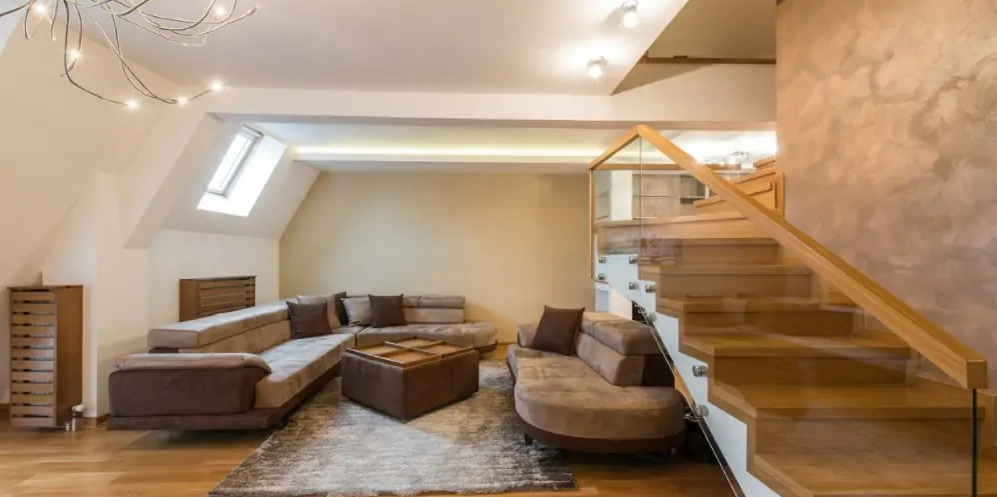
How would you approach incorporating a staircase into an open-plan kitchen?
Kitchens often form a part of open-plan living spaces, bringing together the preparation and entertainment side of cooking by combining with a dining area. Extending this area may mean your existing staircase is now visible in the kitchen, or you may need to add one if you’ve added rooms to multiple stories.
“Consider the materials that the staircase will be manufactured from. The staircase should be as minimalist as possible—if it can be made from glass or have a floating appearance, this will also help.”
-Gilly
“Depending on the positioning of the staircase, there are lots of ways you could approach it. You could create the illusion of even more space with glass panels, keeping the staircase visible from the kitchen. Alternatively, you could close off the balustrades completely and style the stair treads with accent lighting. If you can access the space beneath the stairs, you could use it for extra kitchen storage—you can even house appliances in the space—or as a stand-alone utility or laundry space.”
-Hannah
“The layout and work path of a kitchen is the foundation of its design. If your staircase is located in the kitchen area, give careful consideration to the flow of traffic and be mindful that the two must not cross if possible. A staircase should be an impressive focal point, so think about this when you're laying out the rest of the room.”
-Elizabeth
What advice could you offer for integrating storage into a minimal, open-plan design?
The creation of an open-plan living space will often involve the merging of multiple rooms. While this can give you greater design choices, you can’t ignore the items you store in those rooms and how they will fit into your renovated space.
“Joinery that has floor-to-ceiling sliding or folding doors would be my choice. Even the kitchen can be hidden behind this type of design. This needs to be considered at the design stage, as the width of the space will be key. A lot of storage can also be integrated into an island.”
-Gilly
“The space beneath the stairs is ideal if you need to create secret storage! Drawers and slide-out cupboards can be incorporated into the space to hide away everyday items such as coats, bags and shoes. Some of the pieces of furniture I’ve reclaimed have also inadvertently doubled up as storage solutions. I repurposed an old butcher’s block into a stunning kitchen island, and by chance, the huge original cupboards within the base created the perfect storage space for oversized vases and crockery, removing the need to install additional wall cabinets.”
-Hannah
“When living, cooking, and eating are all conducted in the same space, the key is storage! Clutter and mess will soon overrun an open-plan area, ruining the flow of a home. Use every available space to integrate storage. Floor-to-ceiling cupboards with minimal or concealed hardware can blend into a space and look just like a plain wall. The space under a staircase is often neglected when it can be used for so many things—an office nook or a beautifully lit wine cellar. This under‑stair area can be fully utilised with a well-designed pull-out shelving system and can provide fantastic deep storage for shoes and bags or an ugly vacuum cleaner.”
-Elizabeth
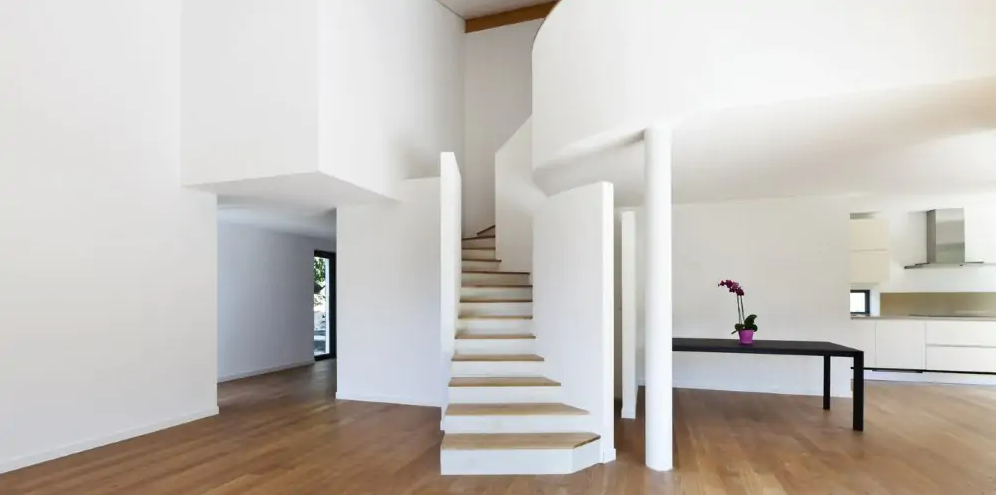
What staircase material do you think is best suited to open-plan designs?
A staircase is the focal point of any home, with materials and part styles impacting the overall feel of the area. Your staircase will stand out even more when it’s part of an open-plan living space, so these choices are more important than ever.
“I would keep the staircase design as open as possible and use toughened glass or Perspex wherever you can.”
-Gilly
“Most open-plan spaces tend to be quite modern, so glass can create a stylish effect. It also won’t interfere with the overall design of the room as it won’t interrupt the sight line.”
-Hannah
“Although glass offers the ultimate in minimal staircase design, there are many other options that look fabulous in an open-plan space. A fusion of metal and wood can create a stunning contemporary effect or make a feature of the staircase and showcase the warmth and beauty of a traditional oak or pine balustrade.”
-Elizabeth
How would you recommend using a staircase to divide the space for different purposes?
Open-plan living spaces can still be divided for different purposes, and your staircase can serve as a natural barrier between these areas. The design choices you make can maintain the flow of the open space while still allowing you to accommodate your everyday life.
“Constructing the staircase from a material that is unobtrusive, such as the suggestions above. This will be dependent on the architecture, but if done properly, it can work very well.”
-Gilly
“Although the main benefit of open-plan spaces is that all living areas flow into each other, you may still want to differentiate between specific sections of the space, e.g. the kitchen and the lounge area. The staircase can provide a natural division between areas, allowing you to switch up the décor or theme to highlight specific parts of the space.”
-Hannah
“If your staircase is situated between two living zones, you have a perfect room divider to separate areas that you would prefer to be apart, without sacrificing the open-plan scheme. An open balustrade design or the removal of the under-stair walls can maintain the sight line through the building while retaining some privacy. This is particularly useful if you want a child's play area within reach but don't necessarily want all the toys on view. Or when you want to be able to see through to the kitchen when you're sitting on the sofa, but would prefer to conceal some of the cooking mess from your guests.”
-Elizabeth
What tips could you share for creating a cosy living space in an open-plan layout?
Open-plan living spaces don’t have to feel cold, and you can still create warm and cosy areas without such strict barriers. Lighting, decor, and larger furniture pieces can all help to create a comfy space that still maintains flow.
“I would include a fire in the space if there is the infrastructure to support it. It doesn’t have to be against a wall—it can be in the middle of the space, giving a really stunning focal point. There are a lot of different options on the market.”
-Gilly
“The downside to open-plan living is sometimes rooms can feel quite cold and stark. You can easily address this by incorporating different textures and materials—such as soft throws or raw timbers—into your accessories. Tables and free-standing lamps are a good way of creating an inviting atmosphere and drawing the eye to particular areas of the room. If the design allows, incorporate some kind of log burner or fire into the space. Not only will this create a lovely cosy ambience, it will also act as a focal point for the lounge area.”
-Hannah
“Open spaces can feel cold and exposed, so create cosy areas with well-positioned lighting. Concealed integrated lighting under shelves can provide a soft glow. Lamps on low-level side tables in a living area create pools of light, and dimmable spotlights can highlight statement artwork. A combination of various materials and textures creates interest and depth in an open-plan design. Layer textiles with throws and cushions and soften hard floors with well-placed rugs to create an instant cosy feel.”
-Elizabeth
What benefits are there to open-plan living?
You might choose an open-plan living space for the opportunity to level up your home’s design, but it can also bring benefits to other areas of your life. Maintain your relationships with your loved ones or enhance your social gatherings with these flowing spaces.
“More people are asking for this type of design now. I think it’s how people want to live. Cooking/preparing a meal has become a social event now, and everyone likes to be part of it. The days of the lady of the house spending the whole evening shut away in the kitchen are past, and people want to prepare, eat and sit together. Consider having other areas in the house that can be private for reading, homework, etc., if there is the space to allow it.”
-Gilly
“Space, space and more space! From a personal point of view, it also presents the ideal opportunity to show off beautiful pieces of furniture.”
-Hannah
“In today's world, we tend not to gather together as a family like we used to. The kitchen is not always the heart of the home anymore, and gone are the days when we would gather around the hearth to listen to the radio or tell stories. Even the TV has failed as our main focal point since modern technology can enable family members to watch different media at the same time. By knocking down walls and opening up the home, we can all be in each other's company no matter what we’re doing. Homework can be tackled in the office area while dinner is being prepared. Adults can relax on the sofa while the kids play within sight. Open-plan living suits our modern way of life while maintaining our need for family unity.”
-Elizabeth
Create the perfect open-plan space with Jackson Woodturners
Staircases are a huge part of any open-plan living space, whether they act as a focal point or create a natural barrier between areas of different purposes. The materials and styles you choose for your stair parts can take the feel from warm and traditional to clean and modern, so it’s important you choose what’s right for you and your home.
Here at Jackson Woodturners, our expert team are on hand to help you choose the perfect elements to suit your budget, time constraints, and desired result. Get in touch with us below, or take a look at some more of our top tips in our planning and advice section.


