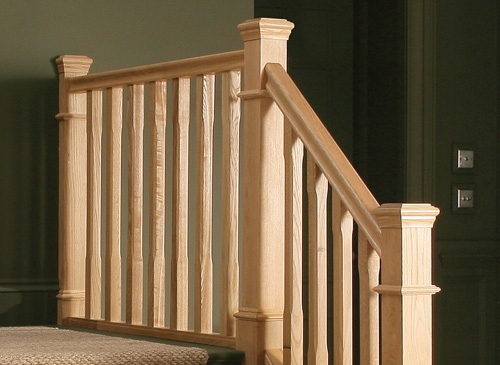
There are many different types of handrails for stairs and it can be difficult to know which one to choose. The best handrail for your home will depend on the layout and style of your staircase. So, what are the different types of stair handrails?
There are two main types of handrails: wall-mounted and integrated handrails. Wall-mounted handrails are used when a staircase is enclosed by a wall on both sides and include mopstick and pigs ear handrails. Integrated handrails run along the top of the spindles and form part of the balustrade. You can choose between grooved or ungrooved options.
In the rest of this blog, we discuss the most popular types, styles and materials of handrails and provide tips on choosing the best handrail for you.
In this guide:
- Wall-mounted handrails
Read the benefits of mopstick and pigs ear handrail designs. - Integrated handrails
Learn about the benefits of integrated handrails, including grooved and ungrooved styles. - Popular handrail materials
Find out about the most popular handrail materials, such as oak, pine and white-primed. - Modern vs traditional handrails
Understand the difference between modern and traditional handrail designs. - Things to consider when choosing your handrail
Learn the key factors you need to consider when purchasing a handrail. - Types of handrail FAQs
Get the answers to your most commonly asked questions about different types of stair handrails.
Wall-mounted handrails
Wall-mounted handrails are ideal if you are attaching a handrail to the wall. The popular types of wall-mounted handrails include:
Mopstick handrails
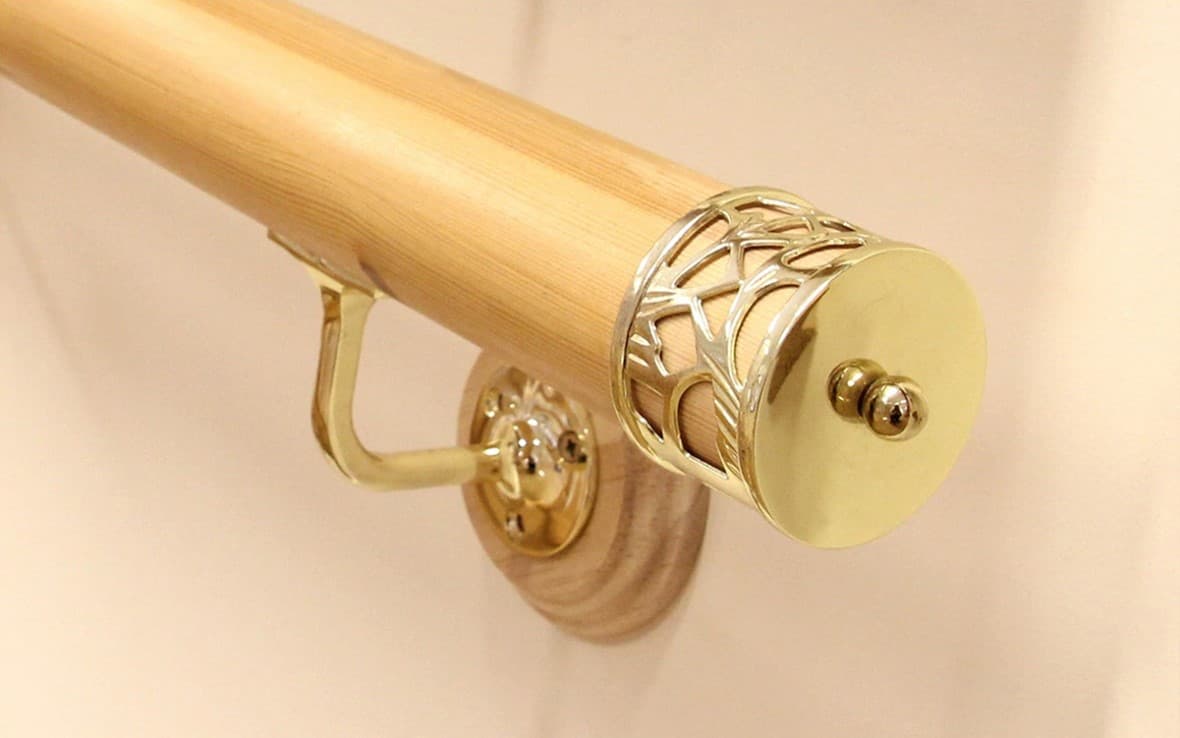
Mopstick handrails are an extremely customisable option if you are looking for a wall-mounted handrail and are available in an eclectic range of woods. These types of handrails are designed to be secured to the wall by handrail brackets, and they can be a more decorative option than pigs ear handrails, which are fastened to the wall with screws. You can also add handrail end caps in your desired style to finish the look.
Whether your home is more modern or traditional, mopstick handrails are a simple, versatile option, and can perfectly complement most interiors. Offering a round, simple design, a mopstick handrail is perfect if you want to use a classy, simple handrail option.
What woods are mopstick handrails available in?
Key benefits of mopstick handrails
- Extremely customisable and available in an eclectic range of woods.
- They can be a decorative option when secured to the wall with handrail brackets.
- Ideal if you are looking for a simple, classy design.
- They provide a versatile option and can complement many different interiors.
Read our guide to choosing mopstick handrails here. Or view our full range of mopstick handrails on our website.
Pigs ear handrails
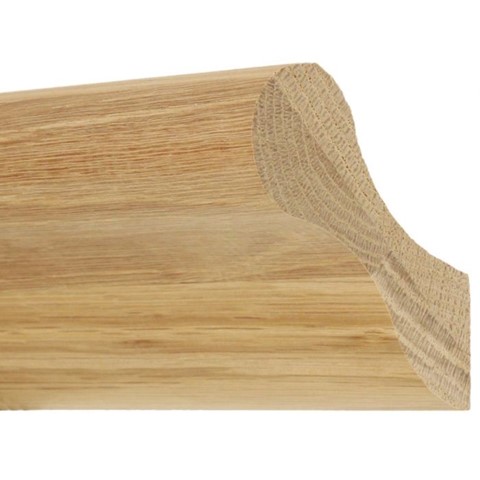
Unlike mopstick handrails, pigs ear handrails don’t require handrail brackets and can conveniently be screwed directly onto the wall. Pigs ear handrails are a particularly ideal option if you have a narrow staircase. Offering a slightly different design to round mopstick handrails, they provide a unique option for your stairs and are extremely versatile – meaning they suit a range of interior designs.
What woods are pigs ear handrails available in?
Key benefits of pigs ear handrails
- You don’t need to buy handrail brackets, saving you time and money.
- Versatile, simple design.
- Suitable option if you have a narrow staircase.
Find out more about choosing pigs ear handrails here. Or view our full range of pigs ear handrails on our website.
Integrated handrails
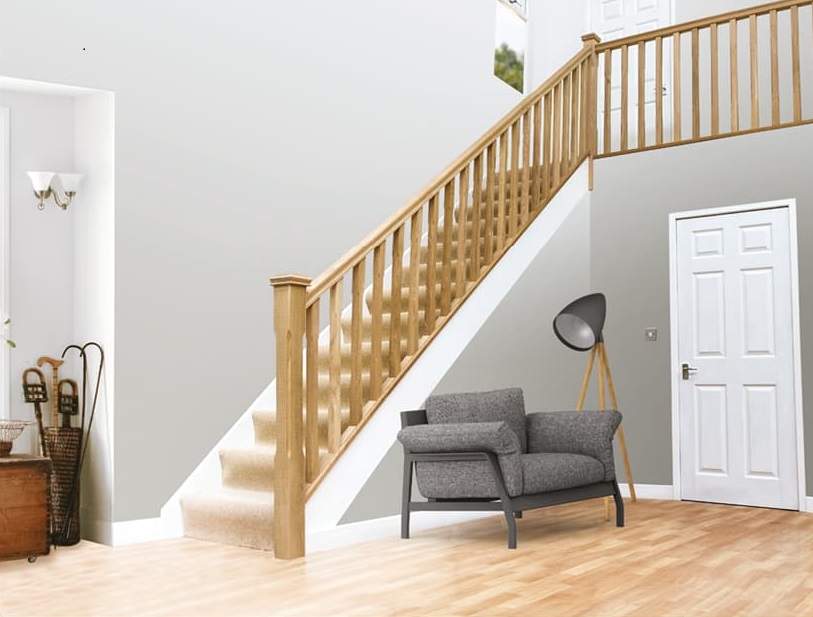
Unlike wall-mounted handrails which are attached directly to the wall, integrated handrails run across the top of the spindles and form part of the balustrade. Integrated handrails can either be grooved or ungrooved.
Grooved handrails are typically used with wooden spindles, but there are specific glass grooved panels which are designed to house glass panels. Ungrooved spindles are usually used with metal spindles or glass panels and clamps, but they can also be attached directly to the wall (like a wall-mounted handrail).
Grooved handrails
Grooved handrails are designed so that the spindles sit within the groove of the handrail. For example, a 32mm spindle would sit in a 32mm grooved spindle. For this reason, it’s important to ensure that the size of the groove of your handrail aligns with the size of your spindles.
What woods are grooved handrails available in?
Key benefits of grooved handrails
- Designed to be compatible with wooden spindles.
- Don’t require brackets as the spindles can slot directly into the groove.
You can shop our full range of grooved handrails on our website.
Glass grooved handrails
Glass-grooved handrails have a wider channel designed to fit a glass panel. Like with standard grooved panels, you must ensure that the groove of your new handrail is the right size for the glass panels you want to use in your balustrade.
What woods are glass grooved handrails available in?
Key benefits of glass grooved handrails
- Designed to be used with glass panels.
- Don’t require glass brackets or clamps, unlike ungrooved handrails.
You can shop our full range of glass-grooved handrails on our website.
Ungrooved handrails
Ungrooved handrails are typically used with glass panels or metal spindles. If you use an ungrooved handrail with glass panels, you’ll need glass brackets and clamps to secure the panels in place. With metal spindles, the spindle foot can be screwed directly into the handrail.
You can also attach ungrooved handrail rails directly to the wall, instead of a pigs ear or mopstick handrail.
What woods are ungrooved handrails available in?
Key benefits of ungrooved handrails
- Very versatile and can be used with metal spindles, glass panels or mounted to a wall.
- Have a slim profile that can work well in narrow staircases.
You can shop our full range of ungrooved handrails on our website.
Popular handrail materials
There are many different materials available for handrails, but the three most popular materials are oak, pine and white-primed. Learn more about these three materials below:
Oak handrails
Oak handrails are a very popular and widely used option due to their excellent strength, durability and classic appearance. Offering a unique tiger-stripe design, they are available in a large range of designs and sizes. Shop our range of oak handrails here.
The key benefits of oak handrails
- Durable material.
- Provides a unique, classic appearance, featuring a tiger-stripe grain.
- You can rest assured knowing that your staircase won’t get damaged easily.
- Offers superior strength in comparison to many other woods.
- Ideal for both modern and traditional homes.
Find out more about oak handrails in our guide.
Pine handrails
If you are looking for a different option for a wooden handrail, you may consider pine. Pine is a softwood rather than a hardwood, and it offers a lot of variety when it comes to how you can paint or stain it. While quite durable, pine does not have the classic appearance of oak and is unlikely to last as long. It does need to be treated before being painted.
The key benefits of pine handrails
- Pine is more budget-friendly than oak.
- It has an attractive pale colour and distinctive knots.
- Pine is easy to sand and finish.
Read our guide to oak vs pine handrails here.
White-primed handrails
Installing white handrails is a great way to make your staircase appear larger, complementing neutral colours and decoration in the home. Our white primed products are supplied already primed on a hardwood base, ready for you to then paint.
We recommend pairing a white handrail with black spindles and a white base rail to provide a modern, elegant touch. Alternatively, a white handrail alongside white wooden spindles can create the perfect bright addition to your stairway.
Key benefits of white handrails
- Looks excellent when paired with white spindles, black spindles and woods such as oak.
- Work especially well in modern properties.
- They are strong and durable.
- Can make the staircase appear larger.
What woods are used for white handrails?
The base wood used for our white primed handrails is either birch or poplar (tulipwood), a knot-free, pale hardwood that lends itself to be used for white primed parts. Our handrails are sprayed white, to a very high standard. Our white primed handrails are classed as "primed" as there can often be some colour variation between batches, so they can either be finished in the colour of your choice or used as they are.
Read our full guide to choosing white handrails. Or shop our white handrail range on our website.
Modern vs traditional handrails
When choosing the perfect new handrail for your staircase, you’ll also need to think about whether you want a modern or traditional design.
Choosing a modern design
When choosing a modern handrail, we suggest choosing a lighter wood. Woods that offer a modern appearance include:
Modern handrail designs include mopstick handrails, glass-grooved handrails to be used with glass, metal wall-mounted handrails and HR handrails.
Another great way to style a modern staircase is to combine wood with glass or metal. Find out more about this here.
Traditional designs
The cottage loaf handrail is a popular traditional handrail. Woods you can use to create a more traditional feel include dark hardwood and walnut.
Things to consider when choosing your handrail
As well as the design, there are several other factors you should consider when choosing your new handrail.
Cost
Materials such as oak tend to be more expensive, as they offer high durability and strength. This can make an excellent investment, as your handrail will last longer and maintain its quality. However, if you have a smaller budget, you may want to look at slightly more cost-effective options such as pine. Shop our handrail selection here to view your full range of options.
Design
We offer a wide range of handrail designs, whether you are looking for a traditional or modern handrail. You can choose between simple designs and more complex options if you want your handrail to be more decorative.
View our full range of handrails here.
Grooved vs. ungrooved
Grooved handrails are ideal for wooden spindles, whereas ungrooved handrails can be used with metal spindles and glass panels (with clamps). If you want to pair your handrail with glass panels, you can also purchase a glass-grooved handrail.
Size
Handrails have to be fitted in accordance with UK building regulations. There are a number of guidelines outlined in Part K of the Building Regulations which set out the handrail requirements for staircases:
- You should fit a handrail at a height between 900mm and 1000mm from the pitch line of the stairs, or the floor for landings. The pitch line is a virtual line that sits on top of the nosing at the edge of the stair treads.
- Staircases require at least one handrail:
- If the stairs are less than 1m wide: provide a handrail on one or both sides.
- If the stairs are wider than 1m: provide a handrail on both sides.
Read more information in our blog, ‘What height should a staircase handrail be?’.
Handrails are often sold in set lengths of 1800mm, 2400mm, 3600mm and 4200mm. Choose the best length that fits your staircase measurements.
If you are buying a grooved or glass-grooved handrail, you need to ensure the size of the groove is suitable for the size of your wooden spindles or glass panels.
Style and aesthetic
Consider matching your staircase to the interior of your home. Perhaps you want to opt for a traditional cottage loaf handrail to complement your traditional interior or combine traditional and modern with an oak handrail combined with glass panels. For more tips, visit our handrail advice centre.
Handrails by Jackson Woodturners
Jackson Woodturners provides the largest selection of contemporary and traditional stair parts in the UK. We offer a comprehensive selection of high-quality handrails, including ungrooved handrails, mopstick handrails and pigs ear handrails, as well as a selection of handrail brackets, end caps, fittings and wall-mounted handrail kits.
View our full range of handrails on our website. If you need any assistance choosing the right type of handrail for your home, please get in touch with our team. We’ll be happy to answer any questions you may have. You can call our staircase experts on 0114 272 1228 or email [email protected]
Different types of handrails FAQs
What type of handrail is best for a modern home?
When choosing a handrail for your modern home, it’s best to go with lighter woods like oak, pine, hemlock or white-primed wood. Another great idea is to pair your wooden handrail with glass stair panels for a bright, contemporary look.
What type of handrail is best for a traditional home?
A wooden handrail is the perfect choice for a traditional home. Darker woods, such as walnut or dark hardwood, are guaranteed to add character to your property. Finish the look of your traditional handrail with ornate brackets, end caps, scrolls or volutes.
How do I know if I need an integrated handrail or a wall-mounted handrail?
The layout of your existing staircase will determine whether you need an integrated or wall-mounted handrail. You’ll need a wall-mounted handrail if your staircase is entirely enclosed by a wall. However, if one side of your staircase is open, an integrated handrail, alongside spindles and newel posts, will be a better option.


