
Staircase designs for lofts and basements
When we think of a staircase, the general assumption is that it is located in the hallway. However, with the rise in popularity of loft and basement conversions, there is an increasing need for staircases to be incorporated into different areas of a property. Often, staircases have to be created to fit bespoke spaces, so with this in mind we have taken a look at common staircase configurations for loft and basement stairs, and also some inspirational, unique staircases that have been designed to suit specific environments.
- Loft Conversions
- Continuation of existing staircase
- Staircase cut between rooms
- Spiral staircase
- Space saver staircase
- Diagonal Feature
- Basement Conversions
- Building Regulations for Lofts and Basements
- Staircase gallery
- Innovative Loft/Basement Staircase Design Gallery
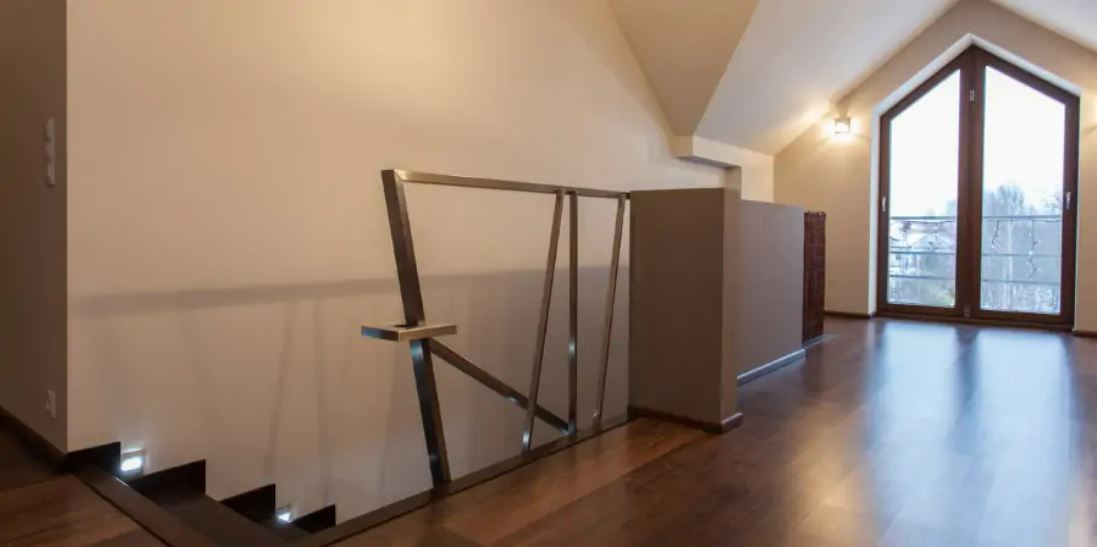
Stairs for loft conversions
These days, many people are choosing to extend their existing home to get more space to create a new bedroom or home office instead of the upheaval, not to mention cost, of moving house. In most cases, the obvious place to extend is into the roof, creating extra living space beneath the eaves. Obviously this type of conversion presents the need to incorporate an additional staircase into the first floor to enable access to the loft, which unfortunately can sometimes involve eating into habitable space. Common approaches to integrating an additional staircase include:
- Continuation of the existing staircase (doubling back on itself)
- Cutting off a section of an upstairs room or sacrificing storage cupboards
- Space saving or spiral staircases can be a solution when a high pitched staircase is required, although spiral configurations often require a larger floor space
- The rise of the stairs cutting diagonally into a bedroom or bathroom
Continuation of existing staircase
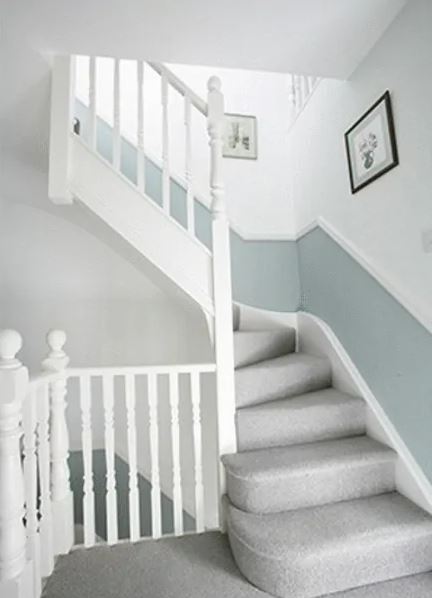
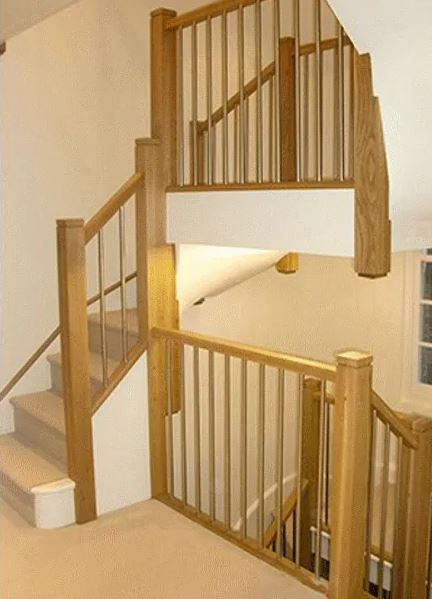
This configuration is generally the most preferable option for loft stairs, as it utilises the ‘dead’ space above the ground floor to the first floor staircase, and is in-keeping with the existing flow of the home. The only constraint on this type of staircase would be the available headspace.
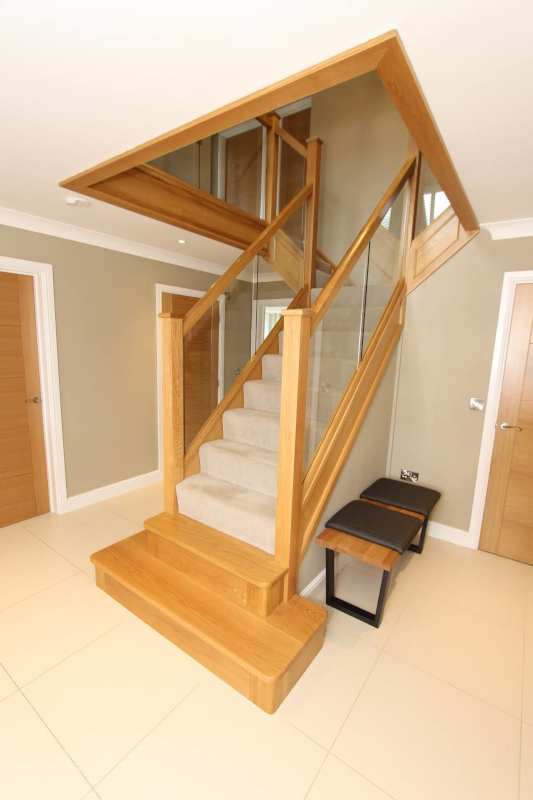
Staircase cut between rooms
Sometimes it is necessary to cut off a section of a bedroom to house a loft staircase. To lessen the impact of the reduced space the staircase can sometimes be positioned between two bedrooms, marginally reducing the size of two rooms instead of losing a larger proportion of one. This may work better if you have two rooms of a similar size.
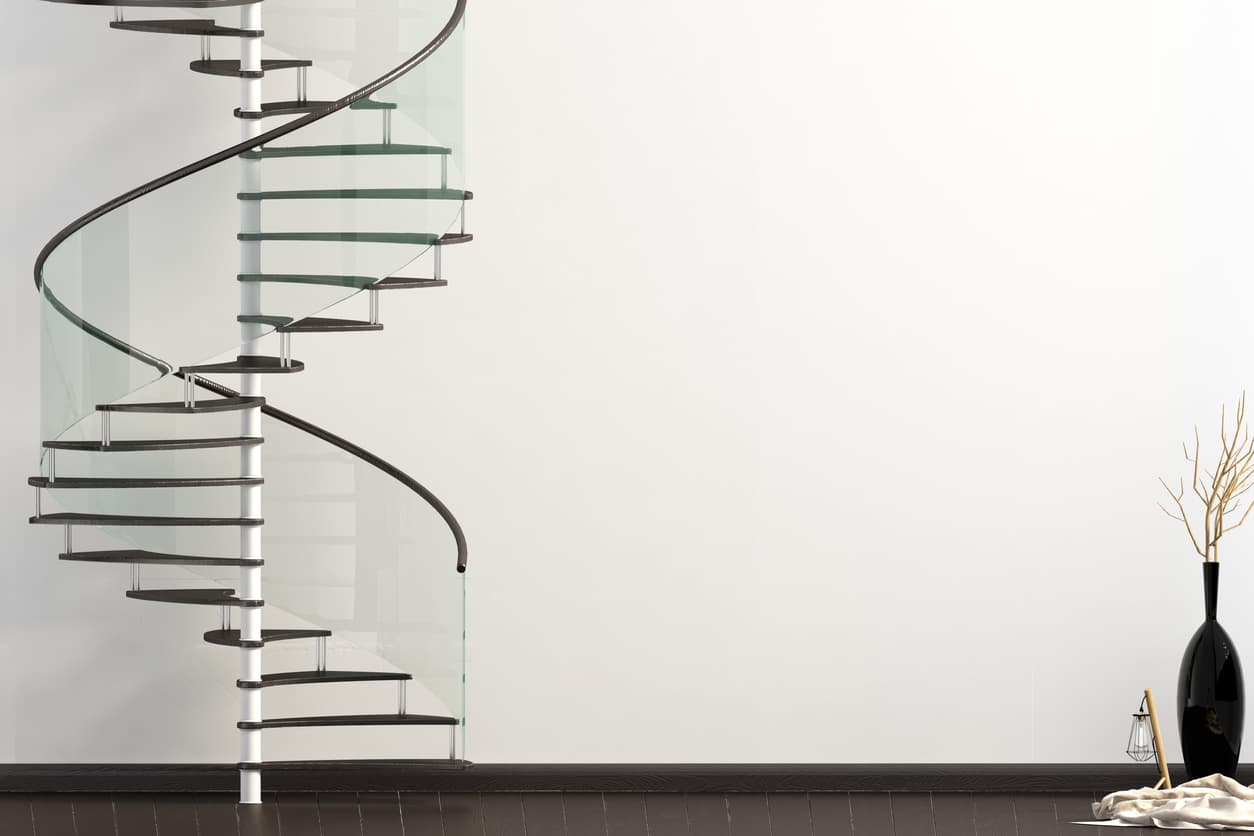
Spiral staircase
Spiral staircases can be an effective solution where it is not practical to incorporate a traditional pitched staircase, and can often serve and be chosen as a striking design feature. Whilst there are some space saving designs available, many of the more stylish, decorative designs require a reasonable amount of floor space. The practicalities of moving furniture up to and down from the top floor should also be considered, as spiral staircases can be quite restrictive.
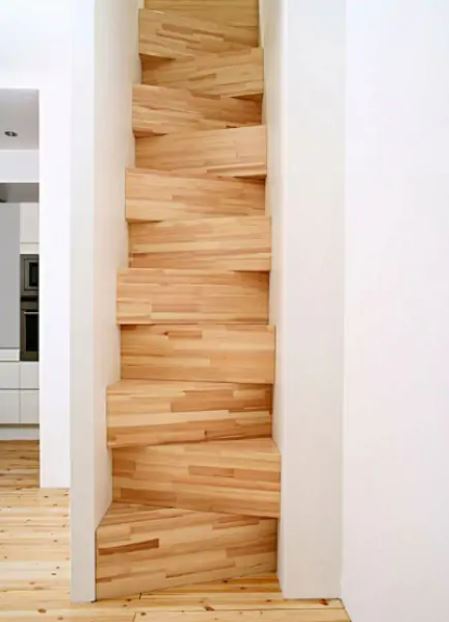
Space Saver staircase
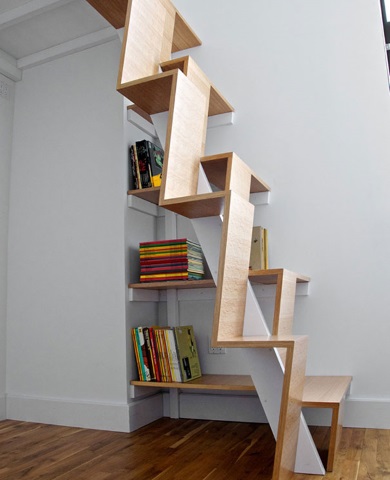
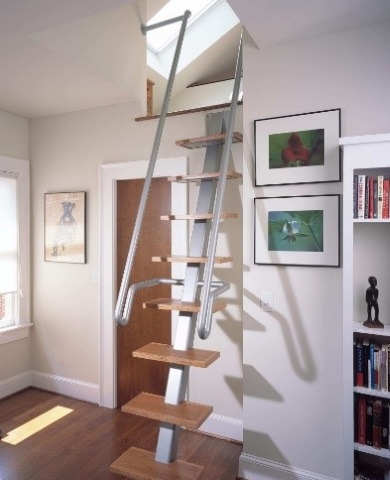
Space saver staircases, which are also known as ‘loft stairs’, ‘alternating stairs’ or ‘paddle stairs’ are a great way to deal with a steep pitch whilst still looking aesthetically pleasing. This is perhaps not the most practical type of staircase for young families or older people, so it is worth considering the resale potential of the property if you are thinking of installing this type of staircase into a ‘family’ type house. As they are installed where the pitch is steep, it is a requirement that they have a handrail on one side for safety.
Diagonal feature
Depending on the pitch of the staircase and the layout of the room, a configuration that cuts diagonally into the room below can sometimes be incredibly effective. This design can work particularly well in a bathroom, especially over a bathtub, wash basin or toilet where maximum headspace isn’t required.
Do I need planning permission to install a loft staircase?
This is managed on a case by case basis. Smaller, more straightforward conversions are less likely to warrant the need for planning permission. If it is a larger conversion or it requires bigger changes of a complex nature then it may be required. It is always recommended to get advice from your local authority before beginning any work.
Basement stairs conversions
Basement conversions are another great way of creating more space, especially when more living space is required. Similarly to loft conversions, the positioning of the staircase is an important consideration, although slightly less so as the majority of the staircase will be hidden below view. Some basements already have stairs in place, which may need a little TLC to bring them up to habitable rather than purely functional usage. If there isn’t a staircase, or if the existing stairs are beyond repair, you may need to install a new staircase, the location of which will be determined by the following factors:
- The layout of the house and basement
- The available headroom available
- Whether a secondary means of escape can be provided from the cellar area
Building regulations for loft and basement staircases
Before you fall in love with a particular type of staircase, it really is advisable to speak to a few different architects to get advice specific to your property. You may find that building regulations prevent you from having the staircase that you want.
For loft staircases the following may apply:
- Must have at least one handrail installed.
- Must have a pitch no greater than 42 degrees.
- All stair risers have to be equal height, minimum height of 150mm and a maximum of 220mm.
- Fire regulations state that loft stairs should provide at least 30 minutes of fire resistance, there must be a smoke alarm fitted in the converted room
- If the bottom of the stairs is not an open plan area, it needs to be protected with a fire door.
There may be other specific regulations depending on your specific building works - seek this information from your certified tradesman to ensure all building works are compliant. You can also View the complete Building Regulation guidelines for staircases for more information.
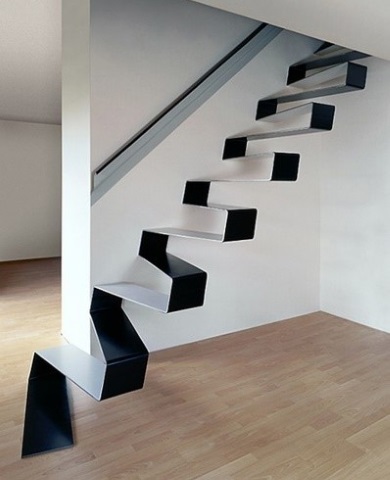
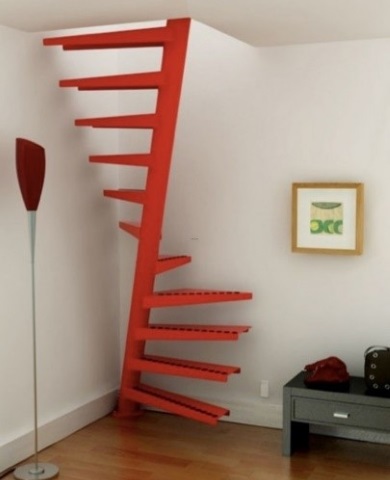
Innovative loft/basement staircase design gallery
 |
 |
 |
 |
Stair parts for your loft or basement stairs from Jackson Woodturners
We have a wide range of products to suit all styles and budgets. If you have bespoke requirements we can help. Get in touch with a member of our team today to discuss your project, and we can help to ensure you get the right stair parts at competitive prices
Loft & basement stairs FAQs
Do I need to have a handrail?
Yes, a staircase containing 3 steps or more should have a handrail to meet safety regulations. See more on handrail use in our dedicated handrail FAQs.
Can you use space saver stairs for the basement?
Space saver stairs can be used when serving a single room only so are used for both basement and loft conversions.
What are the drawbacks of spiral staircases?
While they are usually aesthetically pleasing they can bring more challenges than a regular staircase. The elderly, young and people with mobility issues may find them difficult to use. Additionally, moving large items, especially furniture can be difficult to navigate. The triangular steps of a spiral staircase can take some getting used to and can be a drawback for many.


