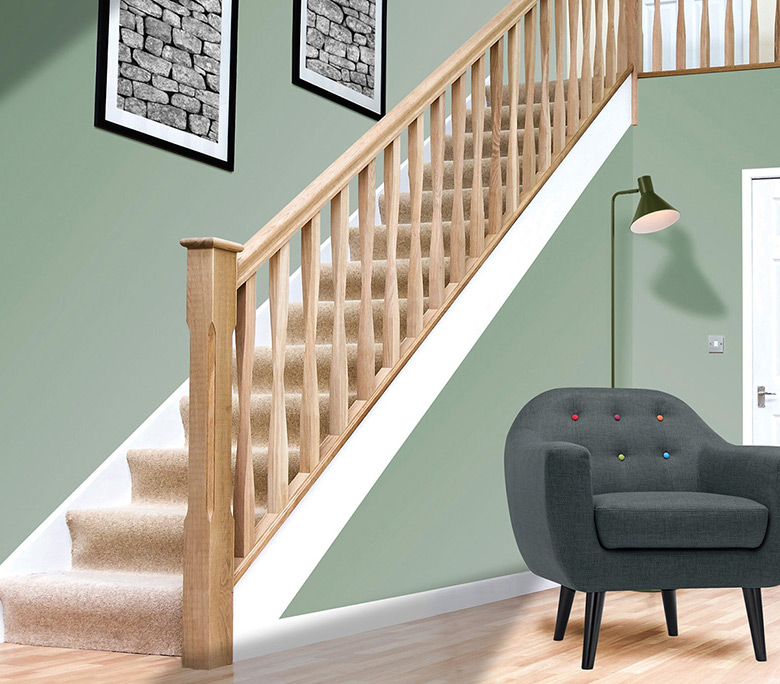
When looking for handrails, you will see a variety of different materials and a variety of woods. Oak handrails are a very popular and widely used option due to their excellent strength, durability and classic appearance. While oak handrails do tend to be more expensive than other options you may find, they are a great investment that could actually save you money on having to replace your handrails more frequently.
In this guide, we look at why you might want to choose oak handrails, discuss whether it is worth the cost, the different designs you can choose and how to care for oak handrails. We also look at some alternative woods you may want to consider, as well as answering some common concerns about choosing oak handrails so you can make the right decision for you!
Click on a link to jump to that section:
Read the key benefits of using oak and whether it may be an ideal option for you.
Find out why it may be worth paying more for oak than other options of wooden handrails.
Find out what options of oak handrails you can choose from.
Read the other options of wooden handrails and how they compare to oak.
Read some key tips on keeping oak handrails looking their best.
We answer frequently asked questions on choosing oak handrails and their benefits.
Why choose oak handrails?
As you look at the best option for your staircase design, you will find that oak has a wide range of benefits. Oak is an incredibly durable material, which has superior strength. This means that it can withstand the daily use that wood stair parts tend to undergo.
While it may be more expensive than other choices, oak has a unique classic appearance that can bring a touch of elegance to any home. With a wide choice of finishing options available, you can perfectly match a white oak handrail to the overall aesthetic of your home.
Is oak worth the cost?
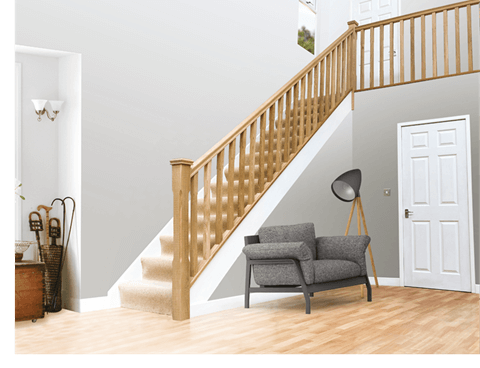
Oak is an excellent choice for your home, and as oak handrails are more expensive than other materials on the market, they should be seen as an investment. If, for example, you have bought a home and you are looking to improve the look and feel of a house you will be living in for many years to come, oak might be the ideal choice. By investing in a durable wood such as oak, you can also rest assured that your staircase won’t get damaged easily. This can be extremely useful if you have kids who are likely to spill drinks or will likely touch a staircase handrail with dirty hands.
If, however, you are planning on moving on from your home fairly soon, you may not want to invest in one of the pricier woods, such as oak. It is wise to look at your budget and see whether a timber such as pine might be a better option for you. These less expensive choices can still look great but will cost less and might not be as long-lasting.
You will also want to think about the appearance you want. Oak is known for its classic look, and its distinctive tiger-stripe grain makes oak handrails a great, eye-catching addition to the home. An option such as a metal handrail on a wood and metal staircase, on the other hand, will give a more minimalist, modern appearance.
What are the different designs of oak handrails?
If you choose an oak handrail, there are plenty of options available when it comes to designs, whatever price point and style you are looking for.
Combining the modern with the traditional - the Oak Glass Grooved Handrail 4.2mtr, for 8mm Glass from Jackson Woodturners is perfect for homes that want to add a little flourish to the classic look of an oak handrail and can be used alongside a glass panel. Combining oak and glass can bring a truly unique look to your home.
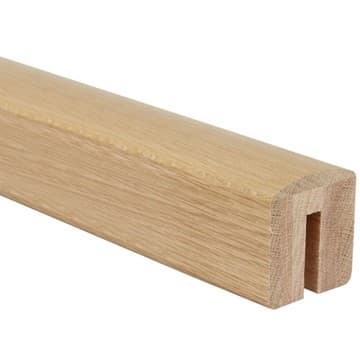
- This handrail has a groove, which allows 8mm toughened glass to be fitted.
- Timber infill is supplied with the handrail.
- Oak stair parts come unfinished and can be finished by painting, varnishing or waxing.
- Glass can be secured in place using clear silicone. We suggest using the Clear Fix Adhesive (code CLEARFIX13).
- 4200mm (L) x 60mm (W) x 66mm (H).
The Oak Ungrooved Cottage Loaf Handrail 4.2mtr is a little more traditional and unfinished, which means it is ideal for putting your own stamp on it.
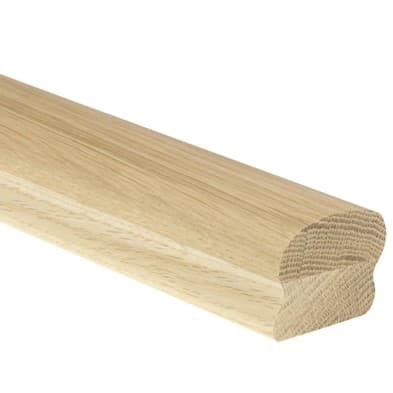
- This handrail is ungrooved, so it is ideal for use with glass brackets, clamps and spindles that are fastened directly onto the handrail. It can also be used as a handrail on a wall.
- Oak stair parts come unfinished and can be finished by painting, varnishing or waxing.
- Handrail Size: 4200mm x 66mm x 45mm.
If you are looking for something very modern, the Axxys Oak Handrail 3.6mtr comes pre-finished, which is perfect for a modern or minimalist home.
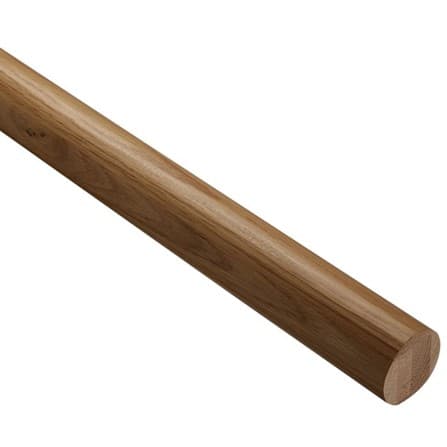
- The Axxys handrail can be used with both the Axxys and Fusion ranges. It is a 54mm diameter handrail with a flat on the underside. All of our brackets and end caps can be used with the Axxys handrails.
- This Oak handrail comes pre-finished.
- Handrail Size: 3600mm x 54mm x 54mm.
What are the other options of wooden handrails?
If you are looking for a different option for a wooden handrail, you may consider pine. Pine is a softwood rather than a hardwood, and it offers a lot of variety when it comes to how you can paint or stain it. While quite durable, pine does not have the classic appearance of oak and is unlikely to last as long. It does need to be treated before being painted.
You might also choose hemlock, which is similar to pine while having less visible knots. It is also slightly more hardwearing and stronger, and is ideal for painting or polishing, providing a high-quality finish.
Ash and white primed wood are popular alternatives if you are looking for a lighter coloured wood, and go well with neutral colours in the home. Walnut and dark hardwood, on the other hand, are perfect options if you are looking for a darker, traditional option.
Caring for oak
Correctly caring for oak is an essential part of ensuring that it can stand the test of time. When it comes to taking care of your oak handrail, you will want to make sure that you patch up any small imperfections in the wood as they occur by using oak wood filler. It is also vital to use Treatex Hardwax Wood Oil to enhance the natural beauty of your wood, as well as protecting it and keeping it looking fresh.
Don’t forget to wipe down your handrails regularly to keep them clean and looking their best!
Frequently asked questions
How do you clean wood handrails?
You can use a simple solution of water and vinegar to wipe down handrails. Keeping your staircase looking its best by using the correct finishing and treatment products is also vital.
What is the best paint for wooden stairs?
When it comes to wooden stairs, it is important to use a primer which you can then paint over with semi-gloss paint. This tends to be harder wearing than other paints.
What colour should your handrail be?
Your handrail should fit in with the overall aesthetic of your home. It is generally a good idea to go with a neutral colour such as white or appreciate wood’s natural appearance, but you can also add a pop of vibrancy to make your handrail a feature.
Can you paint over stained wood without sanding?
While it is possible to paint over stained wood without sanding, the stain may bleed through and cause streaking.
How do you paint an oak bannister white?
It is possible to paint an oak bannister white, but sanding and preparing the wood is an essential part of this process. You will need to take extra care to make sure this is done to a high standard, to ensure that no colour comes through in the finished result.
How do you refinish a wood handrail?
To refinish a wood handrail, you will need to strip the wood before preparing and priming it. Then you can stain and finish the wood to your own aesthetic tastes.
Should you paint or stain your handrail?
Paint is a great way to freshen a handrail or balustrade, but staining tends to last for longer and be more resilient over time.
Related Content
When looking for handrails, you will see a variety of different materials and a variety of woods. Oak handrails are a very popular and widely used option due to their excellent strength, durability and classic appearance. While oak handrails do tend to be more expensive than cheaper softwood handrails, investing in oak handrails might actually save you money over the long term, as you’ll need to replace them less frequently! So, what are the other benefits of choosing oak handrails?
Oak is known for its superior durability and can withstand heavy wear and tear, making it an ideal material for handrails. It has a light brown colour with a straight grain pattern that’s guaranteed to add character to any staircase. An oak handrail is a versatile choice that works in both modern and traditional homes.
In this guide, we look at why you might want to choose oak handrails, discuss whether it is worth the cost, the different designs you can choose and how to care for oak handrails. We also look at some alternative woods you may want to consider, as well as answering some common concerns about choosing oak handrails, so you can make the right decision for you! Keep reading to learn more.
Click on a link to jump to that section:
- Why choose oak handrails?
Read the key benefits of using oak and whether it may be an ideal option for you. - Is oak worth the cost?
Find out why it may be worth paying more for oak than other options of wooden handrails. - What are the different designs of oak handrails?
Find out what options of oak handrails you can choose from. - What are the other options for wooden handrails?
Read the other options of wooden handrails and how they compare to oak. - Caring for oak
Read some key tips on keeping oak handrails looking their best. - Frequently asked questions – choosing oak handrails
We answer frequently asked questions on choosing oak handrails and their benefits.
Why choose oak handrails?
As you look at the best option for your staircase design, you will find that oak has a wide range of benefits. Oak is an incredibly durable material, which has superior strength. This means that it can withstand the daily use that wood stair parts tend to undergo.
While it may be more expensive than other choices, oak has a unique, classic appearance that can bring a touch of elegance to any home. With a wide choice of finishing options available, you can perfectly match a white oak handrail to the overall aesthetic of your home.
Here’s a quick summary of the main benefits of oak handrails:
- Superior durability and strength compared to cheaper wooden handrails, such as pine.
- Ability to withstand heavy usage and resist scratches and dents, making it ideal for handrails in busy family homes.
- Stunning natural appearance with warm undertones and a distinctive “tiger-stripe” grain pattern that is sure to add depth and character to any home.
- Can be customised with your choice of finish to match your home’s interior design style.
- With proper maintenance and care, oak handrails can maintain their appearance for decades, making them a worthwhile long-term investment!
Is oak worth the cost?
Oak is an excellent choice for your home, and as oak handrails are more expensive than other materials on the market, they should be seen as an investment. If, for example, you have bought a home and you are looking to improve the look and feel of a house you will be living in for many years to come, oak might be the ideal choice. By investing in a durable wood such as oak, you can also rest assured that your staircase won’t get damaged easily. This can be extremely useful if you have kids who are likely to spill drinks or will likely touch a staircase handrail with dirty hands.
If, however, you are planning on moving on from your home fairly soon, you may not want to invest in one of the pricier woods, such as oak. It is wise to look at your budget and see whether a cheaper timber, such as pine, might be a better option for you. These less expensive choices can still look great and will cost less, but they might not be as long-lasting.
You will also want to think about the appearance you want. Oak is known for its classic look, and its distinctive tiger-stripe grain makes oak handrails a great, eye-catching addition to your home. However, if you want a more traditional look, you might consider a dark wood option such as walnut or dark hardwood. If you’re planning on painting your handrail, we would recommend our white primed range. Our white primed handrails have already been professionally primed with high-quality primer, so they’re ready to receive a top coat of paint in your choice of colour!
What are the different designs of oak handrails?
If you choose an oak handrail, there are plenty of options available when it comes to designs, whatever price point and style you are looking for.
Oak glass grooved handrail
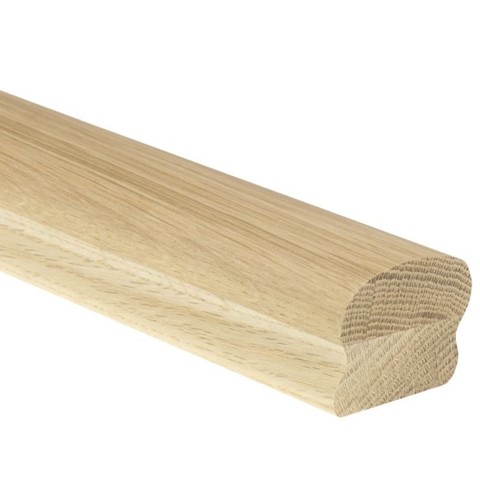
Combining the modern with the traditional - the Oak Glass Grooved Handrail for 8mm Glass from Jackson Woodturners is perfect for homes that want to add a little flourish to the classic look of an oak handrail and can be used alongside a glass panel. Combining oak and glass can bring a truly unique look to your home.
- This handrail has a groove, which allows 8mm toughened glass to be fitted.
- Timber infill is supplied with the handrail.
- Oak stair parts come unfinished and can be finished by painting, varnishing or waxing.
- Glass can be secured in place using clear silicone. We suggest using the Clear Fix Adhesive.
- Available in 1800mm, 2400mm, 3600m, 4200mm lengths.
- 60mm (W) x 66mm (H).
Fusion oak round handrail prefinished
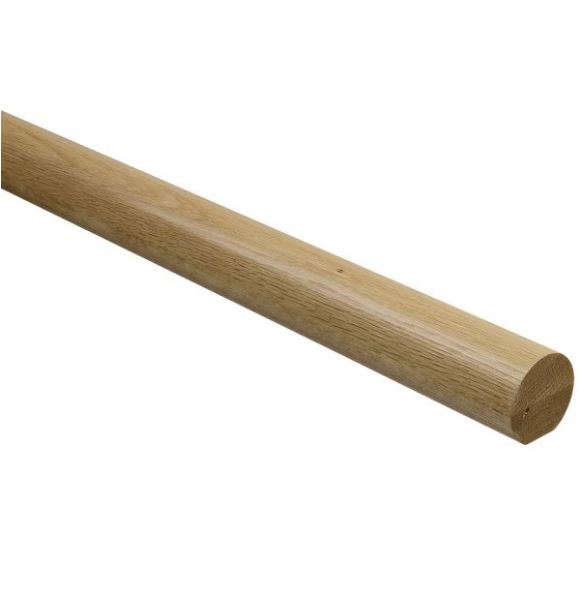
If you are looking for something more modern, the Fusion Oak Round Handrail comes pre-finished, which is perfect for a modern or minimalist home
- This White Oak handrail is to be used in conjunction with the Fusion range of stair part fittings.
- This White Oak handrail comes pre-finished.
- This handrail is 54mm in diameter with a 25mm flat on the underside.
- Handrail Size: 54mm.
- Available in 2400mm, 3600mm & 4200mm lengths.
What are the other options for wooden handrails?
If you are looking for a different option for a wooden handrail, you may consider pine. Pine is a softwood rather than a hardwood, and it offers a lot of variety when it comes to how you can paint or stain it. While quite durable, pine does not have the classic appearance of oak and is unlikely to last as long. It also needs to be treated before being painted.
You might also choose hemlock, which is similar to pine but has fewer visible knots. It is also slightly harder wearing and ideal for painting or polishing, providing a high-quality finish.
Ash and white primed wood are popular alternatives if you are looking for a lighter coloured wood, and go well with neutral colours in the home. Walnut and dark hardwood, on the other hand, are perfect options if you are looking for a darker, more traditional option.
Caring for oak
Correctly caring for oak is an essential part of ensuring that it can stand the test of time. When it comes to taking care of your oak handrail, you will want to make sure that you patch up any small imperfections in the wood as they occur by using oak wood filler. We recommend this 2-part Oak Wood Filler. It is also recommended to use Treatex Hardwax Wood Oil to enhance the natural beauty of your wood. It also helps to protect the oak and ensure a long-lasting and attractive finish.
Don’t forget to wipe down your handrails regularly to keep them clean and looking their best!
Here are some of our other top tips for caring for your oak handrail:
- Dust your oak handrail regularly with a soft cloth.
- Use a damp cloth to clean your handrail and a mild, non-abrasive cleaner or specialist wood cleaner.
- Avoid harsh chemicals and scrubbing brushes, which might damage the oak.
Oak handrails from Jackson Woodturners
At Jackson Woodturners, we offer the biggest selection of traditional and contemporary stair parts in the UK, including a wider selection of oak handrails. We offer a wide range of oak handrail styles, including grooved, ungrooved, pigs ear and mopstick, making it easy to find the perfect fit for your home.
View our full range of handrails on our website or get in touch with our friendly team of staircase experts if you have any questions.
Oak handrail FAQs
How do you clean oak handrails?
You can use a simple solution of water and vinegar to wipe down handrails. Make sure you don’t use pure vinegar on your oak handrail, as this can damage the wood. Keeping your staircase looking its best by using the correct finishing and treatment products is also vital.
What is the best paint for oak handrails?
When it comes to wooden handrails, it is important to use a primer which you can then paint over with a high-quality semi-gloss paint. This tends to be harder wearing than other paints, making it suitable for high-traffic areas. If you’re planning on painting your handrail, you might want to consider opting for a white primed handrail instead of oak, as these handrails have already been professionally primed with a high-quality white primer.
Can you paint over stained oak without sanding?
While it is possible to paint over stained wood without sanding, the stain may bleed through and cause streaking. Sanding also helps to roughen up the surface of the oak, making it easier for the paint to adhere to it. If you don’t want to sand your stained oak handrail, you can use a stain-blocking primer which is specially formulated to block stains, before painting with a high-quality top coat.
How do you paint an oak bannister white?
It is possible to paint an oak bannister white, but sanding and preparing the wood is an essential part of this process. You will need to take extra care to make sure this is done to a high standard, to ensure that no colour comes through in the finished result. In this case, a white primed handrail might be the best option as these handrails have already been professionally primed with a high-quality white primer.
How do you refinish an oak handrail?
To refinish a wood handrail, you will need to strip the wood before preparing and priming it. Then you can stain and finish the wood to your own aesthetic tastes. Here’s a quick summary of the steps you’ll need to follow:
- Clean the handrail to remove any dirt and grime.
- Sand the surface to remove any existing finish and prepare the oak for the new finish.
- Make sure to remove any sanding dust before the next step.
- Apply your primer, followed by semi-gloss paint, or stain or oil your oak handrail if you’re looking for a more natural finish.
- If you’ve stained or oiled your oak handrail, you can apply a coat of polyurethane or wax for additional protection.
Should you paint or stain your oak handrail?
Paint is a great way to freshen a handrail or balustrade, but staining tends to last for longer and be more resilient over time. Ultimately, it all depends on the look you want to create.


