What are the different types of staircase handrails?
Stair handrails play a key role in helping you achieve your preferred design and aesthetic for a staircase. With a broad range of designs available, you have the freedom to create your dream staircase. In this article, Jackson Woodturners explore the different types of handrails for stairs.So, what are the different types of staircase handrails available?
When it comes to staircase handrails, the options are endless. Designs range from modern, sleek stair handrails to more traditional options. On top of this, there is also a wide variety of materials available for your stair rail, from warmer colours such as oak to paler options like pine.
Keep reading to find out more about the different stair handrail designs available to you.
Stair handrails for traditional staircases
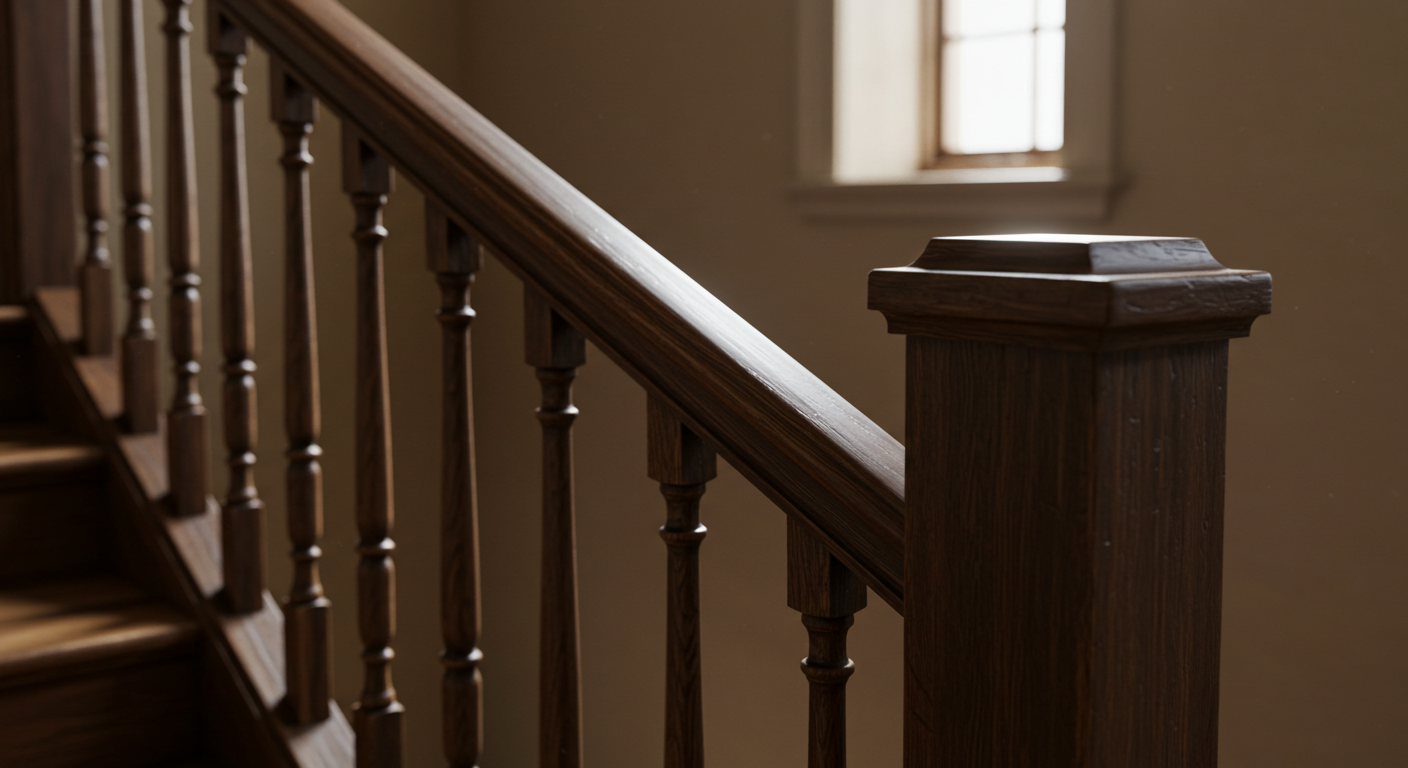
For traditional homes, timber is often the material of choice. Due to the sheer volume available for wooden stair rails, you should easily be able to find a style and colour that reflects the age and character of your property. Here are some examples of traditional staircase handrail ideas:
Wall mounted handrails
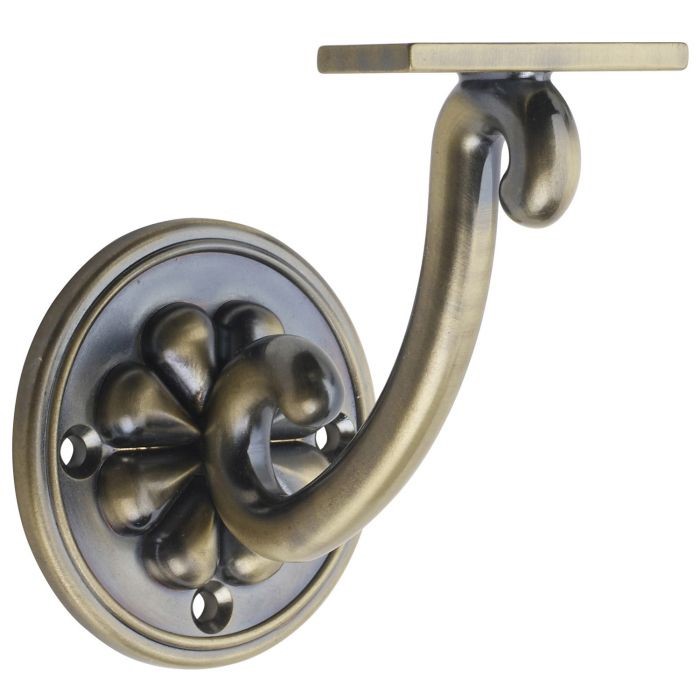
Wall mounted staircase handrails tend to be quite simple in design, however, you can add some traditional details with ornate stair handrail brackets. For example, you could pair your stair handrail with our petal wall bracket in pewter or brass. This range also features pewter or antique brass handrail end caps to complete the look.
Dark stair handrails add a striking touch to any balustrade and walnut or dark hardwood are great choices for traditional properties. Dark wood wall mounted handrails complement walls painted in rich dark blue or green. For an ultra traditional look, team a dark wood stair handrail with traditional patterned wallpaper, featuring paisley prints or William Morris-style prints inspired by nature.
Stair rails for balustrades
Pairing a traditional staircase handrail with a turned, square or box newel post is a great way to highlight the heritage of your home. If you have timber flooring in your hallway, you can accentuate the natural beauty of wood by matching the tone of the balustrade with the flooring. This works particularly well with oak stair parts and solid oak flooring.
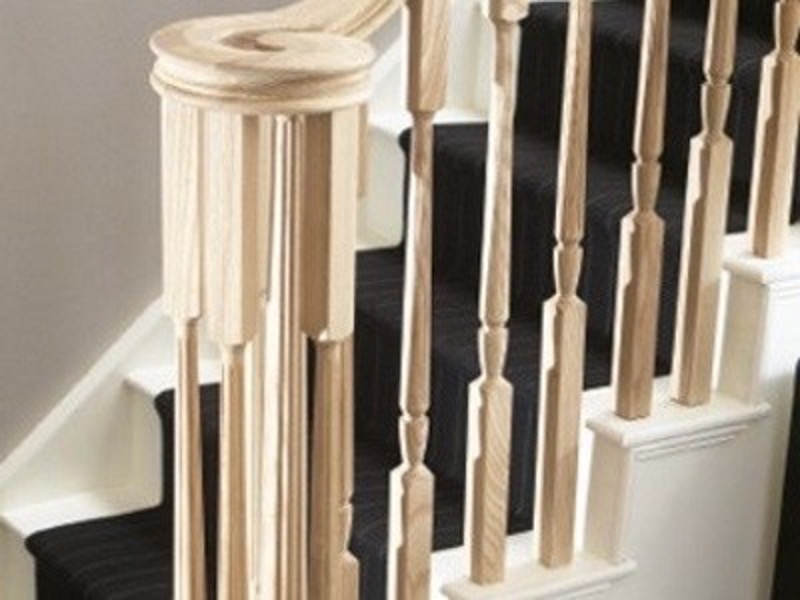
One way to create a truly unique staircase is to incorporate a volute wooden stair handrail. These curved ornamental staircase handrails give balustrades a feeling of formality, with the handrail wrapping around the newel post at the bottom of the stairs.
If, however, you prefer a simpler look, an oak staircase handrail teamed with white primed spindles creates a classic ‘shaker style’ balustrade. Oak is always a great choice for traditional stair handrails because the grain of the wood adds warmth.
Take a look at our range of volute staircase handrails for more inspiration.
Stair handrails for contemporary staircases
More often than not, modern staircases benefit from a simple handrail design. Often, lighter colours work well to create a contemporary feel. Clean lines with subtle curves are a popular design choice for a modern stair handrail design. You can achieve this by pairing simple stair handrails with square newel posts and square spindles.
Staircase handrail for glass panels
Incorporating glass into a balustrade is very common in contemporary homes because it can open up the staircase, introducing light and space to the area. Glass stair panels are ideal if you want to showcase your staircase steps. For example, if you have natural wood flooring. At Jackson Woodturners, we offer a range of stair handrails that have an 8mm groove cut into them for the glass. The glass is then secured into the handrail with silicone.
So, you may be wondering how to secure a glass panel with a glass grooved wooden stair handrail. Here’s everything you need to know:
- 1. In this case you’ll need to have a base rail with a groove in it. Once you have this, you can then slide the glass panel into position, making sure that the panel sits flush with the newel post or wooden central posts (if you have chosen to include these between the panels). The thickness of the glass will dictate the size of the groove in your handrails. *Glass panels are usually between 8mm to 10mm thick.
- 2. You’ll need to make sure that the groove measurement matches the glass thickness that you are using. At Jackson Woodturners, our grooved staircase handrails come with infill, however you still need to buy silicone separately to secure both the glass and infill in place.
- 3. Our Clear Fix Hybrid polymer grab adhesive can bond most things in interior and exterior applications.
- 4. If you choose an ungrooved handrail, you’ll need to use glass clamps to secure the glass panels in place. Glass clamps are typically made of stainless steel or steel with a coating, such as chrome or nickel.
- 5. Clamps are attached to central posts between glass panels with screws and grip panels securely, usually using a rubber lining to provide a cushion between the metal and the glass.
- 6. Clamps are usually fitted near to the top and bottom of the pane, with four for every square metre of glass. It’s essential that clamps ‘mirror’ each other and are fitted evenly to avoid creating pressure points which may cause faults in the glass, leading to breakages.
- 7. If fitted correctly, glass clamps should apply constant and even pressure to glass panels. This will avoid damaging and weakening the glass, ensuring it remains a safe and unobstructive option.
Shop our full range of glass panels and glass clamps to modernise your staircase.
To find out more about our expert tips, take a look at our blog, ‘Choosing Wooden Handrails For Glass Balustrades’.
Metal staircase handrails
Metal stair handrail end caps are an easy way to bring a modern look to a mopstick handrail and add a unique design element. They are easy to fit as they simply slot onto the end of the handrail. For more inspiration, take a look at our extensive range of end cap designs.
If you are looking for ultra-modern stairway handrail styles, metal handrails are as contemporary as it gets. The reflective surface of our sleek chrome handrails work perfectly with the cleanliness of glass panels. At Jackson Woodturners, we stock chrome plated handrails in 1800m, 2400m and 3600m lengths.
Most popular types of stair handrail designs
Our most popular stair handrails are the mopstick and pigs ear designs, both of which work well on a modern or traditional staircase. Here’s everything you need to know about these staircase handrails:

Mopstick stair handrail
A mopstick handrail is a classic circular handrail with a flat underside that, although simple in design, can incorporate stylish detailing with brackets, end caps, wall patrices or end scrolls.
Our oak mopstick handrails suit contemporary and traditional properties well and can be easily mounted to the wall with brackets. Mopstick handrails usually fix to the wall but can be used with glass panels, such as with the Fusion range of stair parts by Richard Burbidge.
Mopstick handrails are not usually used with wooden spindles as the flat underside is too narrow to accommodate most spindle styles. However, they can be used with metal spindles, such as with the Richard Burbidge Fusion Range.
If you’re looking for a mopstick handrail with a traditional finishing touch then choose an oak handrail finished with curved end scroll for a beautiful traditional handrail. View a range of our mopstick handrails and accessories for further inspiration.
Pigs ear stair handrail
Pigs ear staircase handrails are always wall-mounted. The unique curve of the wood provides the perfect shape for gripping the rail when going up or down stairs. As this type of handrail connects directly to the wall, it does not require brackets or patrices, which makes it a cost-effective choice.
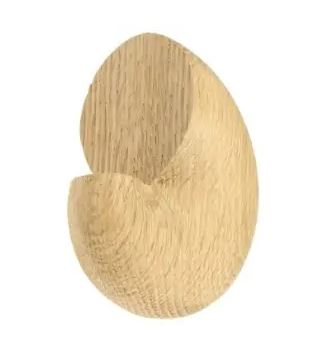
When you fit a pigs ear handrail, you’ll inevitably be left with screw holes that you’ll need to fill in. Cross grain pellets are circular pieces of wood that are used to ‘plug’ these holes to create a seamless finish.
Read our guide to fitting pigs ear handrails for more support or browse our huge collection of pigs ear handrails and cross grain pellets.
What are the different staircase handrail colour options?
The most popular colours for stair handrails are grey and white. Their range of subtle shades means that they work well with any colour scheme. Let’s find out more about these colours:
White
If you have white walls on your stairway, then installing a white wall-mounted handrail could make your stairway look bigger. For a quick style update, you can simply replace your existing handrail with a white primed handrail.
White primed handrails are already painted white, which means all you have to do is install them. Bear in mind however, that the colour of white primed handrails can vary between products, so you may need to re-paint the stair handrail to achieve the colour you want.
Pairing a white staircase handrail with black spindles, a white base rail and a white newel post is an elegant way to update your stairway. You could even add black metal spindles, rather than black painted spindles, as a quick way to modernise the look without having to paint all the spindles individually.
Modernise your staircase with some of our stylish black metal spindles at Jackson Woodturners.
Grey
Grey has been the go-to colour for home interiors for many seasons now. As a colour, grey is chic and can help instil a feeling of calm in your home, especially when used with other neutral colours. A grey stairway is a great way to create a sense of drama when people first enter your home.
You can either paint your existing staircase handrail or you can remove it first (this may be easier). Alternatively, if you want to update your handrail with a new one, white primed handrails have a smooth, sealed surface that’s ready to paint. Choose a heavy-duty, durable grey paint with a satin or high-gloss sheen, depending on your preference. If you’re repainting your white primed spindles, we recommend using a solvent-based top coat.
As grey is such a neutral colour, it works well with both white and bolder colours such as yellow, pale pink and pistachio green. This gives you the option of keeping things muted or adding a splash of colour.
Painted
There are no limits to the colours you can paint your handrail, whether you want to make a bold statement or are looking for a classic colour for a traditional hallway.
As white primed stair handrails come pre-primed, they have the ideal surface for painting. This means that they only need a solvent-based topcoat to achieve the best results. Alternatively, if you don’t want to cover up the beauty of natural wood, you can enhance it by giving your handrail a coat of varnish instead or try one of the products in our Treatex Hardwax Oil range.
Take a look at our full range of white primed handrails to kickstart your design process.
Stair handrail height regulations
Regardless of the staircase handrail you choose, you’ll need to make sure it’s fitted at the correct height to comply with building regulations. A stair handrail should be fitted between 900mm and 1000mm from the floor of the pitch line of the stairs. (The pitch line is the diagonal imaginary line that runs across the top of the stair treads).
Regulations also state that a staircase must have a handrail wherever there is a drop of more than 600mm. (This is equal to two steps on most staircases, so you would still comply with regulations if you installed a handrail that didn’t cover the bottom two steps of a staircase).
Find out more about height regulations for handrails with our guide, 'What Height Should a Staircase Handrail Be?'
How to choose a staircase handrail size
To determine the correct handrail length, you can hook a tape measure onto the bottom stair nose and measure up to the top of the staircase. A staircase handrail should run the entire length of the stairs to make sure it is safe and code compliant.
Our stair handrails are sold in set lengths of:
- • 1800mm
- • 2400mm
- • 3600mm
- • 4200mm
Choose the best length that fits your staircase measurements.
The spindle sits within the groove of the handrail. For example, a 32mm spindle would sit in a 32mm grooved handrail. You could use this dark hardwood HR handrail alongside this dark hardwood Teesdale spindle. When choosing glass panels and glass grooved handrails, ensure that the groove is large enough to fit the thickness and length of the glass panel.
To find out more about our staircase handrails, visit our helpful article, 'Your Guide To Handrails'.
Staircase handrails at Jackson Woodturners
Now that you’re up to date with the different types of stair handrails, take a look at Jackson Woodturner's extensive range of handrails for stairs. With our team of stair parts experts on hand, we can advise and help you plan and design the staircase of your dreams.
With trade prices available to all, we can help you build your staircase project efficiently and affordably, as our price promise means that we will beat any like-for-like quote. Get in touch with us today for more information about your up-and-coming stair project.


