
When shopping for a handrail, you have a range of factors to consider – including material, style, additional accessories, and more. However, one important aspect of choosing a handrail is getting the size right, to ensure you have a safe and supportive handrail that fits your staircase perfectly. If you don’t know where to start with choosing a handrail size – don’t worry. Here is an overview of what you need to know.
When choosing a new handrail, you’ll need to consider its length, diameter and the height it will be mounted. The handrail length should match your staircase to ensure it’s safe and code-compliant. In most of the UK, handrails should be between 32 and 54mm in diameter and mounted at a minimum height of 900mm.
In the rest of this blog, we explain how to choose the correct handrail size for your staircase – including a guide to the correct handrail length, diameter and mounting height. We also discuss what is meant by a handrail groove and how to choose the correct groove size, as well as choosing handrail accessory sizes and options to dress up a wall mounted handrail.
How to choose the correct size of handrail?
When purchasing a new handrail, you’ll need to consider the following factors:
- The length
- The diameter
- The mounted height
- The handrail groove size
Below we cover these factors in more detail to make sure your new handrail is safe, compliant with current regulations and will fit your staircase perfectly.
What length should a handrail be, and how can you make sure a handrail is the right length?
To determine the correct handrail length, you can hook a tape measure onto the bottom stair nose and measure up to the top of the staircase. A staircase handrail should run the entire length of the stairs to make sure it is safe and code-compliant.
For more information, read our full guide to measuring a staircase.
What diameter should a handrail be?
According to Part K Building Regulations, a circular handrail in a domestic property should be between 32mm and 54mm in diameter. A non-circular or oval handrail should be 50mm wide and 39mm deep with a radius of at least 15 mm.
How high should a handrail be mounted?
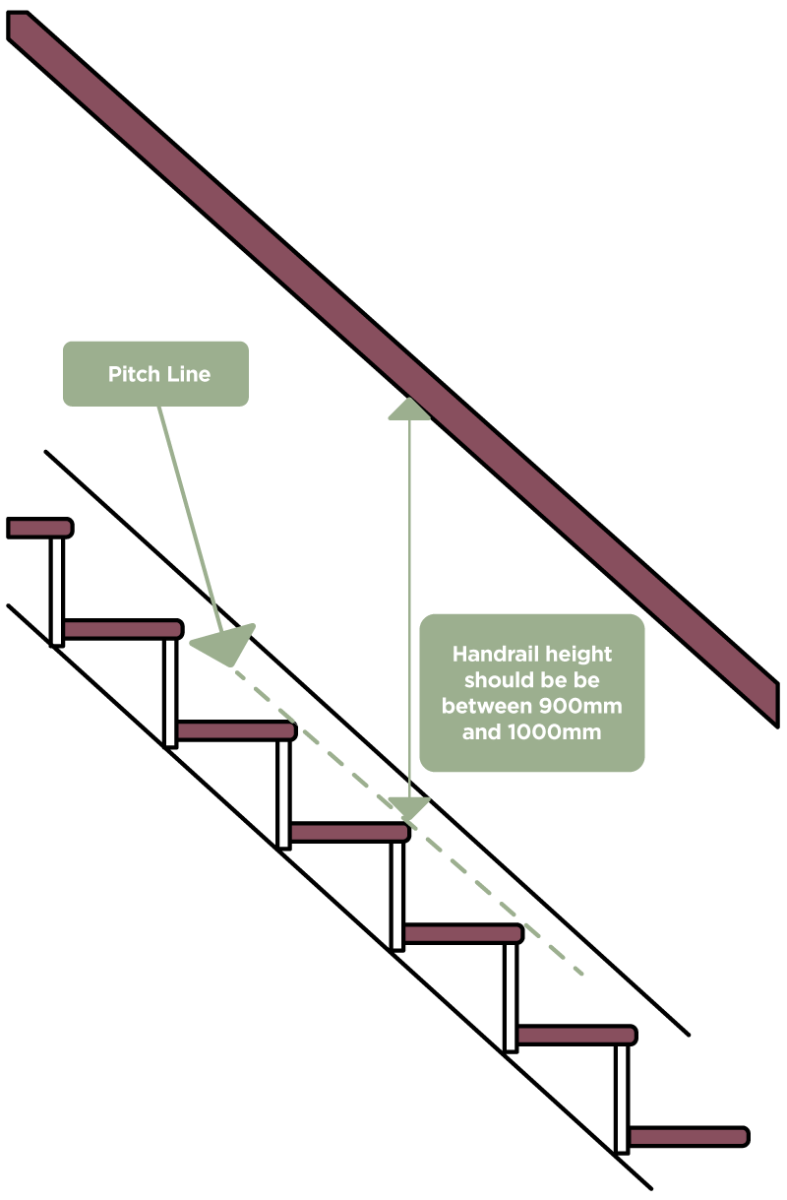
According to Part K Building Regulations - in a domestic property, the top of the handrail must be no lower than 900mm from the nosing of the stair tread to the top of the handrail. This 900mm height rule also applies to handrails on landings.
Your handrail should be fitted at a height between 900mm and 1000mm from the pitch line of the stairs, or the floor for landings. The pitch line is a virtual line that sits on top of the nosing at the edge of the stair treads. Find out more about measuring the correct handrail height.
What is the minimum height for a wall mounted handrail?
Wall mounted handrails share the same height regulations as other types of handrails, which is a minimum height of 900mm.
On a landing, what height should a handrail be?
Handrail height on a landing should be the same as it is on a staircase. It should be between 900mm and 1000mm above floor level. This is according to Part K Building Regulations Protection from Falling, Collision and Impact on the Government’s website.
You can read more about handrail height regulations in our guide ‘What height should a staircase handrail be?’.
How do you choose a handrail groove size?
The spindle sits within the groove of the handrail - a 32mm spindle would sit in a 32mm grooved handrail. For example, you can use this dark hardwood HR handrail alongside this dark hardwood Teesdale spindle. It’s important that you choose the right handrail groove size to match your existing spindles.
When choosing glass panels and glass grooved handrails – ensure the groove is large enough to fit the thickness and length of the glass panel.
Do I need handrails on both sides of my stairs?
To comply with regulations, you’ll need handrails on both sides of your stairs if they are wider than 1000mm. If they are less than 1000mm wide, you only need to provide one handrail.
Handrails are important components of a staircase since they offer stability and protection to the person who is climbing up the stairs – particularly if you have children in your home. You might wish to provide two handrails for added stability even if the regulations don’t require it.
Wall mounted handrail accessories - sizes and fitting requirements
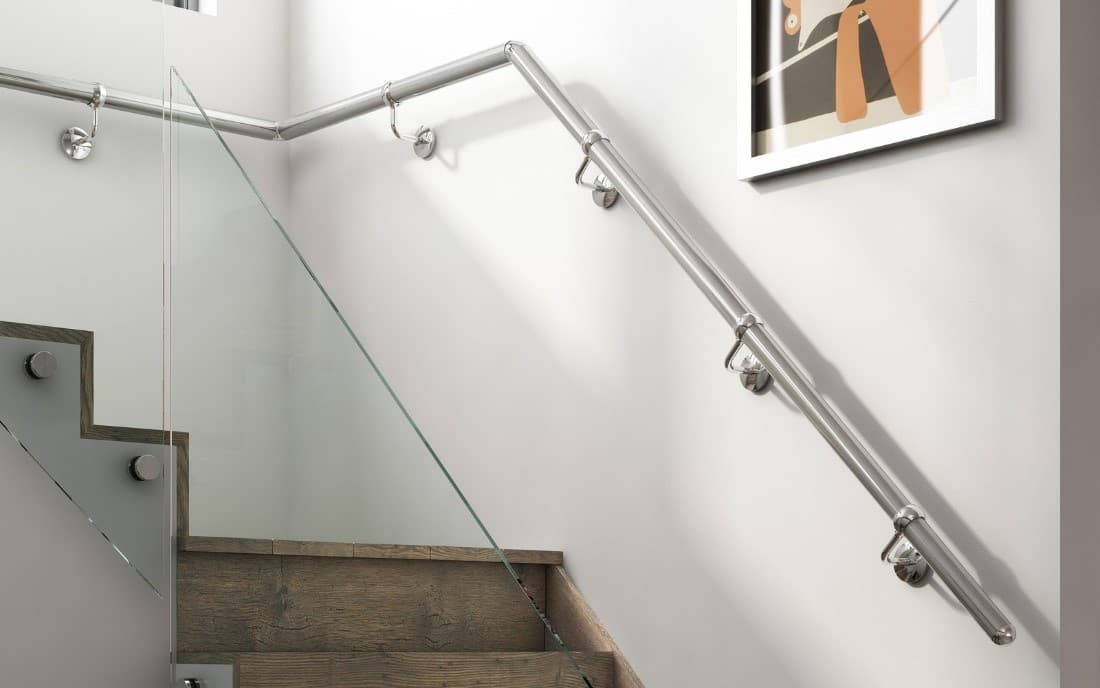
Wall mounted handrails are available in both metal and different types of wood. Popular types of wall mounted handrails include pigs ear designs and mopstick handrails. Pigs ear handrails can be attached directly to the wall without the need for brackets, whereas mopstick handrails require handrail brackets.
How to choose the right end cap size?
End caps are designed to be fitted to wall mounted handrails, and are a great way to dress up your handrail. You need to match your end cap diameter to your handrail diameter. When choosing an end cap, you also need to ensure it will fit the shape of your handrail – for example, if you have a mopstick handrail, you need to match it to a mopstick end cap.
You can shop our full range of end caps here. Or if you’d like to learn more about end caps and how to choose the right style for your handrail, read our end cap guide.
Where should you fit handrail brackets for wall mounted handrails?
When you’re installing a handrail, it’s a good idea to fit the brackets no more than one metre apart.
Fitting enough brackets will ensure your handrail is safe and secure.
At Jackson Woodturners, we offer handrail brackets in the following materials:
- Brass
- Nickel
- Chrome
- Black metal
Are you unsure which handrail bracket to choose? View our full range here.
How many handrail brackets do you need?
For a standard 3.6m handrail, you’ll need four brackets.
For more information about wall-mounted handrail brackets, read our comprehensive guide.
What are wall mounted handrail kits?
A handrail kit comes with all the fittings needed to install a new handrail in your home, including the handrail, and brackets/connectors and screws.
The handrails in handrail kits are designed only to work with the brackets provided, such as the handrail kits in the Fusion stair part range. Unlike most handrail brackets, which fasten to the underside of a complete handrail, the brackets in these kits connect sections of the handrail together. The end result is a highly contemporary, wall mounted handrail.
Shop our full range of wall mounted handrail kits here.
High-quality handrails by Jackson Woodturners
At Jackson Woodturners, we offer the largest selection of modern and traditional stair parts in the UK. Our range of high-quality handrails makes it easy to find the perfect-sized rail to complete your new staircase. We offer ungrooved handrails, mopstick handrails and pigs ear handrails, as well as a selection of handrail brackets, end caps, fittings and wall mounted handrail kits.
If you need any help measuring your staircase to get the right handrail size or are unsure which style of handrail would look best in your home, our staircase experts will be happy to help with some recommendations.
View our full range of handrails on our website. Alternatively, don’t hesitate to get in touch with our friendly team if you have any questions about handrail sizes. You can call our staircase experts on 0114 272 1228 or email [email protected]
Frequently asked questions about handrail sizes
What lengths are handrails sold in?
Handrails are often sold in set lengths of 1800mm, 2400mm, 3600mm and 4200mm. Choose the best length that fits your staircase measurements.
Should the handrail and base rail be the same length?
Unless the stairs are diminishing or cut string, the handrail and base rail will usually be the same length.
What is the maximum weight of a handrail?
Handrails in domestic properties must be able to withstand 0.36kN/m (kiloNewton metres).
Does a handrail need to be continuous?
Your handrail should run the full length of the staircase to ensure it is as secure and supportive as possible.
What are the handrail regulations in the UK?
Part K Building Regulations Protection from Falling, Collision and Impact covers the handrail sizes and mounted heights in the UK. Here’s an overview of these regulations:
- Handrails should be mounted between 900mm and 1000mm above the pitch line of the stairs.
- If the stairs are over 1000mm wide, handrails are required on both sides of the stairs. If the stairs are under 1000mm wide, only one handrail is required.
- A handrail should be provided if there are three or more risers in a flight of stairs.
- You can read more about handrails with our guide to handrails here.


