
Your stair handrail handbook: frequently asked questions answered
Whether you’re a homeowner embarking on a renovation project or a designer seeking clarity on stair safety regulations, navigating the world of stair handrails can be a daunting task. In this article, we’ve compiled a wealth of knowledge to demystify the often overlooked yet crucial element of stair design: the handrail. From understanding building codes to installation techniques, we’re here to address your most pressing inquiries. So, what are the main factors to consider when selecting handrails for your stairs?
When selecting handrails for your stairs, several key factors should be considered to ensure safety, functionality and aesthetic appeal, including:
- Compliance with building codes
- Material durability
- Ergonomic design
- Aesthetic harmony
- Installation ease
- Maintenance requirements
- Budget considerations
Keep reading to find the answers to the most commonly asked questions surrounding stair handrails.
Handrails for stairs frequently asked questions
Welcome to our comprehensive guide on handrails for stairs, where we address the most frequently asked questions to help you navigate this essential aspect of staircase design.
To make it easier for you, we’ve split the FAQs into stair parts, safety, legal requirements, height regulations and measurements. Let’s dive right in.
Stair Parts
What is a bannister on a staircase?
A bannister is another name for a balustrade, which is the collective term for the handrail, newel post, spindles and base rail that enclose the open side of a staircase and create a supporting rail to hold on to.
What is a newel post on a staircase?
A newel post is the upright post sitting at the top and/or bottom of the balustrade to support a staircase bannister and secure the balustrade. They are essential for giving a balustrade structure and strength. Newel posts also offer an opportunity to add decorative touch to a stairway. You can read more about the different types of newel posts in our guide, ‘Your complete guide to stair newel posts’.
For more inspiration, take a look at our pine complete newel posts.
What is the difference between a balustrade and a handrail?
A balustrade is the collective name for the handrail, spindles, newel post and base rail. Alternatively, a handrail is simply the rail that runs along the top of the spindles. Handrails can also be attached to the wall as a stand-alone fitting, these are known as wall-mounted handrails.
What is the difference between a handrail and a guardrail?
The International Residential Stair Code defines a guardrail as “a building component or a system of building components located near the open sides of elevated walking surfaces that minimises the possibility of a fall from the lower level”.
A handrail is defined as “a horizontal or sloping rail intended for grasping by the hand for guidance or support”. The term “guardrails” usually refers to external stairs, such as those on decking. In this case, a guard can be anything that provides the required level of protection, such as a wall, planter box or railing. The protection doesn’t have to be a handrail.
What is a fillet on a handrail?
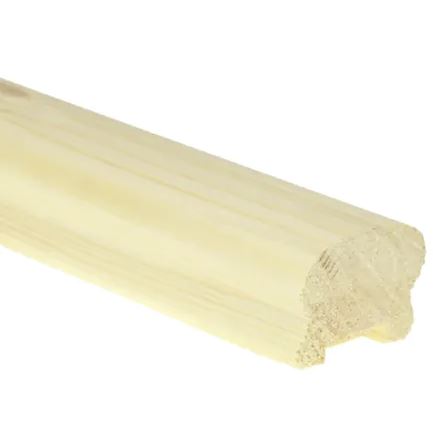
A fillet (or in-fill) is a small piece of wood that’s inserted into the underside of a grooved handrail between the spindles. The purpose of the fillet is to conceal the top of the spindles, whilst giving the appearance that there is no groove on the handrail.
What is a grooved handrail?
A grooved handrail has a hollowed out groove on the underside which allows for a spindle of the same width as the groove to be inserted. Once the spindles are in place, the gap between the spindles can then be filled using an infill strip, which is cut to size to fit the spaces, giving the appearance that there is no groove in the handrail.
Take a look at our grooved pine cottage loaf handrail here.
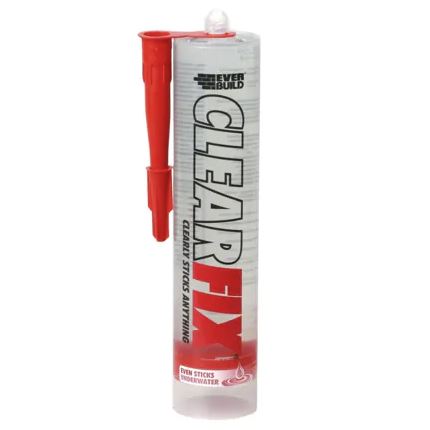
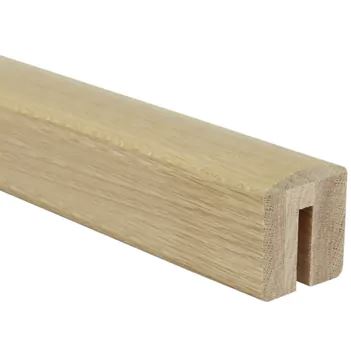
Some handrails have a slot rather than a groove. A handrail with a slot allows for glass to be fitted into the slot rather than a spindle. Slotted handrails come with infill, whilst silicone can be bought separately to secure either the glass or spindles in place. Our Clear Fix hybrid polymer grab adhesive can bond most things in interior and exterior applications.
Alternatively, if you’re looking to blend natural warmth and modern sophistication to your staircase design, take a look at our oak grooved handrail for glass.
What is a stair tread?
A stair tread is the horizontal part of the step on which you place your foot when you climb the stairs.
What is a graspable handrail?
Graspability refers to the ability to securely hold onto a handrail. Handrails that are graspable ensure individuals using the stairs can securely hold onto them, helping to prevent accidents and falls.
You can find out about the different types of handrails in our guide, ‘Handrails- types, materials, accessories and height guide’.
What is a wall mounted handrail?
A wall mounted handrail is a handrail that fits directly to a wall, either screwed on the wall directly or with a wall bracket. These handrails can come in a variety of styles and timber. Decorative items such as handrail brackets and end caps can finish off a wall mounted handrail nicely.
Safety
What is the building code for the standard height of a handrail?
In a domestic property, the top of the handrail must be no lower than 900mm from the nosing of the stair tread to the top of the handrail. The 900mm height also applies to landings.
Read our guide, ‘What height should a staircase handrail be?’ to find out more about handrail height regulations.
Is a handrail required beside every step on a staircase?
Building regulations stipulate that it is not necessary for there to be a handrail for the bottom two steps of a stairway.
Does a handrail need to be continuous?
Yes, according to most building codes, handrails typically need to be continuous along the entire length of a staircase; however, as mentioned already, there is no need for the handrail to span across the final two steps of the staircase.
Legal requirements
Is it a legal requirement to have a handrail on stairs?
According to the Health & Safety Executive, staircases should have a handrail on at least one side if they’re less than 1000mm wide.
Do you need a handrail on both sides of the stairs?
Unless your staircase is wider than a metre, you won’t need to fit a handrail on both sides of the stairs. However, this can be a useful feature if you have elderly residents or children living in your home.
Which side of the stairs should a handrail be on?
There’s no law that states which side of the stairs a handrail should be fitted to so this is personal preference.
How wide can a staircase be without a handrail?
If the stairs are less than 1m wide, you should fit a handrail on one or both sides. If the stairs are wider than 1m, you’ll need to fit a handrail on both sides.
Do I need a handrail for three steps?
According to building regulations, handrails are not required for the bottom two steps of a stairway. However, a handrail becomes necessary for stairways with three or more steps, as the maximum number of steps permitted without a handrail is two.
Does the landing count as a step?
Yes, the landing should be counted as a step.
How many steps require a handrail?
The building code requirement for stair railings typically requires handrails on stairs that have a total rise of three feet or more. Three steps or more will require a handrail.
Height regulations
How high should a stair handrail be mounted?
Wall mounted handrails share the same height regulations as balustrades, which is a minimum height of 900mm. You can read more about handrail height regulations in our guide, ‘What height should a staircase handrail be?’
What is the minimum height of a handrail?
The minimum height for a handrail is 900mm, measured upwards from the nosing on the stair tread. This height is established by building codes and standards to ensure proper support and safety for individuals using the stairs.
How high does a bannister need to be?
The height to the top of the handrail should be no lower than 900mm. This measurement is taken from the nosing of the stair tread to the top of the handrail. You can read more about handrail height regulations here.
Measurements
How do you measure for a handrail?
The length of a handrail needs to run the entire length of the stairs to make sure it’s safe and code compliant. To determine this distance, you can hook a tape measure onto the bottom stair nose and measure up to the top. You should fit a handrail at a height between 900mm and 1000mm from the pitch line of the stairs, or the floor for landings. The pitch line is a virtual line that sits on top of the nosing at the edge of the stair treads.
Find out more about measuring handrail height in our article, ‘What Height Should a Staircase Handrail Be?’
Where should a handrail start and stop?
Handrails should ideally be fitted from the pitch line of the stairs, which is on top of the nosing at the edge of the stair treads. They should ideally continue down the length of the stairs. However, this depends on the configuration of your stairs and whether the handrail is wall mounted. Often people who have a wall mounted handrail run this past the first and last step. For handrails with spindles, the handrail invariably goes into a newel at the bottom of the stairs. However, this depends on the configuration.
You can read more about handrails with our guide to handrails here.
Handrails for stairs at Jackson Woodturners
We hope after reading this article, you’re now equipped with the knowledge to make informed decisions about your stair handrails. Understanding the importance of compliance with building codes and the essential role handrails play in ensuring safety and accessibility will empower you to create a staircase that is not only beautiful but also prioritises the well-being of those who use it.
Remember, whether you're embarking on a renovation project or designing a new staircase from scratch, prioritising safety and functionality while embracing your personal style will result in a staircase that enhances the beauty and functionality of your space for years to come.
At Jackson Woodturners, we stock a range of stair handrails designed to bring your home’s staircase to life. For more information, get in touch with our friendly team of stair experts, who are on hand to help you build your dream staircase.


