
Whether you are completely replacing or designing a staircase, the choices you make with each of your stair parts is crucial to the final product. They can make or break the style of your home, so it is important to know what options you have available to you.
This guide will take you through some examples of both contemporary and traditional spindles, putting you in the best place to make the right decision.
On this page you’ll find out more about the different spindle styles available, including:
Contemporary spindles
Both metal and wood stair spindles are popular choices for a contemporary design. On the other hand, glass stair panels are a modern alternative to spindles, especially if you’re looking to allow as much light as possible to flow through your home.
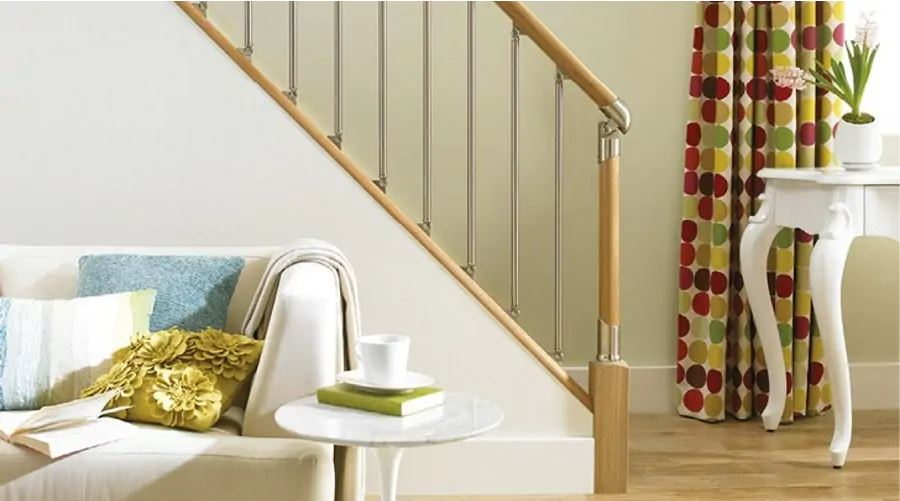
Light coloured metals, like chrome, create an ultra-modern look when combined with wooden handrails.
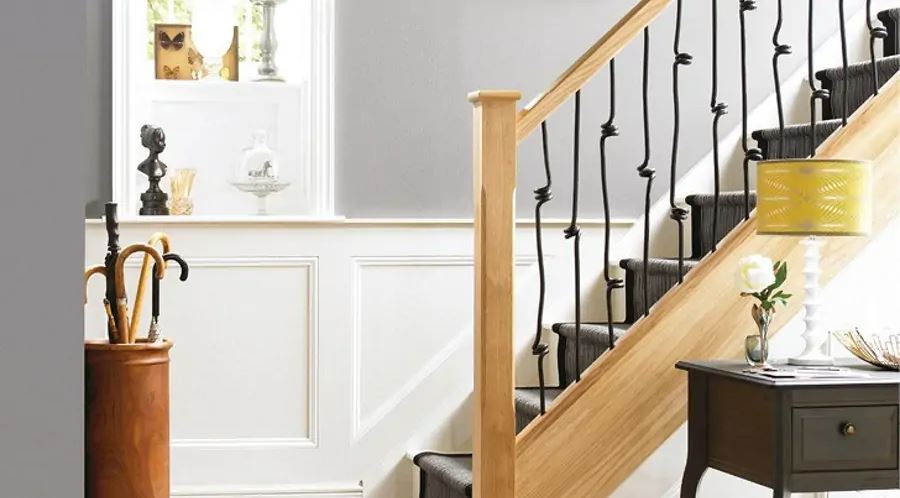
Black metal contemporary spindles, made of wrought iron, are available in a number of designs. This includes spirals and twists, such as those in the Richard Burbidge Elements range.
You could also update the look of your stairs without removing all of the period features. This option involves keeping the existing newel posts and handrails, replacing any ornate spindles with a simple square or chamfered design. You will need to ensure that the existing groove, hand and base rail are the same size as the new stair spindles you want to install.
Some homeowners and designers prefer horizontal metal railings, rather than vertical stair spindles. However, this can make a home feel like an office or commercial space.
Traditional spindles
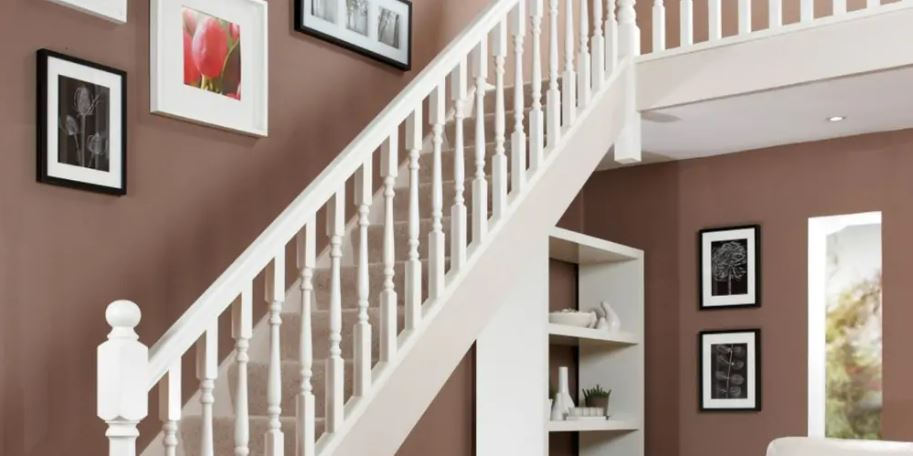
Traditional spindles, with Georgian, Victorian, and Edwardian styles, feature intricate turned features. This adds a luxurious touch to any staircase or entryway.
Edwardian stair spindles
One of the most popular types of traditional spindles is those with an Edwardian style. They are often made from wood, typically oak for a larger budget, and pine for a more affordable option.
The Richard Burbidge range offers Edwardian spindles that epitomise the era. They are the perfect choice for those looking to create a striking period feature with their balustrade.
Dark wood banisters
For older properties, interior designer Evette Hudson-Kaiser recommends choosing dark wood banisters to accentuate the beauty of period spindles:
“In Georgian homes - due to the extended-height ceilings - it’s advantageous to use dark wooden banisters as they draw the eye to elegant curves and delicate spindles.”
The below image features a refurbished wood staircase in an Edwardian villa. The dark wood banister contrasts with the crisp, white, traditional spindles to naturally lead the eye down the stairs.
Existing traditional spindles
Another design option for Victorian, Georgian, or Edwardian spindles is to paint them a darker colour than their surroundings. This accentuates them and naturally draws the eye to their intricate style.
Original spindles in older properties tend to be made of quality hardwood, but wear and tear over the years could have damaged them. You can repair small splits and cracks with a strong adhesive. However, if your stair spindles have severe cracks, you may need to replace them.
Replacing stair spindles
You can buy off-the-shelf spindles from staircase part specialists, but you will usually need to trim them down to size. If you can’t find an exact fit, woodturners will be able to create you a new spindle to match your existing ones.
Check out our useful guide on how to fit new stair spindles, or read some handy advice from an expert joiner on fixing loose spindles.
Custom-made stair spindles
No matter whether you have a contemporary or traditional design in mind, custom stair spindles are a great way to give your staircase a unique look.
Wood stair spindles
Custom-made wooden stair spindles are typically made from timber, by woodturners. If you have an unusually-shaped staircase, choosing custom-made spindles can ensure you find the perfect fit for your balustrade.
Alternatively, if you need a replacement for a broken spindle and cannot find a matching one, specialist woodturners, like us here at Jackson Woodturners, can create spindles to match your existing balusters.
Metal stair spindles
Some specialist companies do offer custom-made metal spindles, but this is typically part of built-to-order staircases, made for uniquely-shaped spaces.
Custom-made metal spindles, like those made of iron, can be very expensive, however. As an alternative, you could try mixing and matching some of the many different pre-made designs available, creating a bespoke look for your staircase.
See our full range of metal stair spindles below, or read our helpful blog; “Your guide to spindles - types, materials, styles, fitting and maintenance”.
Traditional and contemporary spindles from Jackson Woodturners
Jackson Woodturners began as a woodturning business making knife handles over 110 years ago, in 1910. We’ve now transitioned into the staircase industry but, no matter which industry we are in, our expertise shows in every piece we make. Our family-run business business is now in its fourth generation and we continue to provide the same cost-effective solutions.
If you would like to update your staircase spindles, you can choose from a huge range of both contemporary and traditional designs, all available to buy online.
Spindle FAQs
What is the difference between balusters and stair spindles?
These two terms essentially refer to the same stair part.
Is it best to restore or replace stair spindles?
Restoring a staircase’s damaged spindles can make a big difference to a home, in both a practical and aesthetic sense. The different degrees of renovation you will need to carry out will depend on the condition of the existing spindles. In replacing any damaged spindles, you are improving the look of your decor, as well as making your staircase more stable and safe.
Why is the spacing of stair spindles important?
If stair spindles are spaced too far apart, the stair rail will be significantly weakened. Improper spacing could also pose a safety risk. Building regulations state that a sphere, 100mm in diameter, should not be able to pass through your spindles.


