A staircase can be one of the first things that guests see when entering your home, leading off the hallway, or flanking high-traffic reception rooms such as the living room.
If you’re renovating your hallway or looking to upgrade your staircase design, it’s essential to think carefully about how your choice of materials will affect the overall look of your home. This piece will explain your options when combining wooden handrails with glass panels.
Click on a link to jump to the following:
Read the benefits of choosing to combine wood and glass in your staircase.
The different stair handrail measurements and the difference between glass grooved and ungrooved handrails.
Read how to fit glass panels into grooved and ungrooved handrails.
Different types of woods you can choose from and the prices you can expect to pay for each.
The advantages of combining glass and wood
Combining glass and wood is a versatile way to achieve a modern yet classic style for your staircase. Using timber creates a traditional feel, while glass keeps the overall effect minimalist, stylish and up-to-date. There are several advantages to mixing materials, such as glass and wood, when designing your new staircase hardware.
First and foremost, using glass panels instead of wooden spindles allows a solid finish, whilst still enjoying the traditional, natural feel of using timber.
Glass panels can also let the light through even better than spindles, making the staircase seem brighter and more open. This effect can allow light from upstairs windows to radiate downstairs, creating an overall light and airy feel.
Solid glass panels can also sometimes be safer than using wood, particularly if you have young children who might attempt to wiggle through gaps between wooden spindles. Glass panels are made from toughened, tempered glass, making them safe and effective choices for any home.
Read our full guide to glass balustrades here.
Types of handrails
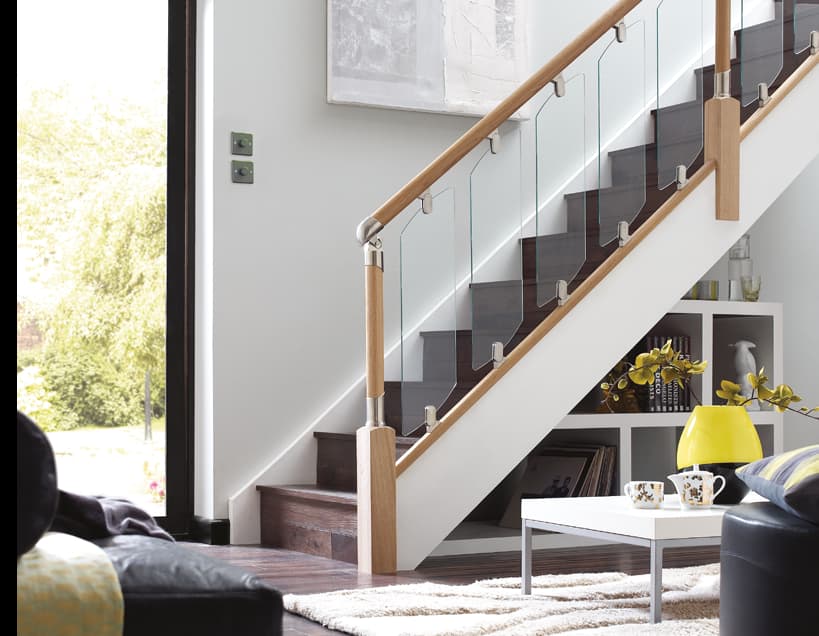
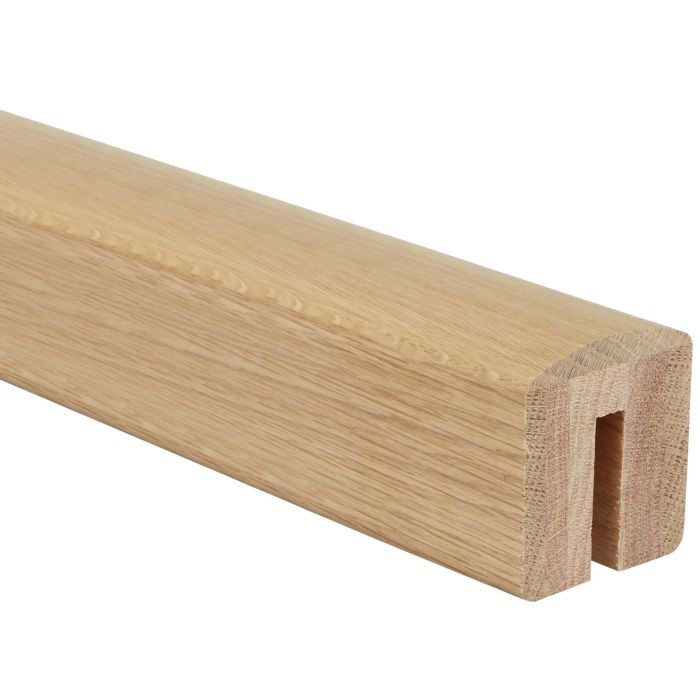
There are different ways to combine glass and wood, and you can choose from a variety of different materials and construction options for your balustrade system. From a construction point of view, the two main options are glass grooved handrails or ungrooved handrails. As the name suggests, grooved handrails have a groove carved into them; the glass panel then sits inside the groove, holding it in place. Ungrooved handrails require glass brackets to connect them to glass panels.
An example of attaching glass panels to ungrooved handrails using glass panels, taken from our Fusion range.
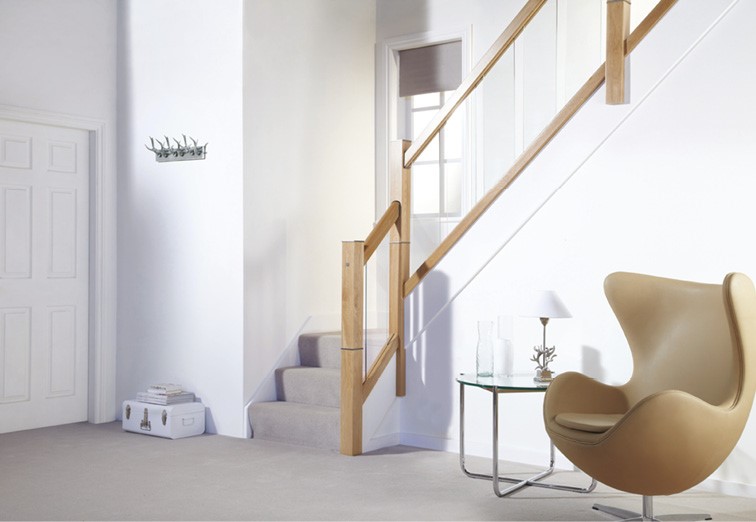
An example of attaching glass panels to glass grooved handrails, taken from our Immix range.
Handrails come in lots of different woods and finishes and are generally sold in set lengths of 1.8m, 2.4m, 3.6m and 4.2m. It’s important to measure the length of your existing staircase beforehand to determine which length you need.
Handrails should be fitted at between 900mm and 1000mm from the pitch line of the stairs.
For more information about handrails, you can read our full guide to handrails.
How to attach handrails to glass panels
Fitting glass panels into grooved handrails
Securing a glass panel with a glass grooved wooden handrail is relatively simple. In this case, you’ll also need to have a base rail with a groove in it. You then slide the glass panel into position, making sure that the panel sits flush with the newel post or wooden central posts if you choose to have these between panels.
The thickness of the glass will dictate the size of the groove in your handrails. Glass panels are normally between 8mm to 10mm thick. You’ll need to ensure the groove measurement matches the glass thickness that you are using.
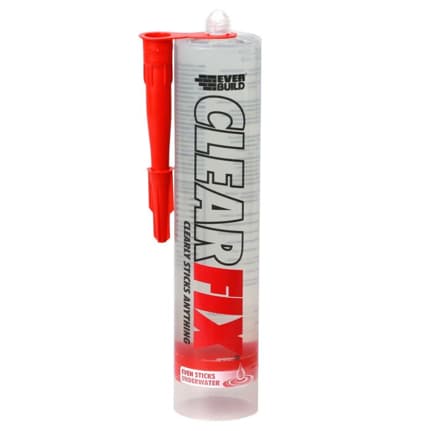
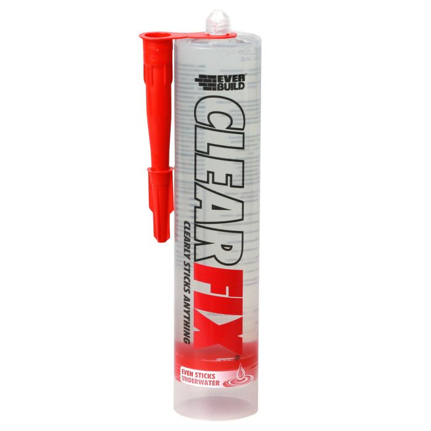
Our grooved handrails come with infill, however you still need to buy silicone separately to secure both the glass and infill in place.
Clear Fix hybrid polymer grab adhesive can bond most things in interior and exterior applications. You can View this product here.
Fitting an ungrooved handrail with glass clamps
If you choose an ungrooved handrail, you’ll need to use glass clamps to secure the glass panels in place. Glass clamps are typically made of stainless steel or steel with a coating, such as chrome or nickel.
Clamps are attached to central posts between glass panels with screws and grip panels securely, usually using a rubber lining to provide a cushion between the metal and the glass.
Clamps are usually fitted near to the top and bottom of the pane, with four for every square metre of glass. It’s absolutely essential that clamps ‘mirror’ each other, and are fitted evenly to avoid creating pressure points which may cause faults in the glass, leading to breakages.
If fitted properly, glass clamps should apply constant and even pressure to glass panels. This will avoid damaging and weakening glass and ensuring your glass panels remain a safe and unobtrusive option.
You can shop our full range of glass panels and glass clamps here.
Choosing handrails: types of wood
Light finishes
There are a wide range of wood finishes to choose from if combining glass balustrade panels with wooden handrails.
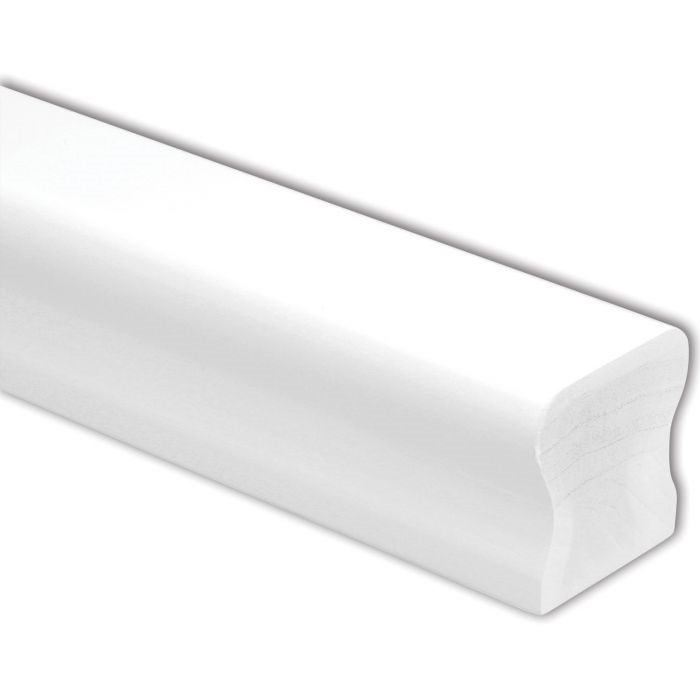
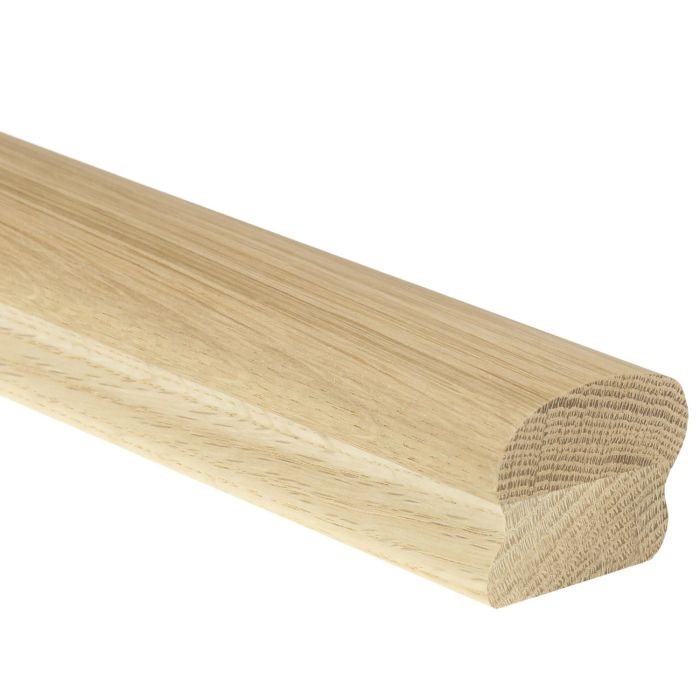
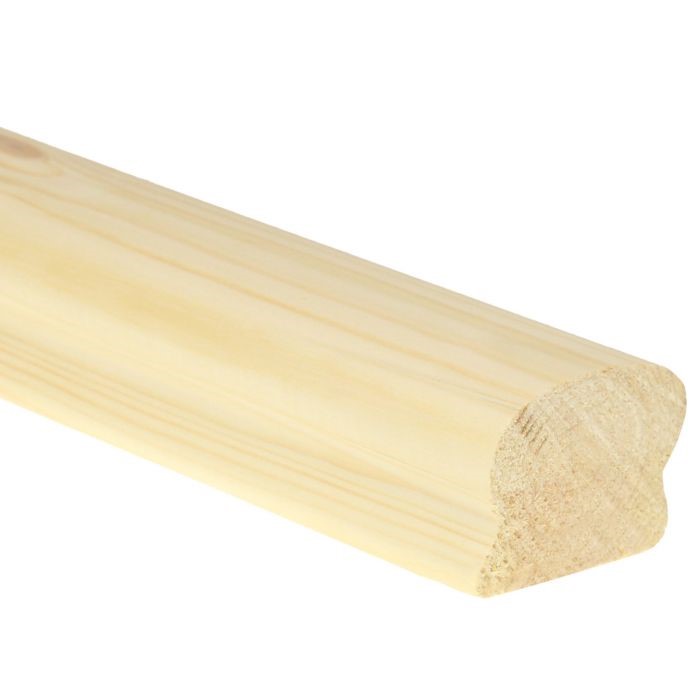
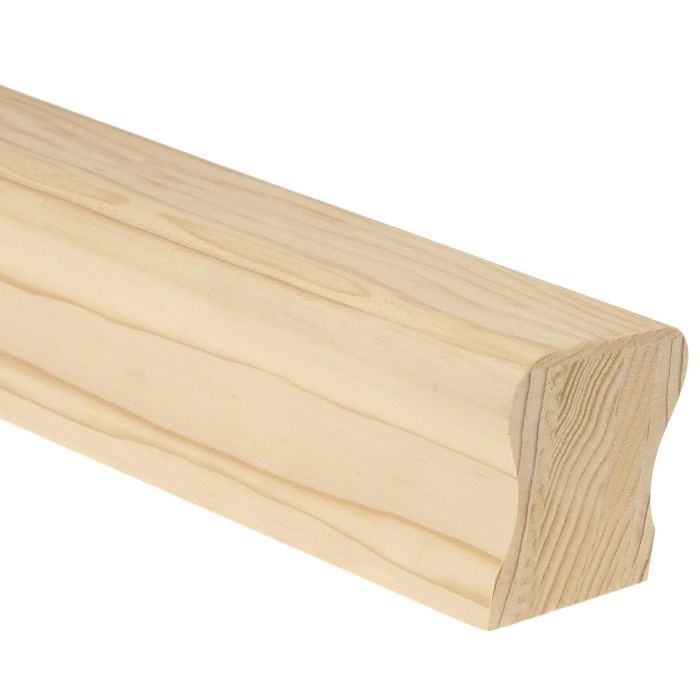
If you’re looking for a lighter, Scandinavian feel, you might choose from White Oak, Ash, Pine or even a White Primed finish. Alternatively, you might choose Hemlock, which is a softwood, making it easy to screw in a glass clamp.
You can expect to pay between £40 and £100.00 for a White Oak handrail of approximately 2.4m, making this the most expensive choice.
Coming in at around £70 for the same length of handrail, Ash can also be quite costly in comparison with materials such as Pine (c. £50.00 for 2.4m) and Hemlock (c. £35.00 for 2.4m).
However, hardwoods, such as White Oak and Ash, are more durable than softwoods such as Pine and Hemlock, so you may find hardwoods to be lower maintenance and worth the investment in the longer term.
A White Primed finish can be a cost-effective option, priced at around £30.00 for 2.4m; this type of handrail can be refreshed easily. White Primed wood can complement a glass staircase very well and is ideal for creating a light and airy feel.
Recommended light handrails
Dark hardwoods
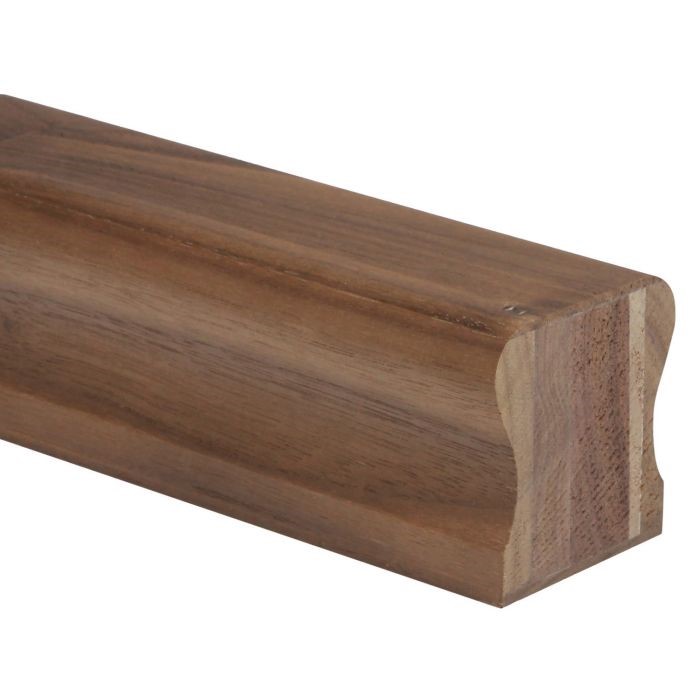
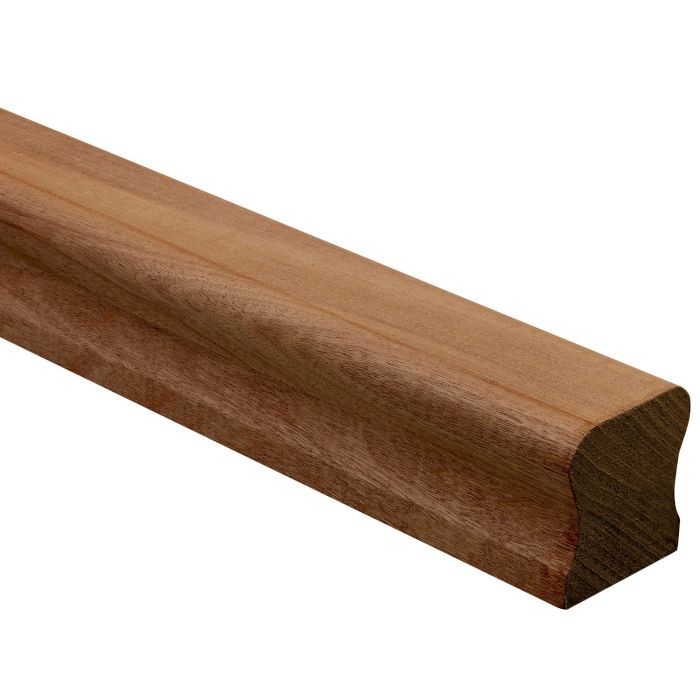
Combining darker wood finishes with glass can create a striking contrast, offsetting traditional textures with a modern edge. Basic Dark Hardwood finish handrails start at around £50.00, while a luxurious Walnut handrail is just a little pricier.
Recommended dark hardwood handrails
Whatever look you’re going for in your home, there’s an option for you. With some precise measuring, thoughtful research and careful installation, you can create an effective fusion of modern and traditional styles using wood and glass.
Related content
The staircase is often one of the first things that our guests see when they come into our homes, whether it’s leading off the hallway or flanking a high-traffic living room. In the case of both simple renovations and complete upgrades, it’s important to think carefully about how your choice of materials will affect the overall look of your home. Finding the right balance of warmth, light, and texture can make all the difference, especially when mixing materials. So, what are your options when combining wood handrails with glass panels?
You have two main options, both available in a range of woods, when it comes to choosing a handrail:
- Grooved: The glass panel slides into the provided space, offering a seamless look.
- Ungrooved: Here you’ll have the opportunity to use added hardware, which could also bring a touch of chrome or brushed nickel to the design.
You should go for the right option for your budget, available time, and the overall design of the rest of your house.
In this blog, we’ll run through the options you have when considering combining wood handrails with glass panels and how to make the right pick for your home.
What are the advantages of combining wood and glass?
Combining wood and glass on your staircase is a great way to achieve a modern, yet classic, style. Timber creates a traditional feel, while glass keeps the overall look minimalistic, stylish, and up-to-date.
A mix of natural wood and sleek glass works well in both modern and traditional homes. Your staircase will suit a variety of styles, even as decor trends come and go. Wood and glass also create a visual harmony across your staircase, softening the modern look without losing the class of the design.
Both materials are easy to maintain, with glass simply needing the occasional cleaning, and wood can be maintained over the years with varnish or wax.
Why should I choose glass panels?
There are a number of benefits to choosing glass panels over the usual wooden or metal spindles for your balustrade, including:
- No Gaps: When you use glass panels instead of the usual spindles, you can enjoy a solid finish without gaps, whilst still enjoying the natural and traditional feel of timber.
- Light: Glass panels let light into your staircase even more than spindles, allowing light to flow through your home and enhance the airy feel of your staircase.
- Safety: Glass panels are made from toughened, tempered glass and can sometimes be safer than wood spindles, especially if you have young children who might try and get through the spindle spacing.
Read: Our full guide to glass balustrades.
What types of handrails can I combine with glass panels?
There are a variety of ways you can combine glass and wood in your staircase renovation, with different materials and construction options for your balustrade system.
From a construction point of view, there are two main options when it comes to a handrail that can be installed alongside glass panels:
- Glass grooved handrails: These have a groove carved into them, which the glass panel sits inside, holding it in place.
- Ungrooved handrails: These require glass brackets to connect them with panels, but provide an opportunity for more variation in hardware.
Handrails come in a range of different woods and finishes, and are typically sold in set lengths:
- 1800mm
- 2400mm
- 3600mm
- 4200mm
It’s important to measure the length of your existing staircase before you buy to determine which length you’ll need.
Read: Our full guide to handrails
How do I attach handrails to glass panels?
The method you’ll need to use to attach your handrails to your glass panels will depend on the type of handrail you buy - grooved or ungrooved. The materials needed to attach the two parts may also play a part in your decision, as they add extra costs to your overall spend.
Fitting glass panels into grooved handrails
Securing a glass panel into a grooved handrail is fairly simple, as long as your base rail has the right size groove. You’ll slide the glass into position, making sure the panel sits flush with your newel posts or central posts if you choose to have these between panels.
The thickness of the glass panels you choose will dictate the size of your handrail groove. They’re normally between eight and ten millimetres thick, so you’ll need to ensure that the groove measurement on your handrail matches the glass thickness.
The grooved handrails available here at Jackson Woodturners come with infill, but you’ll still need to buy silicone separately to secure both the glass and the infill in place.
Recommended:
Fitting an ungrooved handrail with glass clamps
If you choose an ungrooved handrail for your staircase renovation, you’ll need to use clamps to secure the glass panels in place. Glass clamps are typically made of stainless steel and may sometimes have an added coating, like chrome or nickel.
Clamps are attached to central posts between panels, gripping panels securely, with a rubber lining to provide a cushion between the metal and glass. It’s extremely important that glass clamps mirror each other in their placement and are fitted evenly to avoid creating pressure points.
If fitted properly, glass clamps should apply constant and even pressure to the panels. This helps to avoid the damaging and weakening of the glass, ensuring it remains a safe and unobtrusive option.
How do I choose the right type of wood for my handrail?
The type of wood you choose to go alongside your glass panels will typically depend on a couple of factors:
- Your desired look
- Your budget
- Your overall home decor
- Your desired involvement - do you want to DIY your renovation or let a professional handle it?
Light finishes
If you’re looking for a lighter, Scandinavian feel, white oak, ash, pine, or even white-primed wood are all good options. DIY projects might favour softwoods like Hemlock, making it easy to screw in your glass clamps.
Hardwoods, such as white oak and ash, are more durable than softwoods like pine or hemlock, so you might find hardwoods to be lower maintenance and worth the greater investment in the long run.
White primed wood can complement glass panels very well and is ideal for creating a light, airy feel.
Dark finishes
Darker wood finishes can create a striking contrast when paired with glass panels, offsetting the more traditional textures with a modern edge. Basic dark hardwood handrails begin at around £50, while more luxurious walnut finishes are a little pricier.
Choose the right handrails for you with Jackson Woodturners
No matter what look you’re going for in your home, Jackson Woodturners’ range of handrails is bound to offer the right choice for you. With some precise measuring, thoughtful research, and careful installation, you can create an effective fusion of modern and traditional styles with both wood and glass elements.
Need a hand finding the best stair parts for your home? Take advantage of over a century of woodturning experience and contact the team at Jackson Woodturners today. We’ll be happy to walk you through the process of picking your stair parts, with expert advice to make your house a home.
FAQs
Does my glass panel need to be a certain thickness to be safe?
In the UK, glass used for balustrades has to meet thickness requirements, depending on its use. Here are some of the most common thicknesses of glass panels and how they should be used:
- 8mm glass
- Used for interior staircases only.
- Greater flexibility to absorb vibrations or impact without breakage.
- 10mm-12mm toughened glass
- Suitable for low-risk use, like balcony windbreaks or decorative panels.
- Requires a handrail for additional safety measures.
- 15mm toughened glass
- Commonly used for interior staircases and partitioning.
- Offers increased durability, but still benefits from a handrail.
- 17.5mm toughened and laminated glass
- Better for external use, like balconies or terraces.
- Can be used without a handrail in some cases.
- 21.5mm toughened and laminated glass
- Most often used in commercial applications.
- Maximum strength for high traffic areas.
How do I maintain glass panels and wood handrails?
You should clean your glass panels regularly with a mild detergent and a soft microfiber cloth to remove any dirt or dust. Wooden handrails should be dusted every week, with oil or sealant being reapplied every one to two years to keep their appearance.
As with all stair parts, you should avoid using harsh chemicals that can dull finishes or corrode your extra fittings.
How do I choose a wood finish that complements the light and style of my home?
To create a cohesive look throughout your home, you’ll want to take into account the decor of the rest of your home when choosing stair parts. Warm woods, like oak or walnut, match well with neutral colours and warm lighting for a cosy environment.
Lighter woods, like ash, work well with cool or natural lighting and help to create a modern, airy feel. You should also consider the colour of your walls and floors, and choose a complementary material to create visual harmony.
What mistakes should I avoid when using glass panels and wood handrails?
The most common issues to keep in mind when you’re combining wood handrails and glass panels are:
- Incorrect glass thickness
- Misaligned brackets
- Over-tightened brackets
Take care throughout the process, or get in touch with a professional, to make sure you’re doing everything right to create a safe and beautiful staircase.


