

When it comes to renovating a home, spindles or balusters are rarely considered a priority area. However, when we think about how often the staircase is used on a day-to-day basis and how much wear and tear contributes to a tired looking interior, we may want to re-think neglecting this part of the house. In this article, Jackson Woodturners offer expert advice on how to prepare and paint your stair spindles. So, how do you prepare and paint spindles on a staircase?
Turn your worn, chipped paintwork or brand-new spindles into a DIY triumph with these 5 simple steps:
- Protect the area
- Prep and sand the spindles
- Prepare the wood for painting
- Prime the spindles
- Paint the spindles
Keep reading for a breakdown of how to best prepare your room for painting and how to paint your staircase spindles to create a beautifully refreshed looking staircase.
How to paint stair spindles?
Stair spindles are the vertical wooden columns that support the bannister. They come in all kinds of shapes and sizes, including twisty and intricate designs. This means that they can often be harder to paint than other parts of the staircase. For more information about stair spindles, take a look at our guide.
As a result, we’ve put together this simple step-by-step guide to help you paint the spindles on your staircase:
Step 1 - Protect the area
Before you begin painting your stair spindles, it’s crucial that you prepare the room and avoid any stressful mishaps such as damage to your furniture. This includes:
- Putting down a dust sheet to protect the staircase and surrounding area
- Using decorator’s tape to protect the underside of your bannister or any areas you don’t want to get paint on (This is especially useful if you are painting the spindles a different colour to the bannister)
Top tip - Place the tape as close to the edge of the spindles as possible, protecting the areas you’re more likely to get paint on. This will create satisfyingly clean lines when you finish.
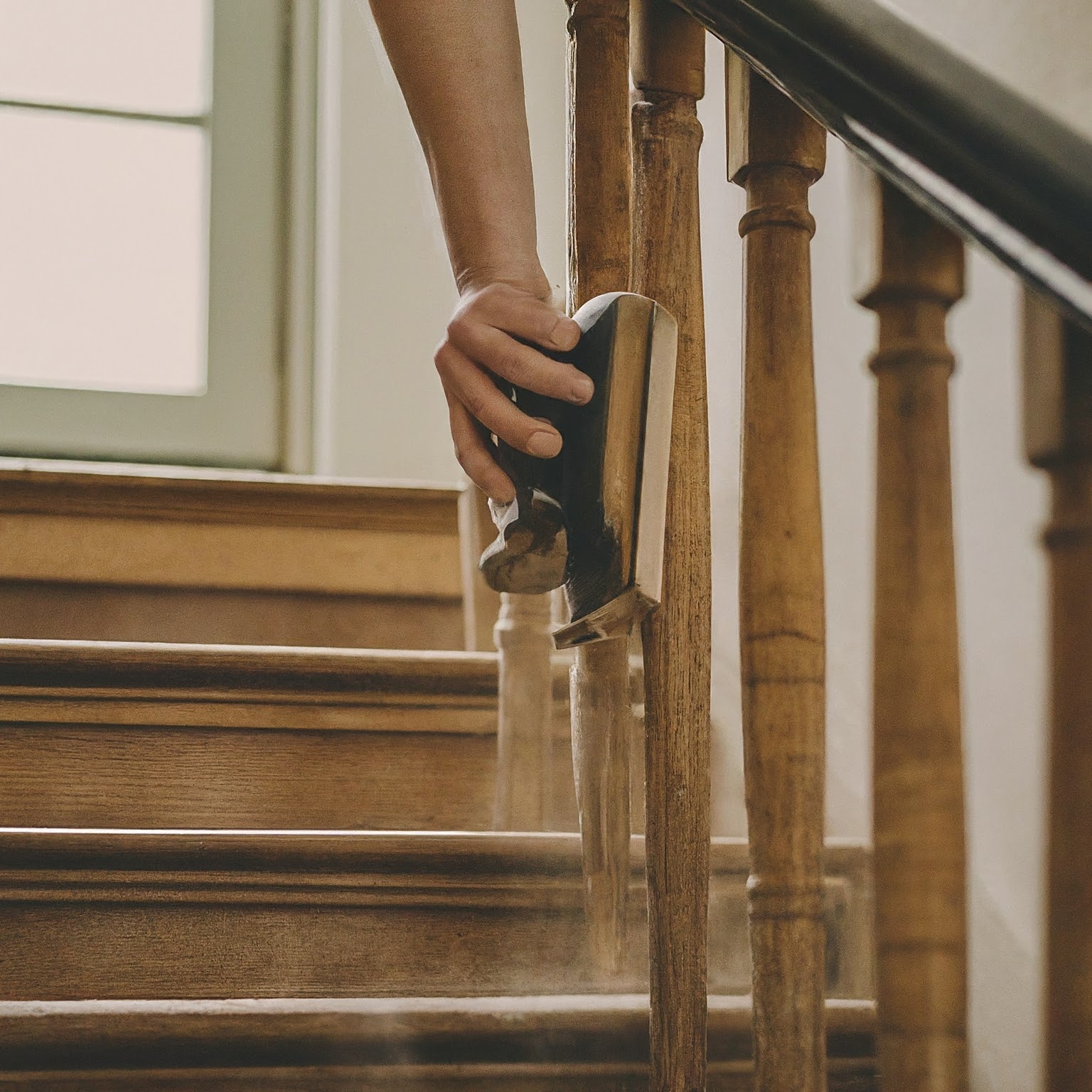
Step 2 - Prep and sand the spindles
Now it’s time to prepare and sand the spindles ready for painting. Using sugar soap or hot soapy water and a clean cloth or flat scouring pad, clean the staircase spindles. Apply the sugar soap or hot soapy water directly to the wood and give it a rough scrub to dislodge the dirt. Then, using another clean cloth, wash off the residue with clean water. Let the spindles dry fully before beginning the sanding process.
If your stair spindles are in good condition with no peeling paint, you can use fine sandpaper to go over the surface roughly. However, if the paint is damaged, use a flat scraper to peel and remove the sections of damaged paint first. Use a medium-grit sandpaper to sand down the bare wood. Remember to wipe away the sanding dust and check the spindles to see if there are any chipped wood or scratches. If there are, use wood filler to repair the damage and then sand it back smooth once it’s dry.
Hand-sanding spindles can be labour-intensive but sanding machines aren’t suited to the intricate curves and designs of most spindles. In some cases, it might be cheaper and easier to replace the spindles rather than sanding and removing many layers of paint and primer, especially when you factor in the time it will take to do it yourself.
Step 3 - Prepare the wood for painting
Often, getting spindles ready for painting can take longer than the painting and varnishing itself. Most experts would recommend asking a professional to take on the work, rather than resorting to DIY. Mark Finney of Finney’s Wood Finishes explains how much work is involved in stripping existing spindles.
“It takes time and patience to strip away old paint and varnish, especially from fiddly spindles and newels. More powerful paint removers are available but these are restricted to professional users only and so generally DIY-ers have to make do with more standard formulas."
Carpenter Scott Else from Scott Else Woodworks recommends calling in the professionals:
“It would take a very long time and I wouldn't recommend any DIY-er take it on. In terms of using an experienced tradesperson, the timescale will be determined by how big the staircase is and what type of balustrade it has, i.e. spindles or panels.”
You can read more advice from Scott and Mark in our piece Renovating a run-down staircase—top tips from the trade.
You can also shop our popular oak spindles and pine spindles ranges here.
Step 4 - Prime the spindles
Once the whole staircase has been prepared and all dust is removed, you’ll need to apply a quality wood priming paint to prevent any stains from sap or other contaminants in the wood from surfacing and staining your final coat. Shake the paint tin well before opening and remember to stir the paint to make sure it is thoroughly mixed and of a smooth consistency. For intricate details on the spindles, use a brush (these are often angled, triangular or rounded and help evenly distribute the paint, getting into the difficult areas.)
While we do offer some prefinished stair parts at Jackson Woodturners, the majority of our stair parts are unfinished, so you’ll need to apply a finish to protect the wood and match your colour scheme. You may even want to seal and protect the wood with a hardwax oil, but the following tips should make a DIY painting job easier:
If you’re in need of some design inspiration, see the Interior Design Tips section of our Advice Centre for stair ideas to suit any taste.
Please note - if you are using a paint that doesn’t need a primer, feel free to go ahead and skip this step.
Step 5 - Paint the spindles
Before you begin painting your staircase spindles, you may want to ensure your painting tools are thoroughly cleaned before going in with your topcoat. To do this -
- Pour some white spirit into an old jam jar
- Use paper towels to remove any paint from the brush
- Be sure to complete the previous step until your brushes are completely free from paint
Once your paint brushes are thoroughly clean, it’s time to get painting! The first thing you’ll want to do is stir the paint, making sure that all the colour is mixed. Dip in your brush and start applying the paint to the stair spindles. Remember to paint in the direction of the grain (the wood should feel smooth when you run your hand in that direction), working in long strokes. Be careful not to spread the paint too thinly.
When painting the details or intricate areas, make sure that the paint doesn’t form blobs or accumulate in areas. After the first coat of paint has dried, you can apply a second. Assess the coverage and see if it needs a third coat. Once you’ve painted the final coat, peel off the decorator’s tape while it’s still wet.
**Remember, if you are planning on painting the bannister, spindles and staircase, start with the stair spindles before painting the bannister.
Top hack - Painting stair spindles with a sock
As strange as it may seem, a fast and effective way to paint your stair spindles is to use an old sock. First things first, cover and protect your hand with a plastic sandwich bag before putting the sock over the bag. Then you can dip your hand into the paint and apply it to all areas, making sure not to miss any of the nooks and crannies. After letting the paint dry for around 6-8 hours, you can apply the second coat.

Our top tips for painting stair spindles
According to expert Mark Finney, the right paint can prevent chipping further down the line -
“Painting is a common solution (for finishing stairs), but remember that this type of surface coating may chip or flake. If this is likely to be a problem, and you would still like a painted look, try applying an emulsion or chalk paint and then finish off with a lower colour change clear finish such as acrylic varnish in either a matte or satin. You can also wax this using clear finishing wax for a smoother, more natural-looking appearance.”
Scott Else recommends painting rather than varnishing if the wood in different parts of your balustrade doesn’t match:
“If you are looking to see the wood in all its natural beauty, oils would be your best bet, but you really need to make sure you remove all the original paint from those hard-to-reach areas. If the staircase and balustrade are made of different types of wood and have damaged areas that have been filled over the years, painting is probably the best option.”
What equipment do I need?
- Hot soapy water/sugar soap and a cloth
- Sandpaper (100 and 200 grit)
- Painters tape
- Dust sheet
- A selection of small and large brushes
- Primer
- Wood filler (optional)
- Quick dry paint
Staircase spindles at Jackson Woodturners
At Jackson Woodturners, we stock an extensive range of wood and metal stair spindles, available in a variety of styles such as twisted, turned, Georgian or fluted. We have something to suit all tastes! With a team of stair part experts on hand, we can advise and help you plan and design the staircase of your dreams.
Get in touch with us today to find out more about our quality staircase spindles.
Painting staircase spindles FAQs
How do you determine the amount of paint you need?
The amount of paint needed for your stair spindles will be determined by the size and thickness of each spindle and how many there are. For the average size home staircase where there are 30 or less spindles, a 0.95 litres of primer and 0.95 litres of paint should be enough. If you are using a paint and primer in one formula, 3.8 litres of paint/primer will be plenty.
Can I paint stair spindles without sanding?
Although it will save time skipping the sanding step, this is a big mistake. Sanding ensures that the primer and paint fuse together properly and also removes any glossy shine that paint doesn’t adhere well. If you want your painting efforts to stand the test of time, it’s best to take the time to sand first. Bear in mind that you don’t have to sand the finish to the bare wood, you just want to rough the surface up to provide “tooth” for the paint to stick. Sanding is certainly worth it in the long run!
What is the best paint brush for painting spindles?
The best brush to paint your stair spindles is a 1” - 1-½” angled brush. Using an angled brush over a regular paint brush or roller will ensure that you get into the nooks and crannies of the spindles. The angle also makes it easier to paint a nice clean edge where the spindles meet the step and under the bannister.
How to paint stair spindles with carpet?
If you want to paint the spindles on carpeted steps, you’ll need to make sure to press the painter’s tape into the carpet around each baluster. We recommend using an angled brush to keep a clean line where the spindles meet the taped carpet.
How do you paint spindles without drips?
If you are painting your spindles in a production line, it can become a rather tedious task and it is easy for paint to get applied too heavily. To avoid having drips, it's best to apply the paint in light coats. The way to ensure you have no paint drips on your spindles is to go back and check after painting about 10 spindles. In the time it takes to paint that amount, you will be able to go back and see any drips that need to be brushed away before they dry.


