
How to paint stairs with carpet
Painting staircases that have carpeted stairs can be a stressful experience for many that aren’t sure how to protect it. Without knowing the right way to protect it, you could end up ruining your carpet with spots of paint that inevitably flicks onto the ground while you paint. Luckily, there are a few easy ways to protect your carpet while you paint.
So how do you paint stairs with carpet? The easiest way is to use masking tape. Tuck masking tape under the skirting board and add layers horizontally until it’s wide enough to lay a dust sheet over the top, you can then tape the dust sheets in place so they don’t shift. This allows you to paint without dropping any on your carpet.
Read on to find out more about how to paint a staircase with carpet, how to paint the skirting boards, and what the steps are to easily protect your carpet.
How to protect carpet when painting
Protecting your carpet can be the most worrying part of painting, and this can be particularly tricky when you’re painting above a staircase that has carpet. On even ground, dust sheets often make adequate carpet protection for painting, however this becomes more difficult when the stairs stop the sheets from easily hugging the steps.
In general, you’re still able to use dust sheets to cover the majority of your staircase. When you do this, make sure you give enough slack on each step so that it fits along the shape of the step, instead of hovering over the steps in a straight line. You can also use tape to hold the sheets in place so that you’re able to walk on them without worrying about pulling it down.
Unsure how to paint individual parts of your staircase? Read our guide on how to paint a wooden handrail for more tips.
How to paint skirting boards with carpet
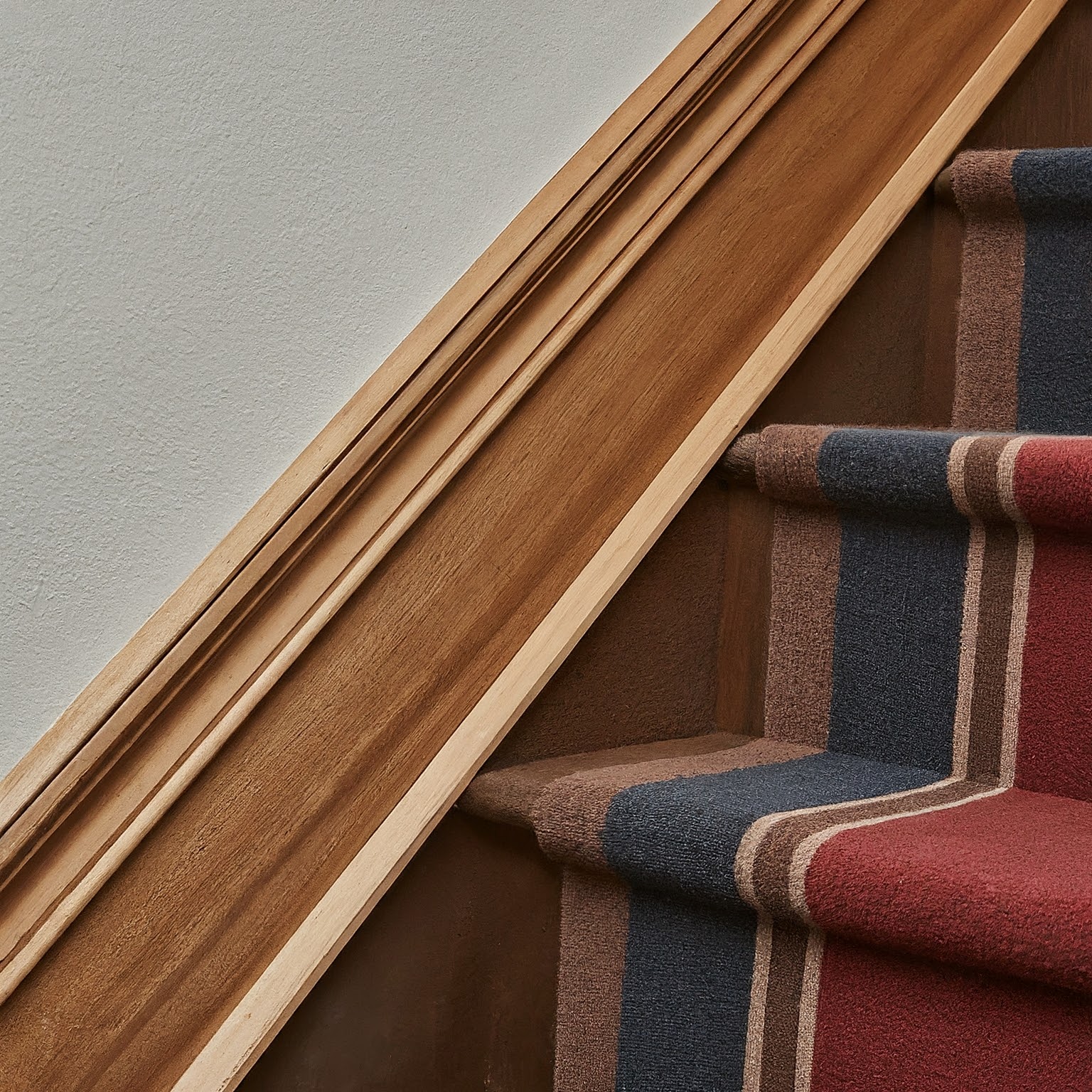
The most difficult part of painting a staircase is getting into the cracks of the skirting boards without getting any on your carpet. If you're adept at DIY there is the option to pull back the carpet before painting to ensure nothing can drop on it, however this requires a lot of work and you’ll need to be skilled enough to refit the carpet afterwards.
The easiest option is to use masking tape to protect the carpet as you go along. Using tape instead of a dust sheet on its own ensures that the tape will stay in place and not slide away as you move along the wall. It also provides a straight edge that will remain consistent along the length of the skirting board. The dust sheets can then adequately cover the rest of the stairs without requiring attention to keep it perfectly in place.
Here is our easy 6 step guide to painting skirting boards with carpet without dropping paint using the masking tape method:
- •Hoover and dust: Always ensure that you dust off the skirting boards and hoover the carpet nearby. This ensures that the paint has no unwanted lumps or dirt and the masking tape can easily stick without being blocked up by dust.
- Apply masking tape: Stick the masking tape along the bottom of the skirting board by pushing the carpet down and pushing the masking tape as low as possible. Ideally, you can get the masking tape to fit under the skirting board so that you’re able to paint all of it, however this may not be possible on particularly thick carpet. Using something with a long edge can help you push it down and keep it straight, such as a squeegee.
- Overlap: Make sure that the pieces of tape overlap at the end of each, and apply these in a straight line along the entire section you want to paint. Try to use long pieces of tape to make it easier to get straight edges and not risk missing an overlap.
- Add extra layers: To give yourself extra room to paint, you can make the tape wider by horizontally overlapping them slightly. This ensures that your dust sheets don’t need to be perfectly aligned along the skirting board.
- Lay dust sheets: Lay dust sheets over the masking tape, covering the rest of the carpet. Now that the cracks have been covered by the masking tape, you can lay these down a lot easier without worrying about dropping paint down the side - however, you can also tape the sheets down to ensure they don’t shift while you’re painting.
- Paint carefully: If the masking tape gets too wet with paint, it could still tear or leak through. Ensure that you don’t use too much paint on your paintbrush at once to avoid this.
Top tip
Make sure your staircase is ready for painting before you begin, including removing any nails and sanding the wood down first. Read our guide on preparing your staircase for painting for more information.
Should you remove carpet before painting skirting boards?
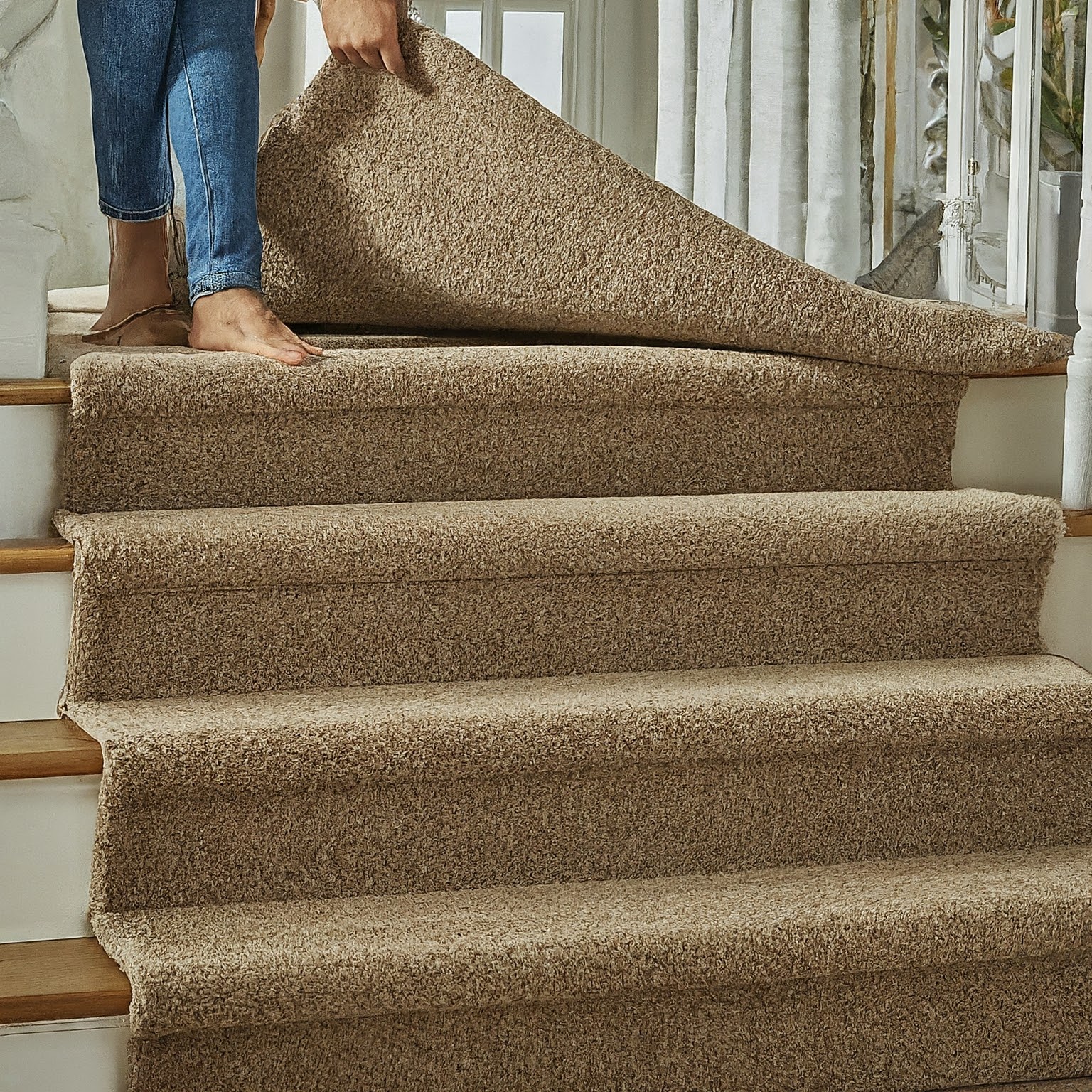
While the masking tape method is the easiest method for most people, the only way to completely guarantee that your carpet doesn’t get any droplets is by pulling back the carpets altogether.
Unfortunately, this takes a fair amount of time, effort, and skill, so we wouldn’t recommend using this method unless you’re already familiar with the process of laying carpets. This is because you need to understand how to safely pull back the carpet without causing any damage, as well as how to refit the carpet perfectly without creating any lumps, air pockets, or imperfections.
Prepare your stairs for painting with Jackson Woodturners
At Jackson Woodturners, we know how important it is to create the staircase of your dreams. With our team of stair experts on hand, we can advise and help you plan and design your stairs to make this a reality. We also offer a range of stair products to help you prepare your stairs before painting, such as our quality wood filler.
With trade prices available to all, we can help you build your staircase project efficiently and affordably. Our price promise guarantees that we’ll beat any like-for-like quote.
Get in touch with us today for more information about your up-and-coming stair project.


