Oak and hemlock make great choices for the handrail for your staircase. Both types of woods have various benefits and some drawbacks, so it's helpful to carefully consider all the features and factors before making a decisive choice for your home.
Oak is a hardwood and so is very strong and durable, meaning that it is less likely to sustain damage from heavy-duty use. Although it is classed as a softwood, hemlock is extremely dense, which translates into excellent strength. It also has the added benefit of costing less than oak.
Here, we take a look at some similarities and differences between oak and hemlock and the most important features to take into consideration when choosing the ideal wood for your stair parts.
Click on a link to jump to that section:
- • Oak vs hemlock – the key differences
Read our guide to the key differences between oak and hemlock. - • Handrail designs available in oak and hemlock
Find out what handrail designs are available for both types of woods. - • Choosing between oak and hemlock
Read our tips on what to consider when choosing between oak and hemlock. - • Choosing handrails – factors to consider
Find out what to consider when choosing the right handrails for you. - • Oak vs hemlock handrails – frequently asked questions
We answer frequently asked questions on oak vs hemlock handrails.
Oak vs hemlock – the key differences
Strength
Oak is renowned for its powerful strength, even under conditions where it needs to be able to cope with considerable force. As a hardwood, it has taken a long time to grow and develop, and this translates into exceptional fortitude.
Although hemlock is actually a softwood, it is very dense, which means that it is a very strong wood, ideally suited to use in handrails.
Appearance
Oak is generally light blonde to brown in colour. It has a distinctive grain without knots. Hemlock is also knot-free, but its grain is more uniform, with a pale brown tone and black vein line.
Cost
Cost is fundamental when considering which timber is the most suitable for your stair parts. Oak tends to be considerably more expensive than hemlock but can still be found at a very affordable price, for example this Oak Ungrooved Cottage Loaf Handrail. However, because oak can be more durable over time than hemlock, you can be confident you are getting a good option for your money.
Hemlock is still very strong, and is a great choice if you're working on a budget.
Durability
Oak is a durable, heavy-duty wood that can last for a long time with little requirement for maintenance. It is less likely than some other woods to be dented or scratched. Hemlock, thanks to its density, is also extremely durable, but its softwood properties make it less durable than oak.
Painting and finishing
An oak staircase is perfect for staining and polishing, while hemlock is often stained, polished, waxed or varnished.
You can shop our full range of hemlock handrails and oak handrails here.
Designs available in oak and hemlock
There is a range of stylish designs available for hemlock stair parts, including mopstick handrails to attach to the wall, cottage loaf style handrails and HR hemlock handrails. Pigs ear handrails are another choice if you are looking or wall mounted handrails.
Cottage loaf is also a popular design for oak stair handrails, with traditional styles and HR oak handrails proving a popular choice. You can also find mopstick and pigs ear oak handrails for wall mounted options.
Oak cottage loaf handrail 32mm groove with infill
- • The Oak cottage loaf handrail is part of the Oak range of modern and traditional stair parts.
- • The HR handrail has a 32mm groove, which will allow a 32mm spindle to be fitted into the groove. Infill/spacer comes pre-packed in with the handrail.
- • Oak stair parts come unfinished and can be finished by painting, varnishing or waxing.
- • Handrail Size: 66mm x 45mm, with 32mm Groove and Infill.
- • Lengths available: 1800mm, 2400mm, 3600mm & 4200mm
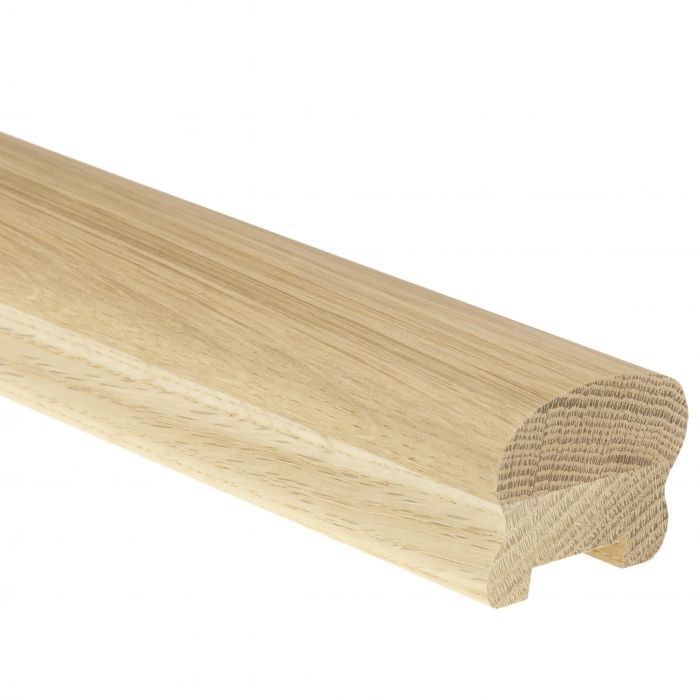
Oak Ungrooved HR Handrail
- • This Oak HR Handrail is part of the Oak range of modern and traditional stair parts.
- • This handrail is ungrooved, so is ideal for use with glass brackets, clamps and spindles that are fastened directly onto the handrail. It can also be used as a handrail on a wall.
- • Oak stair parts come unfinished and can be finished by painting, varnishing or waxing.
- • Handrail Size: 58mm x 58mm.
- • Lengths available: 1800mm, 2400mm, 3600mm & 4200mm
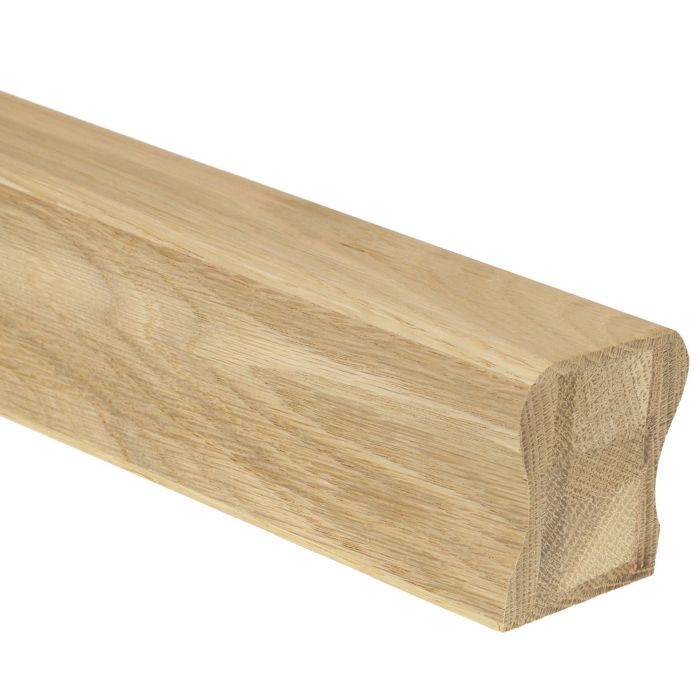
Oak Traditional Handrail 41mm Groove with Infill
- • The Oak TR handrail is part of the Oak range of modern and traditional stair parts.
- • The TR handrail has a 41mm groove, which will allow a 41mm spindle to be fitted into the groove. Infill/spacer comes pre-packed in with the handrail.
- • Oak stair parts come unfinished and can be finished by painting, varnishing or waxing.
- • Handrail Size: 67mm x 60mm, with 41mm groove and infill.
- • Lengths available: 1800mm, 2400mm, 3600mm & 4200mm
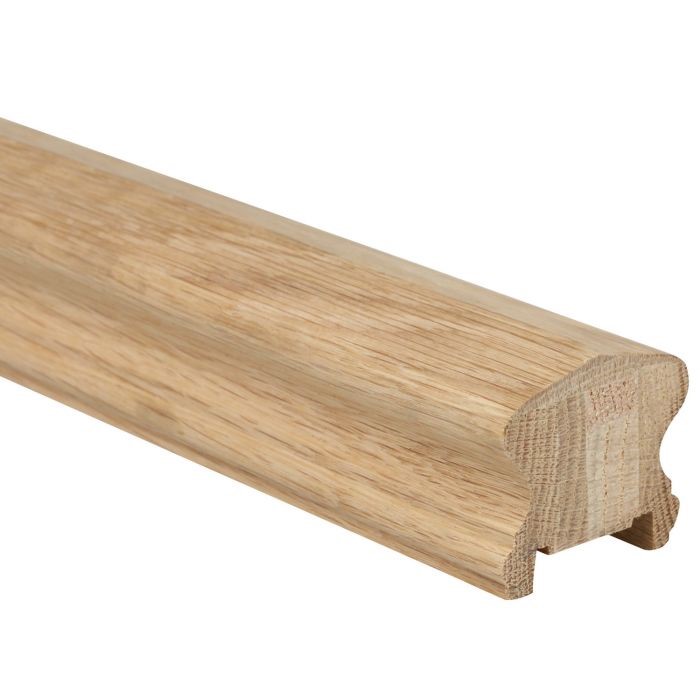
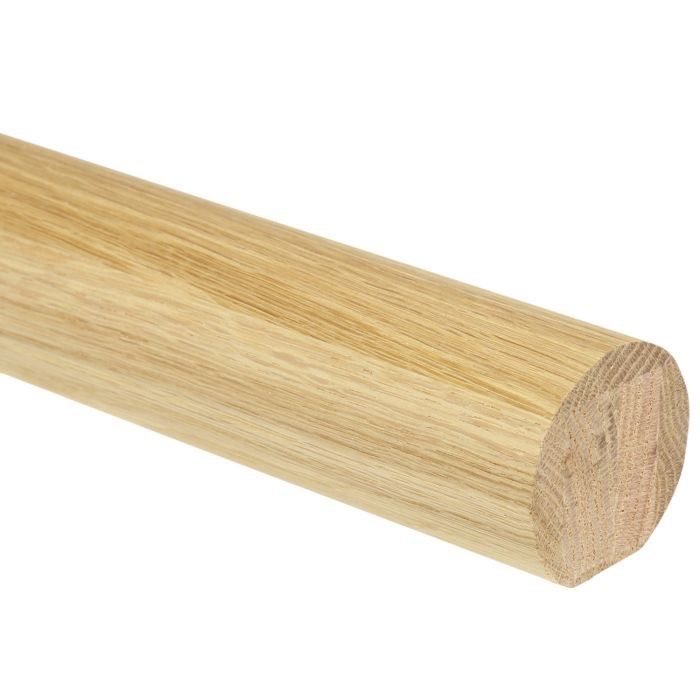
Oak Round Mopstick Handrail
- • This Oak mopstick handrail is part of the Oak range of modern and traditional stair parts.
- • The mopstick handrail is an ideal handrail to be mounted onto a wall. Decorative wall brackets and end caps are available to complete the look.
- • There is a 25mm flat on the underside of the rail.
- • Oak stair parts come unfinished and can be finished by painting, varnishing or waxing.
- • Handrail Size: 54mm diameter.
- • Lengths available: 1800mm, 2400mm, 3600mm & 4200mm
Hemlock handrails – example products
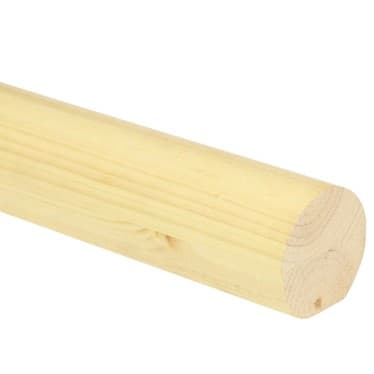
Hemlock Round Mopstick Handrail
- • This Hemlock mopstick handrail is part of the Hemlock range of modern and traditional stair parts.
- • The mopstick handrail is an ideal handrail to be mounted onto a wall. Decorative wall brackets and end caps are available to complete the look.
- • There is a 25mm flat on the underside of the rail.
- • Hemlock stair parts come unfinished. They can be finished by painting, varnishing or waxing.
- • Handrail Size: 54mm diameter.
- • Lengths available: 1800mm, 2400mm, 3600mm & 4200mm
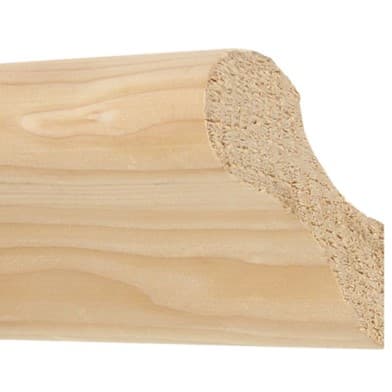
Hemlock Pigs Ear Moulded Handrail
- • This Hemlock pigs ear Handrail is part of the Hemlock range of modern and traditional stair parts.
- • This handrail is a moulded piece of timber that screws directly onto a wall. Screw holes can be filled in with cross grain pellets.
- • This handrail is ideal if you have a narrow staircase.
- • Hemlock stair parts come unfinished. They can be finished by painting, varnishing or waxing.
- • Handrail Size: 94mm x 34mm.
- • Lengths available: 1800mm, 2400mm, 3600mm & 4200mm
Hemlock Cottage Loaf Handrail, 41mm Groove with Infill
- • The Hemlock cottage loaf handrail is part of the Hemlock range of modern and traditional stair parts.
- • The cottage loaf handrail has a 41mm groove, which will allow a 41mm spindle to be fitted into the groove. Infill/spacer comes pre-packed in with the handrail.
- • Hemlock stair parts come unfinished. They can be finished by painting, varnishing or waxing.
- • Handrail Size: 66mm x 45mm, with 41mm Groove and Infill.
- • Lengths available: 1800mm, 2400mm, 3600mm & 4200mm
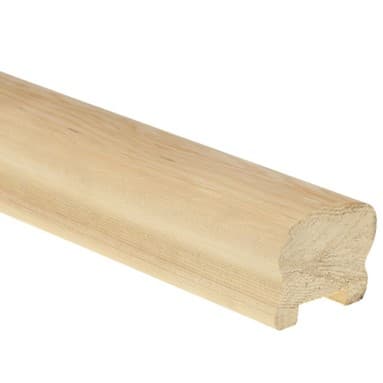
Hemlock Cottage Loaf Handrail, 41mm Groove with Infill
- • This Hemlock HR Handrail is part of the Hemlock range of modern and traditional stair parts.
- • This handrail is ungrooved, so is ideal for use with glass brackets/ clamps and spindles that are fastened directly onto the handrail. It can also be used as a handrail on a wall.
- • Hemlock stair parts come unfinished. They can be finished by painting, varnishing or waxing.
- • Handrail Size: 58mm x 58mm.
- • Lengths available: 1800mm, 2400mm, 3600mm & 4200mm
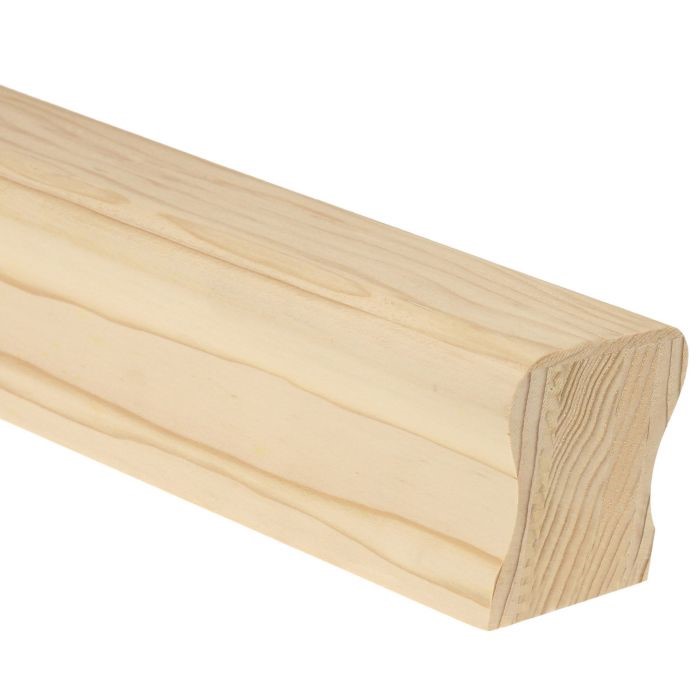
Choosing between oak and hemlock handrails
When choosing between oak and hemlock for your handrail, your first consideration may be strength and durability. Although hemlock is an exceptionally strong wood despite being a softwood, oak is more durable in the longer term and requires less maintenance.
Appearance is also a feature that is usually fundamental. Both oak and hemlock are attractive in appearance, and can be stained or polished to suit your individual tastes. If you prefer to showcase the natural qualities of the wood itself, your personal preferences may be instrumental in making your selection. Picking out the design that you like and fits well into the style of your home is also essential too. Some more traditional homes may be more suited to red oak or white oak timber, whereas the pale brown colour of hemlock could give a more modern feel to your stairs.
Weighing up the practical element with the aesthetics is important to remember, as you want to choose a design you are going to be happy with that will also stand the test of time.
Choosing handrails – other factors to consider
As well as strength, durability, appearance and cost, there are some other essential features to factor into your ultimate decision, such as the size of the handrail and the overall appearance of your staircase.
There is also the choice of grooved handrails and ungrooved handrails. Grooved handrails work excellently with wooden spindles, and allow spindles to sit within the groove of the handrail. However, if you’d prefer to use glass panels, metal spindles or a wall-fixed handrail, ungrooved handrails would be a better choice. You also have the option of glass grooved handrails if you want a staircase with glass panels.
You can view our full range of handrails here.
Frequently asked questions
What colour is hemlock wood?
Hemlock wood is a beautiful and subtle pale brown colour. The wood does not have any knots, and has a stunning uniform grain with black vein lines running through the wood.
What is the best finish for oak stairs?
This will vary according to personal taste, but because the natural grain in oak is so beautiful, it really works well with a clear varnish in order to showcase and highlight its beauty, rather than conceal it. You can also find specific wood oils that are designed for enhancing the natural beauty of wood, such as Treatex Clear Hardwax Oil. Not only does this enhance the finish and bring out the grain of the wood, it adds an extra layer of protection to the surface.
Between hemlock, pine, and oak, which one is best to use for stair parts?
The wood you choose depends on individual tastes and requirements. Hemlock, pine, and oak all have their own benefits and drawbacks, and you should carefully consider which one is best suited to your home based on factors such as your preferred style, strength and expected traffic - you might want something that can meet the demands of a busy household, and cost. Oak has the overall advantage of long-term durability over the other two, but is more expensive. Often, factoring in which wood fits best into the style and decor of your home can be a decisive factor, and the style of handrail is usually the first choice you make over the material itself.
How do you care for wooden stair parts?
Regularly vacuum up the dust that has accumulated on stair parts, including on the stair treads, handrail, base rail and between the spindles. With mild detergent and a damp cloth, wipe away spills or stains on the wood before wiping them over with a dry cloth. This process is best repeated every four to six weeks. You can also view our range of recommended wood finishing products here to keep your staircase looking its best.
Why is hardwood usually more expensive than softwood?
Hardwood comes from trees that take longer to grow, such as oak, and are not as sustainable as softwood trees, like hemlock and pine. The longer growth period generally makes the wood sturdier and stronger, and that is reflected in the cost.
Why choose Jackson Woodturners for stair parts?
Jackson Woodturners have the largest range of stair parts to choose from than any other stair parts retailer in the UK. We can assist you with choosing the right styles, wood and features for your stairway. For stunning wood designs to offset your staircase, choose your stylish wooden handrails from Jackson Woodturners. If you’d like to ask us a question about any of our products, please get in touch with a member of our team today!
Related stair parts planning and advice
Oak vs pine handrails – choosing the best option for you
Your guide to types of handrails
Stair Handrail Designs: What Are Your Options?
To help you choose from our available ranges, why not download our brochure.


