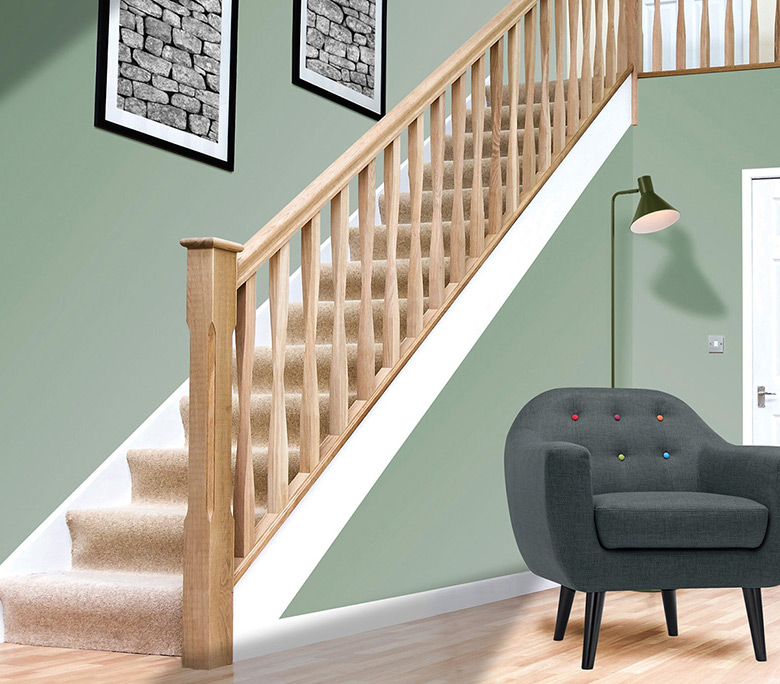
Oak and pine are both exceptionally popular choices for handrails, and both come with their own benefits. Both showcasing style, strength and a variety of colours, it can be a difficult choice to decide which one is perfect for your house. But, which is the best option for you, Oak or Pine?
As a hardwood, oak is denser and stronger, which makes it more durable and less vulnerable to scratches and dents. Pine, a softwood, is more lightweight than oak and tends to be less expensive too. When you are choosing the ideal handrail for your wooden stairs, it can help to compare the pros and cons of each wood and the designs available for each to examine exactly how they would be suited for your staircase.
Read on to take a look at some of the key features of these two kinds of woods and the factors to consider when selecting the perfect timber for your handrail. We also look into the handrail design options available for each type of wood available at Jackson Woodturners.
Click on a link to jump to that section:
Read the key differences between both types of wood.
Find out what handrail designs are available in each wood option.
Read our guide to choosing between oak and pine handrails.
Find out what other factors you need to consider when choosing between oak and pine.
We answer frequently asked questions on oak vs pine handrails.
Oak vs pine – the key differences
Strength
Oak has typically been prized for its exceptional strength. Oak trees can take hundreds of years to grow, making their wood a dense hardwood that can withstand heavy-duty use and force.
Pine trees grow more quickly than oaks, and because of this, their wood is softer. Although it’s not as strong as oak, pine is still strong enough to provide a good option for use in stair rails, and offers the added benefit of being lightweight.
Appearance
Generally, pine tends to be lighter in colour than oak with a yellow or reddish tint which can gradually darken. With straight grain and attractive knots, pine offers a unique and striking style. Oak is often a light to golden brown with an extremely pronounced grain.
Cost
Expense is a key factor when selecting wood stair parts. Due to pine's faster growth rate and oak's superior strength and durability, pine is the less expensive of the two kinds of wood. However, an oak staircase can last longer in optimum condition, making it a potentially cost-effective long-term solution for your stairs.
Durability
As well as being strong, oak is a very durable wood that can last for a long time without deteriorating, even after long-term, heavy-duty use. This means it is less likely to dent, stain or wear down in the long term, and it’s a very low maintenance wood, so easy to care for. Pine is a very sturdy wood, but it doesn't boast the same long-term durability as oak. Being a soft wood, it may dent and knock easier, so may need a little more attention to keep it looking its best over time.
Painting and finishing
Oak is perfect for staining and polishing, primarily chosen for its beautiful natural finish. Pine looks exceptionally stylish when varnished, painted or stained, so if you have a colour scheme in mind, this would be a perfect option.
You can view our full range of oak handrails and pine handrails here.
Choosing handrails – other factors to consider
Weighing up all the pros and cons for each wood to decide which will be perfectly suited to your needs, there can be some other factors to consider too.
- • The size of the handrail - ensure you measure this correctly as they are available in different lengths and styles vary in width. You can find out more about choosing the right handrail here.
- • Choose between grooved and ungrooved handrails. Grooved handrails allow spindles to sit within the groove of the handrail – for example:
-
- ○ a 32mm spindle would sit in a 32mm grooved. Once the spindles are in place, the gap between the spindles can then be filled using an infill strip. You can also choose glass grooved handrails, which have a deep channel running the length of the handrail to accommodate a glass panel. Silicone can be bought separately to secure either the glass or spindles in place.
- ○ Ungrooved handrails, on the other hand, require brackets or clamps to be screwed directly into the handrail. Brackets and clamps can be attached to both glass panels or metal spindles. This can provide a slightly more decorative feel to your staircase. An ungrooved handrail can also be used as a handrail on the wall.
Are you still unsure of which type of handrail to choose? View our full range of handrails here.
Oak handrails – example products
Oak cottage loaf handrail 32mm groove with infill
- • The Oak cottage loaf handrail is part of the Oak range of modern and traditional stair parts.
- • The HR handrail has a 32mm groove, which will allow a 32mm spindle to be fitted into the groove. Infill/spacer comes pre-packed in with the handrail.
- • Oak stair parts come unfinished and can be finished by painting, varnishing or waxing.
- • Handrail Size: 66mm x 45mm, with 32mm Groove and Infill.
- • Lengths available: 1800mm, 2400mm, 3600mm & 4200mm
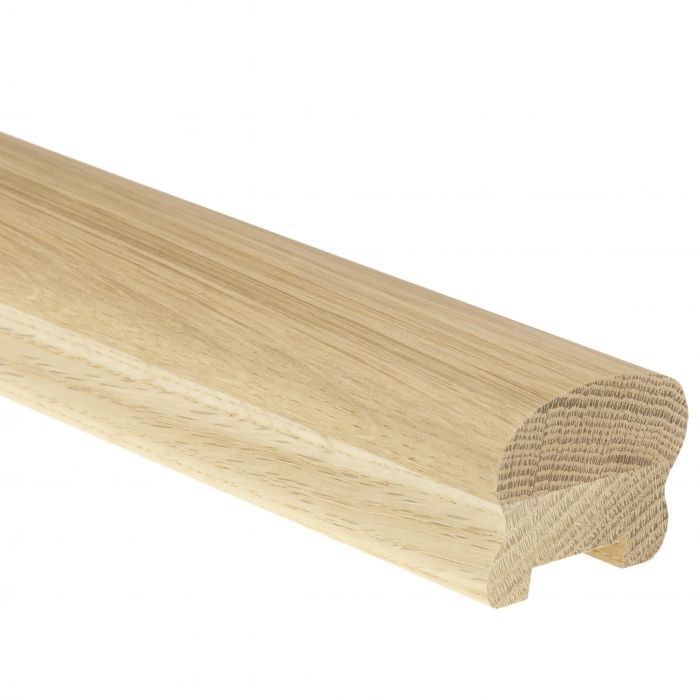
Oak Ungrooved HR Handrail
- • This Oak HR Handrail is part of the Oak range of modern and traditional stair parts.
- • This handrail is ungrooved, so is ideal for use with glass brackets, clamps and spindles that are fastened directly onto the handrail. It can also be used as a handrail on a wall.
- • Oak stair parts come unfinished and can be finished by painting, varnishing or waxing.
- • Handrail Size: 58mm x 58mm.
- • Lengths available: 1800mm, 2400mm, 3600mm & 4200mm
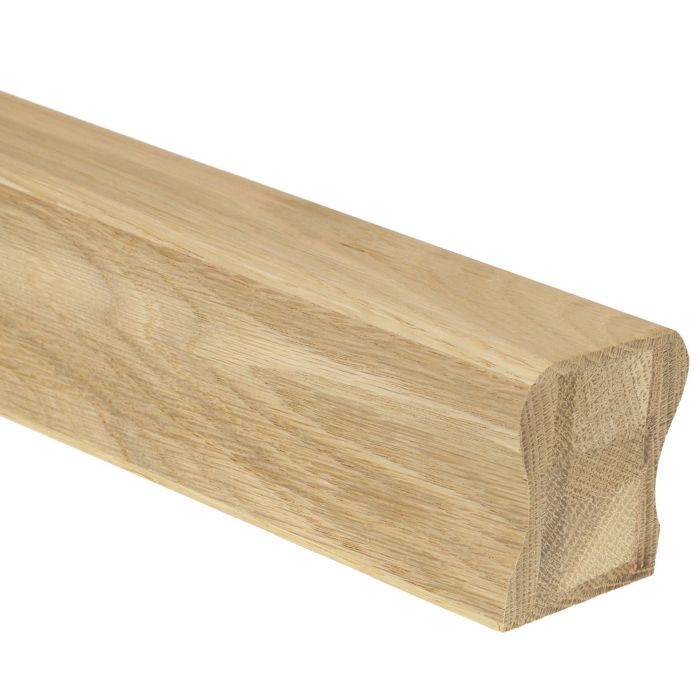
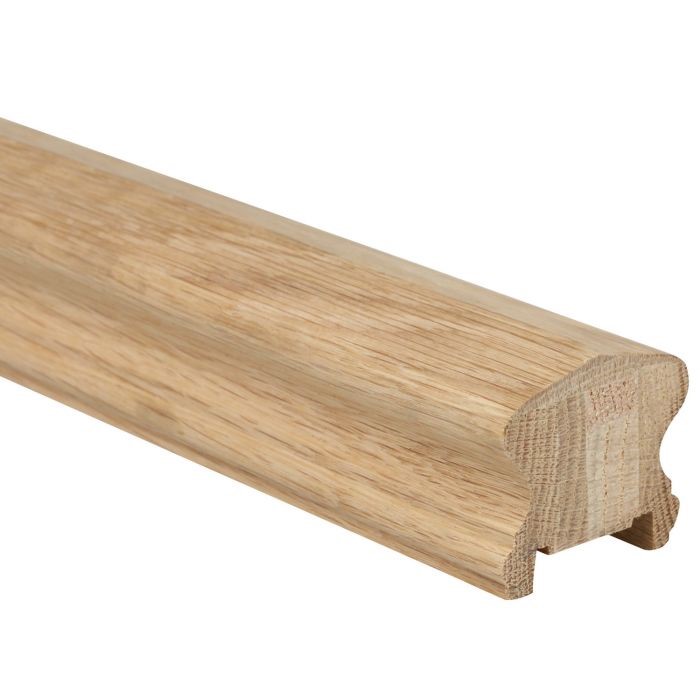
Oak Traditional Handrail 41mm Groove with Infill
- • The Oak TR handrail is part of the Oak range of modern and traditional stair parts.
- • The TR handrail has a 41mm groove, which will allow a 41mm spindle to be fitted into the groove. Infill/spacer comes pre-packed in with the handrail.
- • Oak stair parts come unfinished and can be finished by painting, varnishing or waxing.
- • Handrail Size: 67mm x 60mm, with 41mm groove and infill.
- • Lengths available: 1800mm, 2400mm, 3600mm & 4200mm
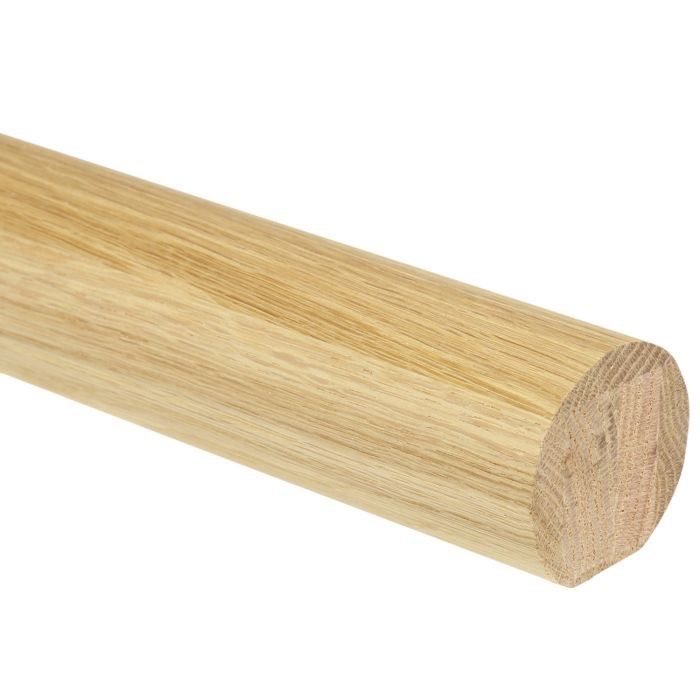
Oak Round Mopstick Handrail
- • This Oak mopstick handrail is part of the Oak range of modern and traditional stair parts.
- • The mopstick handrail is an ideal handrail to be mounted onto a wall. Decorative wall brackets and end caps are available to complete the look.
- • There is a 25mm flat on the underside of the rail.
- • Oak stair parts come unfinished and can be finished by painting, varnishing or waxing.
- • Handrail Size: 54mm diameter.
- • Lengths available: 1800mm, 2400mm, 3600mm & 4200mm
Pine handrails – example products
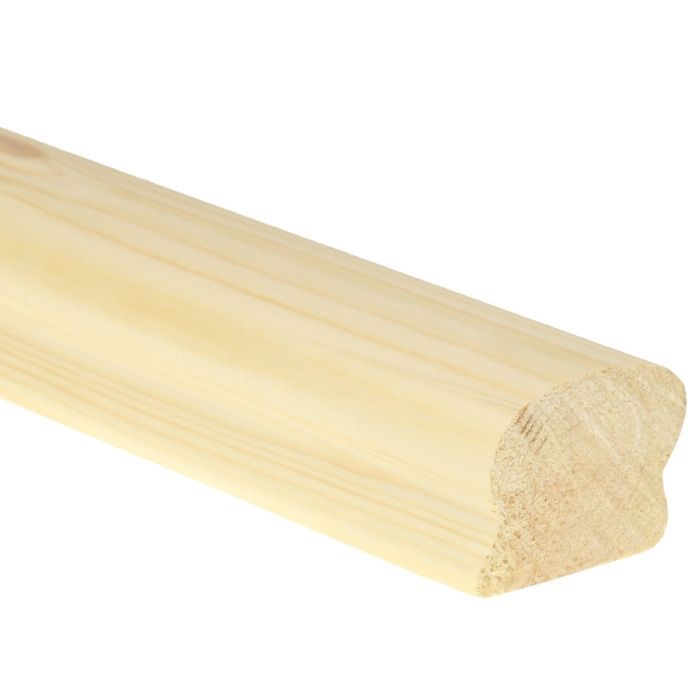
Pine Cottage Loaf Handrail ungrooved
- • The Pine cottage loaf handrail is part of the Pine range of modern and traditional stair parts.
- • The cottage loaf handrail is ungrooved so that you can use metal spindles or glass clamps directly onto the rail.
- • Pine stair parts come unfinished. They can be finished by painting, varnishing or waxing.
- • Handrail Size: 66mm x 45mm. This handrail has no groove.
- • Lengths available: 1800mm, 2400mm, 3600mm & 4200mm
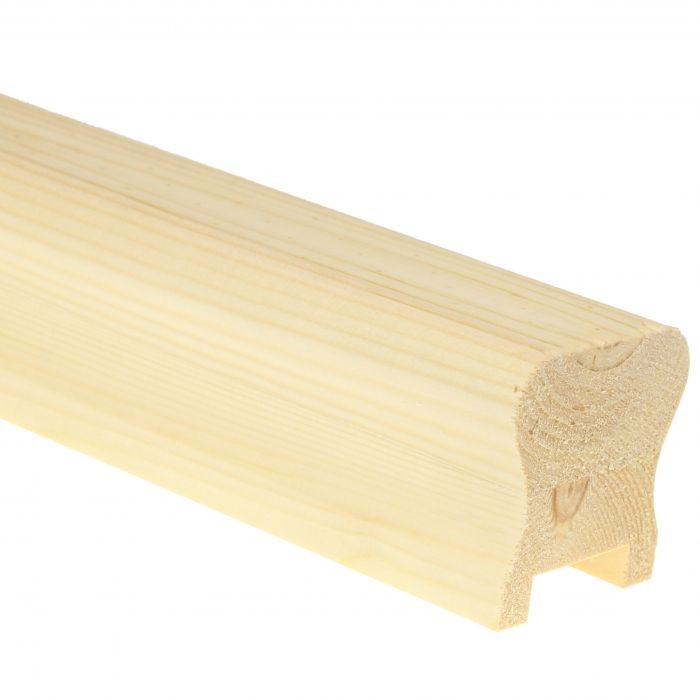
Pine HR Handrail, 41mm Groove with Infill
- • The Pine HR handrail is part of the Pine range of modern and traditional stair parts.
- • The HR handrail has a 41mm groove, which will allow a 41mm spindle to be fitted into the groove. Infill/spacer comes pre-packed in with the handrail.
- • Pine stair parts come unfinished. They can be finished by painting, varnishing or waxing.
- • Handrail Size: 59mm x 56mm, with 41mm Groove and Infill.
- • Lengths available: 1800mm, 2400mm, 3600mm & 4200mm
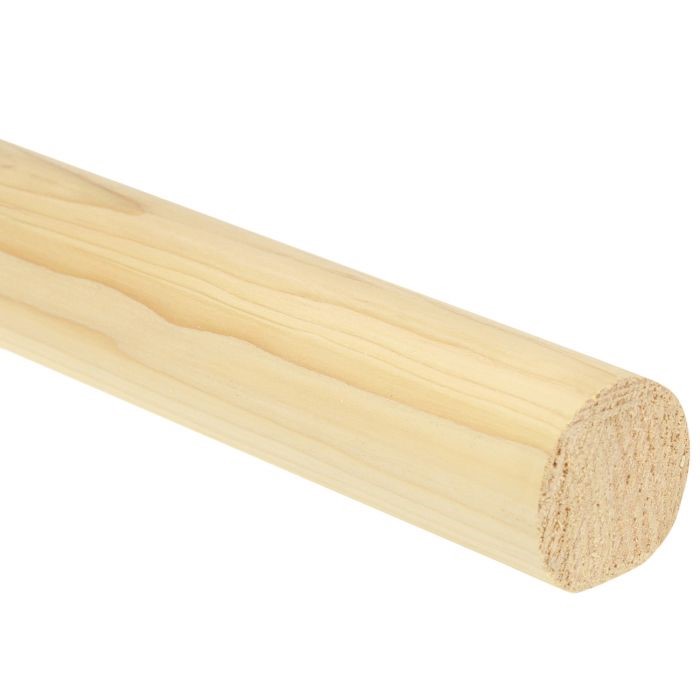
Pine Round Mopstick Handrail
- • This Pine mopstick handrail is part of the Pine range of modern and traditional stair parts.
- • The mopstick handrail is an ideal handrail to be mounted onto a wall. Decorative wall brackets and end caps are available to complete the look.
- • There is a 25mm flat on the underside of the rail.
- • Pine stair parts come unfinished. They can be finished by painting, varnishing or waxing.
- • Handrail Size: 54mm diameter.
- • Lengths available: 1200mm, 1800mm, 2400mm, 3600mm & 4200mm
Choosing between oak and pine
When choosing between oak and pine for your handrail, it's important to consider what kind of design you prefer. Do you enjoy the traditional, knot-free appearance of oak or the unique grain of pine? If you prioritise strength and require wood that can withstand heavy-duty use without denting or scratching, oak may be a good option for you. However, the size of your budget is also a key factor in your choice too. With oak being a more expensive option than pine, the latter delivers good quality on a lower budget.
Read more about the benefits of oak here.
High quality handrails at Jackson Woodturners
For a high-quality finish and stylish look, Jackson Woodturners have it covered. With decades of experience and experts on hand to help you choose the right stair parts for you and your style. Get in touch with us, visit our showroom or shop online today.
Frequently asked questions - oak vs pine handrails
Is pine stronger than oak?
No, pine is a softwood and consequently less strong than oak. As oak is formed, it builds up layers that make it stronger and more resistant to wear and tear. Oak is also much heavier, impacting its durability and hardness. However, pine still offers good strength and durability.
Which types of woods stain the best for wood stairs?
Oak is an extremely versatile wood that works well when stained in order to showcase the natural timber. Pine is perfect for staining, varnishing or painting.
Why is pine cheaper than oak?
Pine trees grow more quickly and are more sustainable than oaks. Their wood is softer and neither as strong nor as durable as oak wood. Consequently, pine is less expensive than oak but is still long lasting.
How do you care for wooden stair parts?
Taking good care of your stair parts will keep them in premium condition for longer. Regularly vacuum any dust, dirt or grime that has accumulated on stair parts, including stair treads, the handrail, the base rail and between the spindles. Use a damp cloth with a mild detergent to remove any spills or stains on the wood before drying the wood with a clean cloth. You can also treat wood to keep it looking its best with varnish or oils. Treatex clear hardwax oil, for example, helps to protect and enhance the natural beauty of wood. Filler can also be used for filling imperfections and comes in different colours to suit your wood type.
You can shop our full range of finishings here.
Is white oak more expensive than red oak?
Red oak is more common and faster growing than white oak, so production costs tend to be lower, which subsequently results in lower costs to the consumer.
How can you tell if the wood is oak or pine?
Pine has a very distinctive pattern of knots with a straight grain and beige or yellow colour. Oak has a larger colour range from blonde to dark browns and is knot-free with a pronounced grain.
Is pine or oak better for stairs?
It depends on your individual requirements. Pine is less expensive than oak and has an excellent finish, but it’s not as hard wearing or strong. Oak is exceptionally durable and timelessly stylish but costs more.
What types of softwood and hardwood stair parts are available for handrails?
Softwood options include pine and hemlock, whilst oak and ash are popular hardwoods available for handrails.
Related content
Oak vs hemlock handrails


