
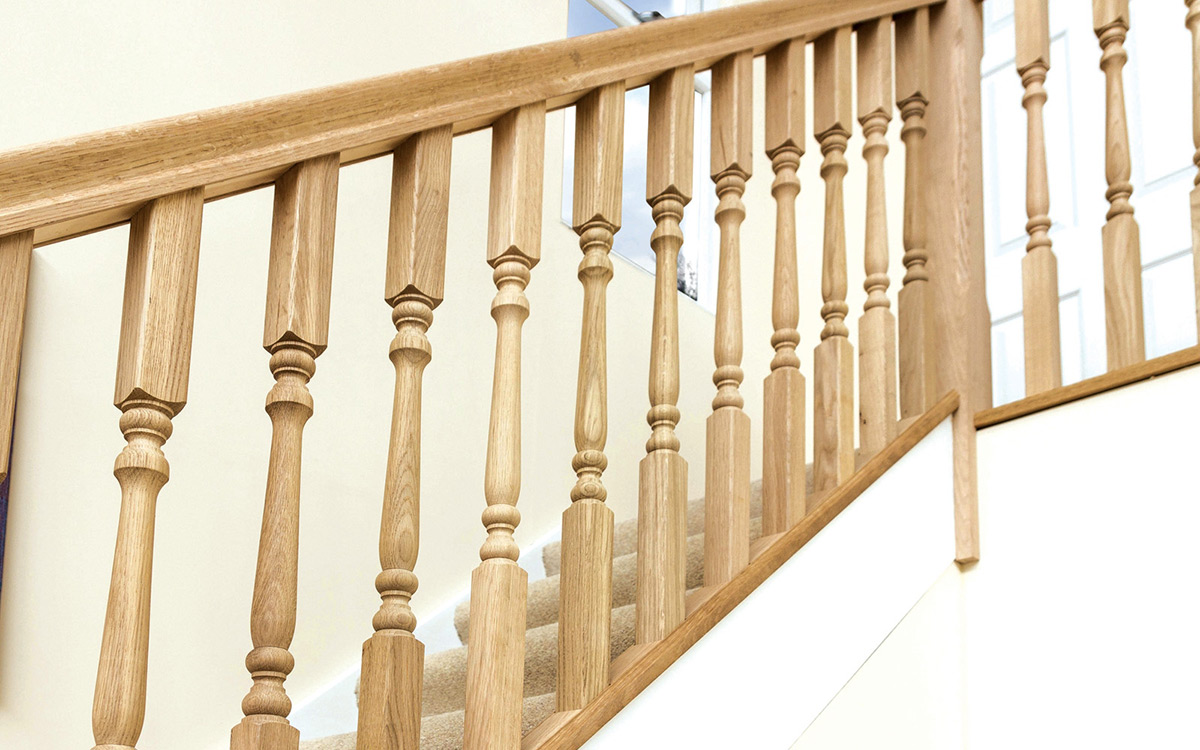
Oak is a hardwood, which means it’s extremely tough and resistant to dents and scratches. The distinctive tiger stripe on oak makes it instantly recognisable. Oak staircase parts can add character and warmth to your staircase. So, what are the benefits of choosing oak stair parts for your renovation project?
Oak is a great choice if you’re looking for a stair part material that’s strong, durable and long-lasting. It provides a classic and timeless look that can work in any home. Oak stair parts include spindles, newel posts, handrails and base rails.
Continue reading our oak stair parts guide to learn more.
Click on a link to jump to that section:
- What are oak stair parts?
- Learn more about oak and why it’s such a popular material for stair parts.
- The benefits of oak stair parts
- Understand why you should consider oak stair parts for your renovation.
- How much do oak stair parts cost?
- Find out how expensive oak stair parts are.
- How to care for oak stair parts
- Learn how to look after your new oak stair parts.
- How to combine oak stair parts with other materials
- Get our top tops for combining oak stair parts with other materials.
- Stair parts made from oak
- View all the types of oak stair parts we offer and our recommended products.
- Oak stair parts FAQs
- Get answers to the most commonly asked questions about oak stair parts.
What are oak stair parts?
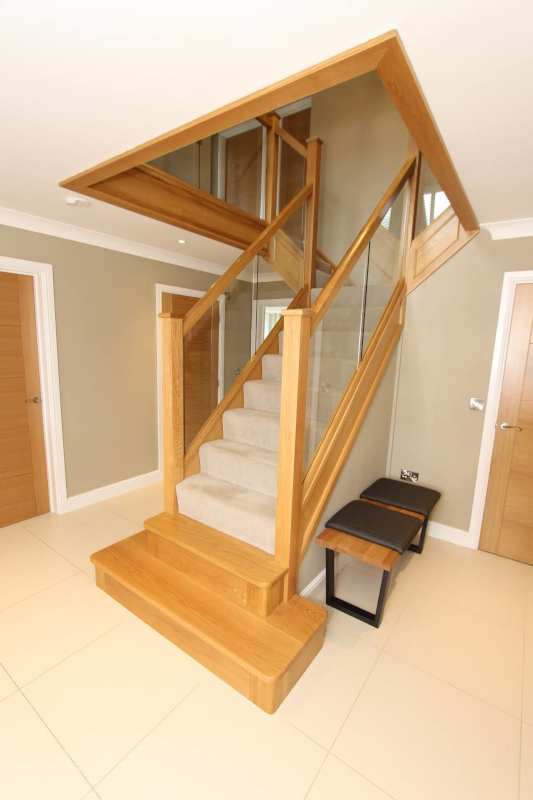
Oak stair parts are made from oak, a hardwood renowned for its strength, durability and resistance to decay. This hardwood is native to the northern hemisphere and is considered one of the best materials for woodworking.
There are over 600 species of oak, but at Jackson Woodturners all our oak stair parts are crafted from white oak (Quercus alba). White oak is native to eastern and central North America and is prized for both its attractiveness and durability. It’s a light-coloured wood with a straight grain and distinctive growth rings. White oak is one of the strongest hardwoods in the world with a Janka hardness scale rating of 1350.
The benefits of oak stair parts
Oak is a popular option for stair parts, offering outstanding durability and strength. If, for example, you have bought a home and you are looking to improve the look and feel of a house you will be living in for many years to come, oak might be the ideal choice. By investing in a durable wood such as oak, you can also rest assured that your staircase won’t get damaged easily. This can be extremely useful if you have kids who are likely to spill drinks or will likely touch stair parts with dirty hands.
Oak is known for its classic look, and its distinctive tiger-stripe grain makes oak handrails a great, eye-catching addition to the home.
How much do oak stair parts cost?
Oak stair parts are typically more expensive than other types of wood, so they should be seen as an investment. You also have peace of mind that your stair parts will last you a long time, and won’t require too much maintenance.
If, however, you are planning on moving on from your home fairly soon, you may not want to invest in one of the pricier woods, such as oak. It is wise to look at your budget and see whether a timber such as pine might be a better option for you. These less expensive choices can still look great but will cost less and might not be as long-lasting.
How to care for oak stair parts
Oak stair parts are easy to clean and maintain. You can keep your oak balustrade clean by wiping it with a soft damp cloth. Although you can use a cleaner designed specifically for wood, it’s otherwise best to avoid chemical cleaners as they can damage the wood or finish or even stain the wood.
You should polish your oak stair parts as often as possible with a soft, non-abrasive cloth to keep the rich colour and shine looking perfect. You can often buff or very carefully sand out a superficial scratch or chip on oak hardwood.
It’s a good idea to ensure you keep extra supplies of your chosen varnish or other finish to cover up the results of any area that has needed to be buffed or sanded.
How to finish oak stair parts
Oak stair parts come unfinished and can be finished by oiling, waxing or varnishing. We go over how to finish your oak stair parts in your choice of finish below:
How to oil oak stair parts
Untreated oak should be oiled immediately to prevent it from drying out. You should choose an oil that has been formulated specifically for use on natural wood, such as a hard wax oil. This will ensure it contains the needed preservatives. Hardwood stair parts, like oak, typically require only two coats of oil.
Here are some tips to follow for oiling oak stair parts:
- Stir the oil thoroughly before use.
- Use a brush or soft cloth and apply the oil thinly and evenly in the direction of the oak grain.
- Wipe off any excess oil.
- Let the oiled oak dry for at least four hours in a well-ventilated area.
- Apply a second coat of oil and let it dry for at least four hours.
- Buff the oiled oak with a soft cloth to make it shine.
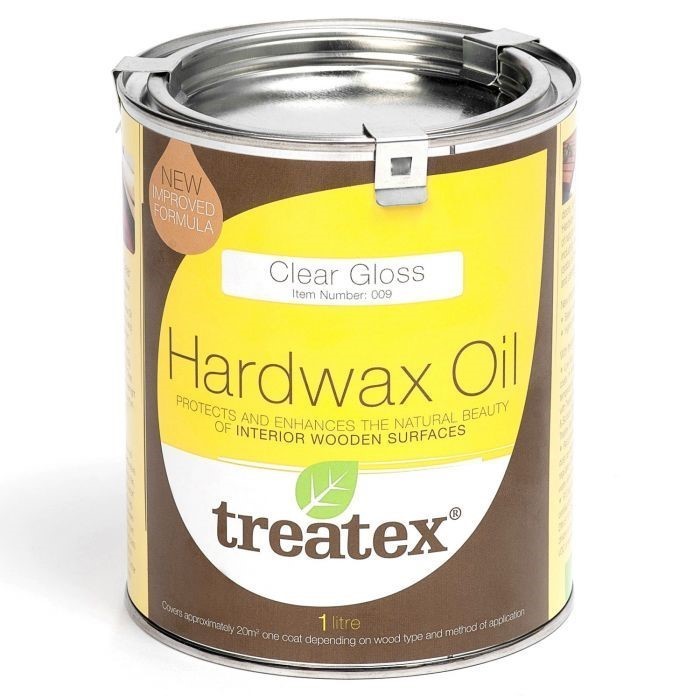
At Jackson Woodturners, we recommend Treatex Natural Hardwax Oil Ultra. A thin coat of this can be applied to unfinished oak before sealing with Clear Treatex Hardwax Oil.
Treatex Hardwax Clear Gloss Oil:
- Just two coats of our Clear Hardwax Oil will protect and enhance wooden surfaces
- Provides a hard-wearing and attractive finish
- Quick-drying and easy-to-maintain
How to wax oak stair parts
After you’ve applied oil to your oak stair part, you can also choose to add wax to protect it from dirt, oil and moisture. Wax binds to the oak, creating a hard-wearing, natural-looking finish that won’t chip with heavy use.
We recommend using Treatex oil which combines the properties of wax and oil to give you the best of both worlds. Shop our range of Treatex oil here.
How to varnish oak stair parts
Another option for finishing oak stair parts is a varnish, such as polyurethane. This is a clear sealer that will protect the oak from wear and tear, scratches and moisture. It’s generally recommended to apply at least three coats of varnish for maximum protection. Here’s how:
- Ensure the oak is clean and dry before you apply the varnish.
- Apply a coat of varnish with a brush and let the oak dry for at least eight hours.
- Apply two more coats of varnish, ensuring each coat has dried for at least eight hours before starting on the next one.
How to combine oak stair parts with other materials
When buying oak stair parts, you should also consider whether you want to combine oak with other materials such as metal and glass. Here are some guides on how to combine oak with different materials and the parts you need:
Combining oak and glass stair parts
Oak and glass go particularly well together and are commonly used to combine modern and traditional themes. Combining glass and oak requires either glass grooved handrails and base rails, or glass panels can be attached to a non-grooved handrail with glass clamps.
You can read more about glass panels here.
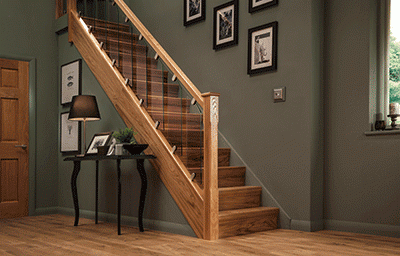
From the Elements with Glass range, this staircase features white oak handrails with glass brackets and glass panels.
You can shop our full range of glass stair parts here.
Combining oak and metal stair parts
Wood is often combined with various metal spindles, creating an eye-catching staircase. You can connect metal spindles to ungrooved oak handrails, as a spindle foot can screw directly into the rail. Metal spindles can also be connected to grooved handrails designed for metal, which have a smaller groove. Metal spindles can be attached using infill. We offer metal spindles in nickel, chrome, and wrought iron.
You can shop our full range of metal stair parts and specifically metal stair spindles here.
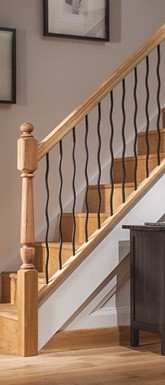
From the Elements range, this staircase features a combination of oak and black metal
We also offer wood stair parts in pine, hemlock and walnut.
Stair parts made from oak
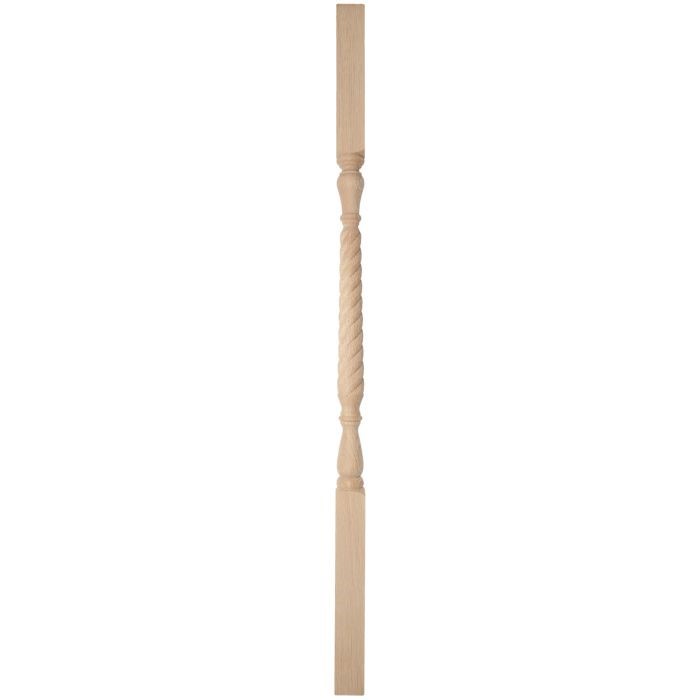
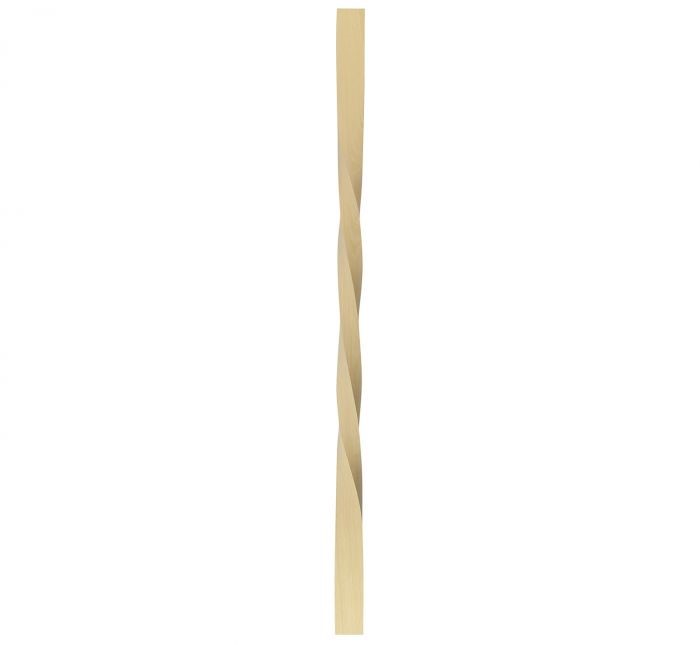
Oak spindles
White oak is a popular choice for wooden spindles, and there are many designs to choose from. At Jacksons, we supply oak stair spindles in the following sizes:
You can see the different designs available for oak spindles here.
Things to consider when buying oak spindles
You should take into consideration whether your staircase is closed string or cut string. The strings on a staircase are the sides which the treads and risers are housed into. In a closed string staircase, the spindles are fixed to a base rail at the bottom and a handrail at the top. In a closed string staircase, the edges of the steps will be hidden.
In a cut or open string staircase, the side profile of the steps will be visible or even overhang the string. As the stair treads and risers are exposed, the spindle sits directly on the stair tread. For this style, you will need two spindles on each tread. The front spindle should be 900mm long and the back spindle 1100mm.
If your staircase diminishes, you should bear in mind that the spindles will begin to shorten in size as the spindles hit the ceiling line.
Recommended products:
Oak newel posts
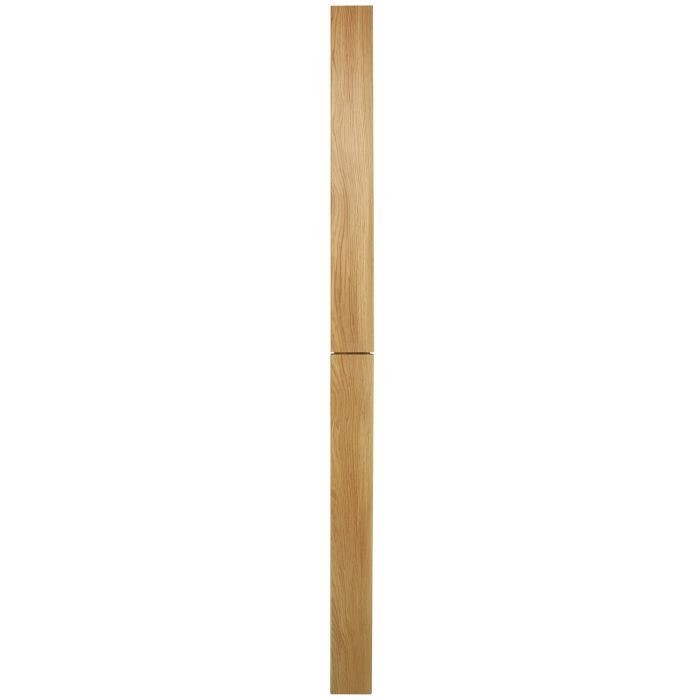
We have a range of oak newel posts in various designs to suit your preferences. You need to consider the conjunction of your stairs when buying or replacing newel posts, as you may need half newel posts or continuous newel posts. You also need to know whether you’re replacing the newel post completely or keeping the existing newel base and attaching a new newel post on top.
You can read about how to attach a newel post to a newel base or replace a newel post completely here.
What are half newel posts?
Half newel posts are used to attach a balustrade to a landing wall. They also provide an attractive finish to the balustrade and help to tie-in the overall look of the staircase.
What is a continuous newel post?
A continuous newel post is used in conjunction with a handrail and handrail fittings, which allows the handrail to flow over the top of the newel post.
Recommended products:

Oak newel caps
Oak newel caps provide a traditional style and put the final touch to your staircase.
Recommended products:
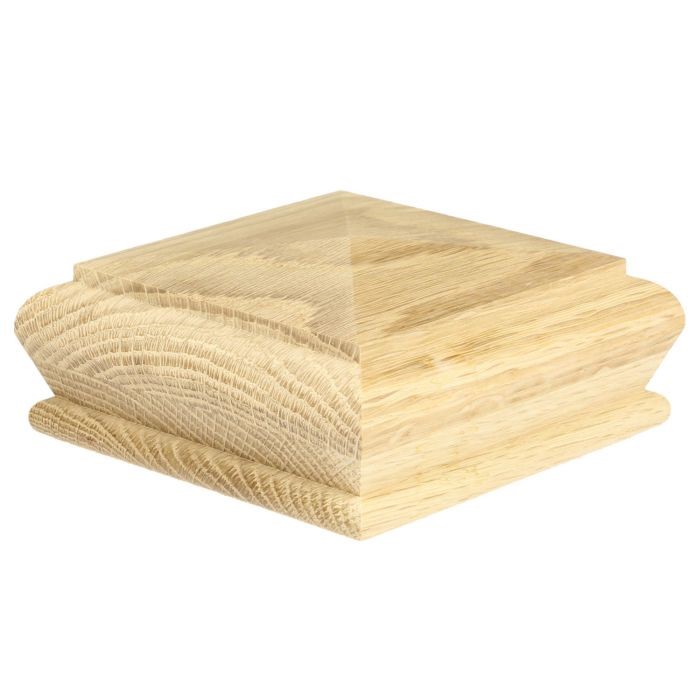
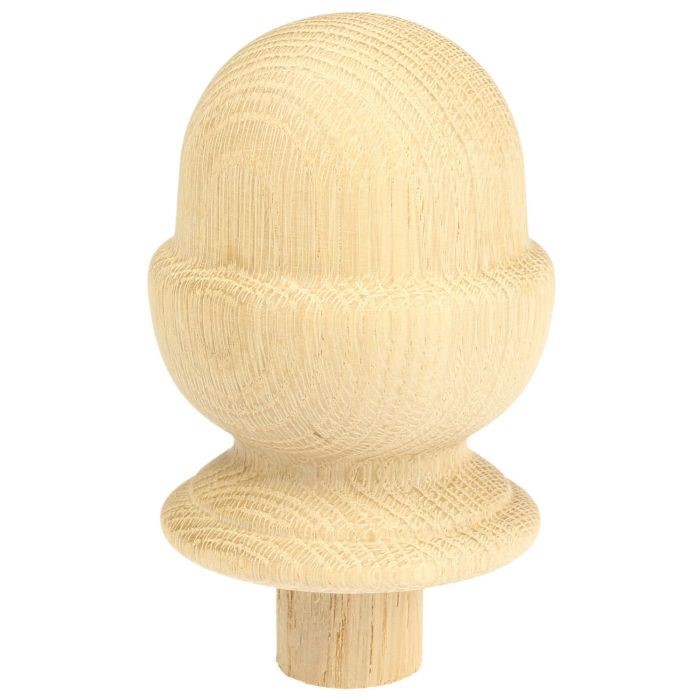
If you are replacing your oak newel cap, you can read our guide How to replace newel caps.
Oak and metal newel caps
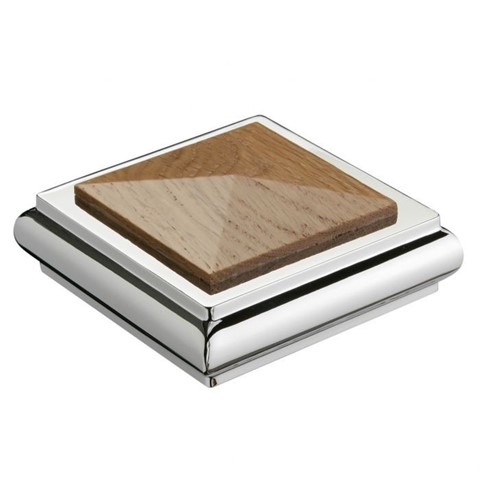
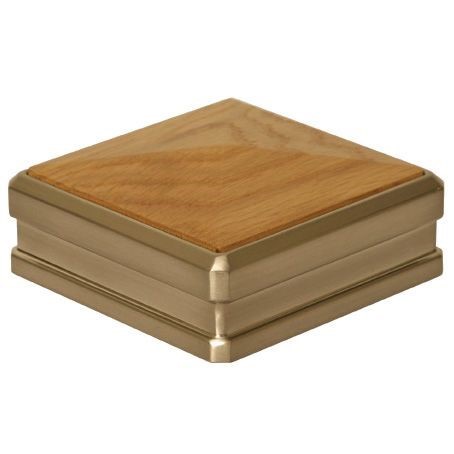
If you are looking to replace a newel cap, you may also want to consider white oak and metal newel caps. View our oak and chrome newel caps range and oak and nickel caps range.
View our full range of newel caps here.
Recommended products:
Oak handrails and base rails
Before purchasing a handrail or base rail, you should consider the design of your staircase and the type of handrail and base rail you need. You can choose between the following types of oak handrails and base rails:
Glass grooved oak handrails and base rails
Glass grooved oak handrails and base rails have a deep channel which is designed for the glass panels to be slotted.
Recommended products:
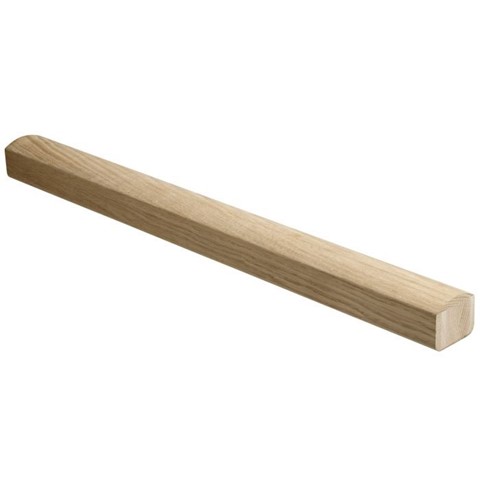
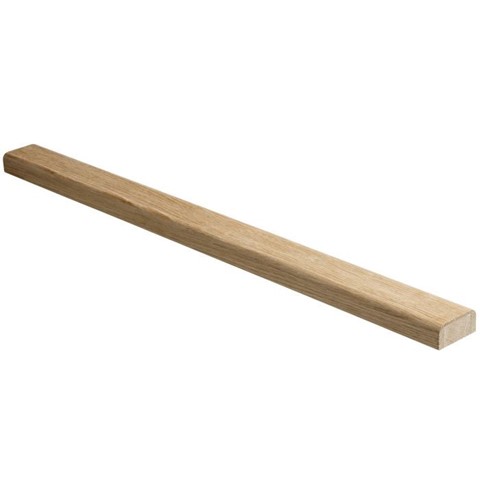
Glass ungrooved oak handrails and base rails
Ungrooved oak handrails are better suited to metal spindles or glass brackets and panels, as the bracket/clamps or spindle foot screw directly into the rail.
Recommended products:
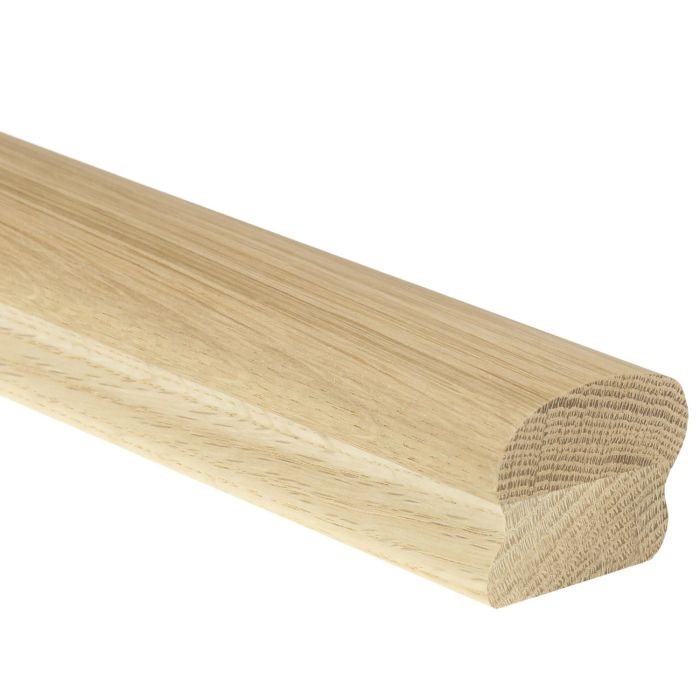
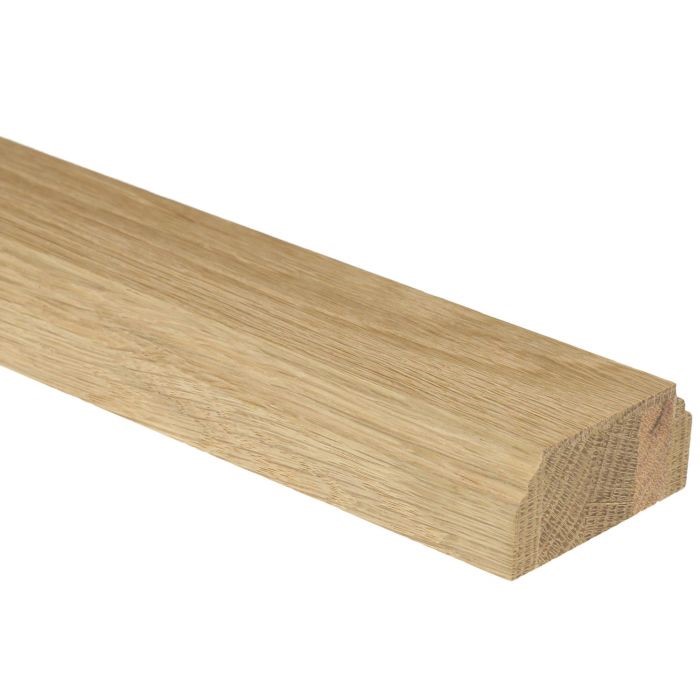
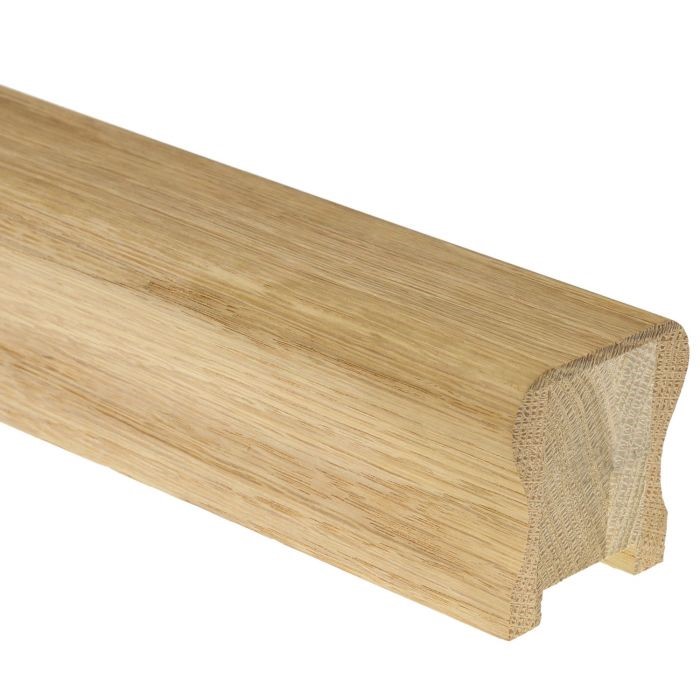
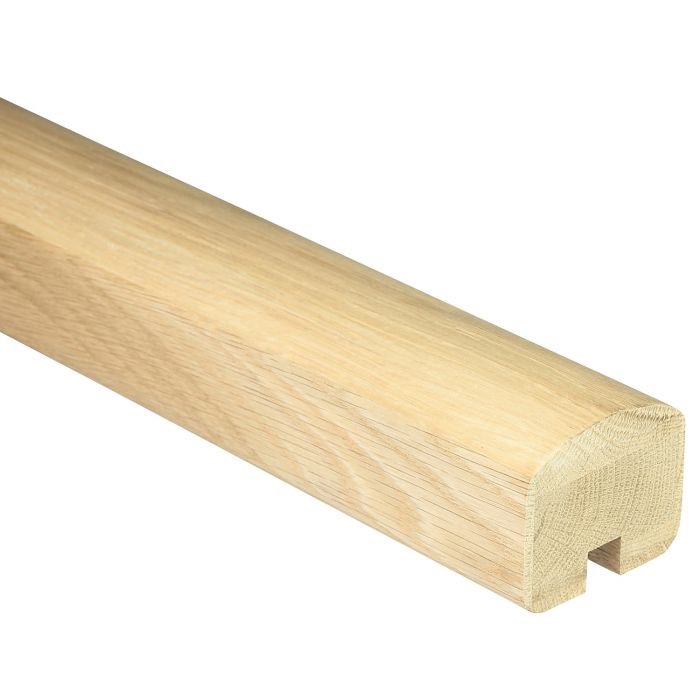
Grooved oak handrails and base rails
Grooved handrails have a groove running through the centre of the rail into which spindles easily slot. Handrails designed for metal spindles have a smaller groove to allow them to fit accurately, such as the iron handrail featured below.
Recommended products:
Shop our full range of grooved oak handrails and base rails.
Wall-mounted handrails
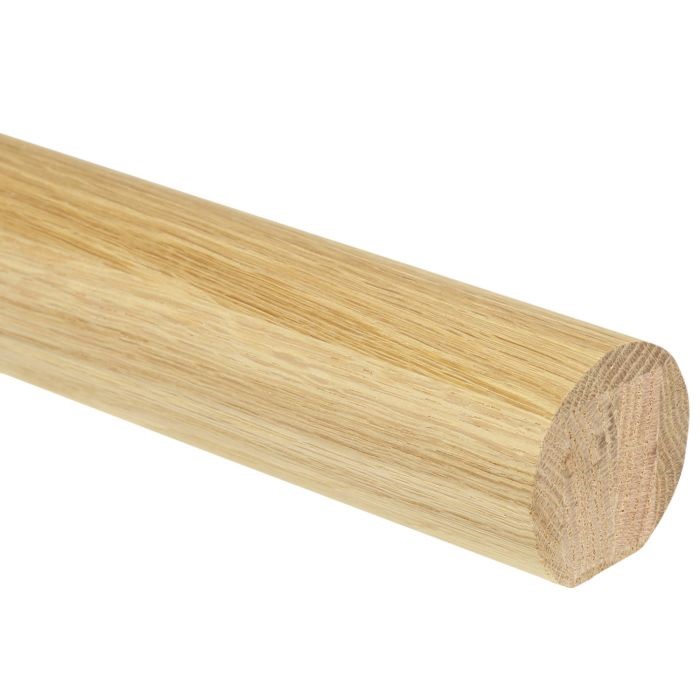
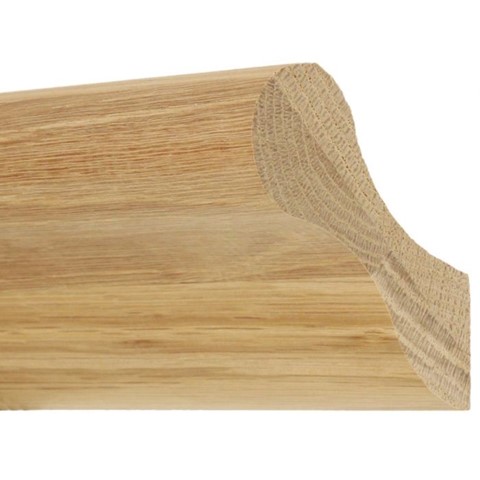
We have both mopstick and pigs ear handrails available in oak.
Oak mopstick handrails and pigs ear moulded handrails are designed to be mounted on a wall. You can combine oak mopstick with metal brackets and end caps to complete the look. You can attach your handrail brackets to our white oak wall patrice.
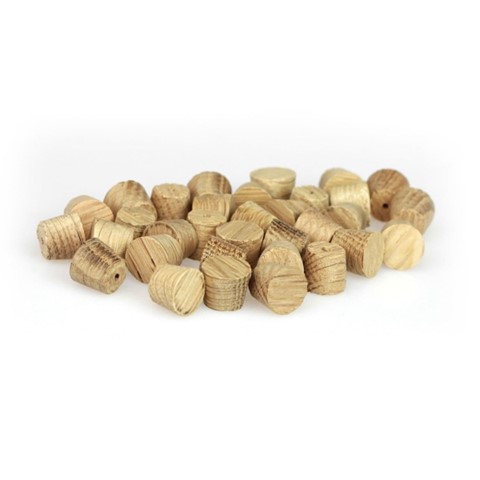
Pigs ear handrails can be screwed directly onto the wall, and screw holes can be filled in with cross-grain pellets.
Recommended products:
You can read our guide to base rails and guide to handrails for more information on each.
Oak bullnose steps
Bullnose steps sit at the edge of your staircase and create that final finishing touch to your stairs. Our oak bullnose oak steps are made to order, and we have left-hand and right-hand bullnose steps.
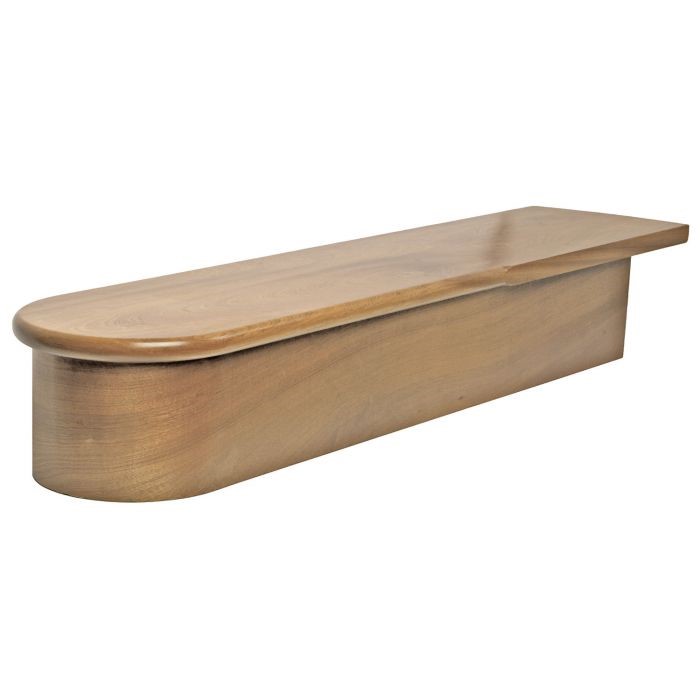
Shop our left-hand and right-hand white oak bullnose steps.
Oak cross-grain pellets
Cross-grain pellets are used in many forms of joinery and are primarily designed to hide screws or bolt heads. They also help finish off the joined timber to a smooth, uninterrupted surface, concealing the joint.
Oak stair parts from Jackson Woodturners
At Jackson Woodturners, we offer the largest selection of contemporary and traditional stair parts in the UK, including high-quality oak stair parts. We offer oak newel posts, newel post caps, oak handrails, oak base rails and oak spindles.
View our full range of oak staircase parts on our website. Or contact the team if you have any questions about half newel posts or any other stair parts. You can call our staircase experts on 0114 272 1228 or email [email protected]
Oak stair parts FAQs
How do you paint an oak handrail white?
It is possible to paint an oak handrail white, but sanding and preparing the wood is an essential part of this process. You will need to take extra care to make sure this is done to a high standard to ensure that no colour comes through in the finished result.
If you’re planning on painting your handrail, we recommend purchasing one of our white-primed handrails. These come professionally primed so they are ready to receive a top coat of paint, without any preparation.
How do you combine glass with oak?
Combining wood and glass can create an effective combination of modern and traditional themes. You can attach glass panels to grooved wooden handrails and base rails using infill. All of our grooved oak handrails come with infill included to make things easier.
You can shop our range of glass panels here.
Why are white oak stair parts so popular?
White oak is very sturdy and durable. Grown in the east of America, it is a popular option as it is a strong hardwood that takes stains and polishes very well. White oak is also generally heavier and more wear-resistant than softwoods. It also has a luxurious, natural appearance that creates a classic look.


