Changing the look of a staircase is not the type of home improvement many people would consider. In fact, more often than not, many homeowners choose to live with a less-than-perfect staircase rather than go to the effort and expense of redesigning it.
To find out more about why people shy away from refurbishing their staircases, we ran a survey. Here’s what we discovered:
The results
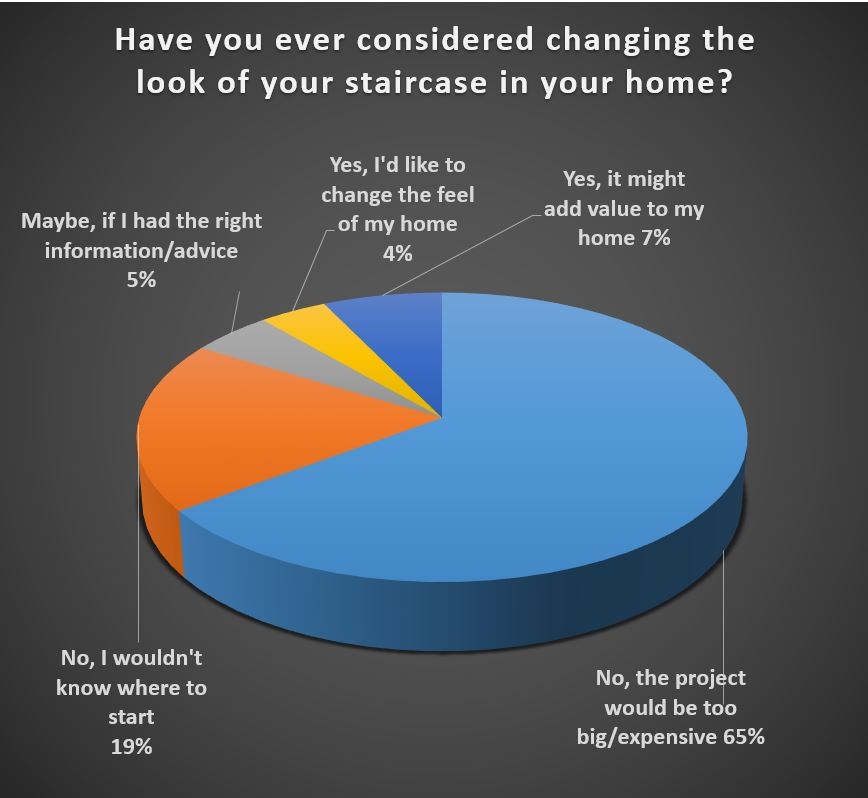
- Most people (84%) wouldn’t even consider changing the look of their staircase.
- This was unanimous among both male and females across all age groups.
Of the 16% who would consider changing their staircase:
- those in the 35–44 age bracket showed the most interest in making improvements, citing the potential increase in house value as an incentive
- men would be most tempted to change the look of their staircase to increase the value of their home, whereas women would be tempted to carry out the work to change the feel of their home
- over 65s expressed the least concern over ‘not knowing where to start’, although the majority still believed that the project would be too big or expensive
- the 25–34 age group would be least likely to attempt the work, even with the right information
Bring in the experts
As with all renovation projects, the perception of the job isn’t always in keeping with the reality. To find out exactly what refurbishing a staircase really involves—and whether it’s ultimately worth the effort—we decided to seek advice from the experts:
Steve Reading—Managing Director of Collier Reading Architects
Lucie Jackson—Director of Jackson Woodturners
Rebecca Dupere—Owner of Dupere Interior Design
Phil Price—Managing Director of Crucible Sales and Lettings
A daunting project
The survey revealed that a large percentage of respondents (65%) see changing the look of their staircase as a huge, very expensive job. However, this isn’t necessarily the case, as Steve Reading of Collier Reading Architects advises:
“Relocating a staircase in its entirety is usually considered as a last resort, as it’s just too disruptive and can be a costly exercise. But the staircase handrail and balustrading can be replaced fairly easily, resulting in a visual transformation.”
Lucie Jackson from Jackson Woodturners couldn’t agree more:
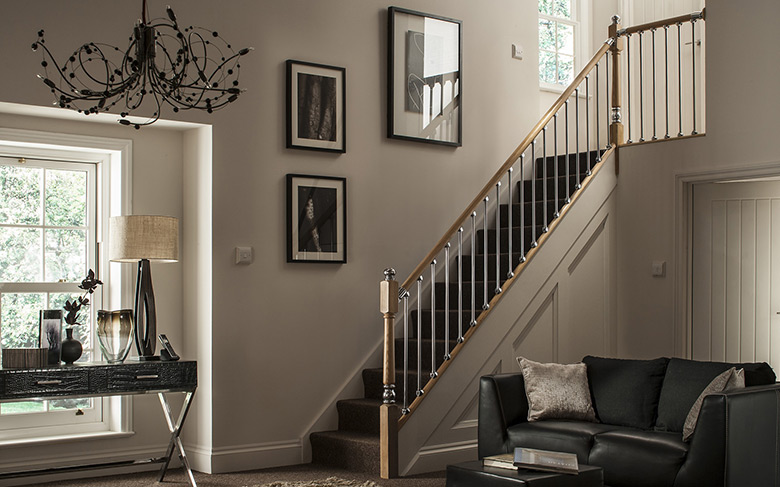
“It’s amazing the impact that can be made by simply replacing the balustrade on an old staircase—maybe swapping traditional wood for a more modern material or design. As long as the stairs themselves are structurally sound, there’s no reason why you would need to turn a simple renovation into an extensive building project.”
Knowing where to start
Almost a fifth of respondents (19%) said they wouldn’t consider changing their staircase because they simply wouldn’t know where to start. In fact, only 5% said that they would consider tackling their staircase, providing they had the right advice.
Revamping your staircase’s appearance can be as simple as deciding on a style and locating the parts. Lucie Jackson explains how:
“Do your research of staircase styles and think about what would be in keeping with your hallway. If you have a dark hallway, you can create the illusion of space with glass panels or you could introduce interest to an otherwise bland hallway by using contrasting metal spindles with a sleek oak handrail. If the stairs are sound but not looking their best, you could apply wooden stair clads to the treads and risers to give them a new lease of life.
Once you’ve decided on your style, you’ll need to take accurate measurements of your staircase—your stair part supplier will be able to advise you on this. Unless you’re experienced in DIY, it’s advisable to get the help and advice of a reputable joiner—this is likely to save you both time and money and will ultimately turn a potentially complicated job into a straightforward one.”
Added value
Despite the majority of respondents expressing concerns about the enormity of the job, 7% acknowledged that a new or repurposed staircase could add value to the property. Phil Price of Crucible Sales and Lettings explains how a run-down staircase can put off potential buyers or have a negative effect on the selling price:
“A poorly presented staircase will certainly decrease a property's saleability, which is likely to result in it selling at a lower price. Potential buyers can't always see how they can put their own stamp on a property, and are often prepared to spend an extra £10k on a 'finished' property than buy an identical property for £10k less that will need perhaps only need £1k of work to bring it up to the same standard.”
Steve Reading agrees that a well-designed staircase can add to a property’s appeal:
“A beautiful staircase can be a valuable feature if designed practically and proportionately within the space, especially if natural daylight can be incorporated into the design.”
Rebecca Dupere from Dupere Interior Design doesn’t necessarily believe that a staircase alone will increase value to a property. However, she too agrees that a well-designed staircase can be an asset when it comes to a property’s saleability:
“A specially designed staircase will without doubt become a talking point and will add interest when selling a home. However, a staircase—designed or not—will not add value to a property so I would advise against designing one purely to help sell a house.”
Improved aesthetics
Refreshing your staircase will undoubtedly give your hallway or living space a new lease of life and give visitors to your home a much better first impression.
Of those people surveyed who would consider changing their staircase, 4% said they would do it to change the feel of their home. Rebecca Dupere explains how a staircase can make a difference to a property’s aesthetics:
“The shape, style and materials used for a staircase will give an added dimension and define the look of wherever it’s located, which is usually in the hallway. A specially designed staircase will definitely create an impact and will have the same ‘wow’ effect as a beautiful sculpture or painting.”
Different types of properties and layouts will be more suited to particular materials and configurations, as Rebecca goes on to say:
“Wood is very versatile; a popular choice for most properties with a wide choice of finishes. Modern conversions lend themselves to using a variety of materials, including wood, metal and glass panels. Metal looks good especially with spiral staircases. Glass panels are very effective and emphasise that wonderful feeling of space that conversions often have as well as showing off the actual staircase. A really large open-plan space lends itself to using polished concrete balustrades which will add to the contemporary feel of a modern property.”
Designing from scratch
In some cases it may be necessary to have a staircase built from scratch—if a property has undergone a sizeable extension or had a loft or basement conversion, for example.
Obviously every property is different so there isn’t a ‘one size fits all’ approach. However, there are some common considerations to take into account when designing from scratch, as Steve Reading explains:
“When designing from scratch the staircase usually needs to be located near to the entrance. However, this does depend on the project and whether an elevational feature is to be made of it—or if it’s to incorporate a galleried effect. The upstairs layout also needs to be taken into consideration so that efficient circulation can be achieved. Normally this means locating the stairs as centrally as possible.”
Lucie Jackson advises that it’s never too early to think about the end result:
“It’s advisable to consider the final look of the staircase at the original design stage. Think about what design and timber you’re wanting and discuss this with your architect, joiner or stair part supplier so they can cost and plan the staircase accordingly.”
There are other factors to consider when integrating a new staircase to access a loft or basement conversion, as Steve adds:
“Head height needs to be considered in the case of a loft conversion. A logical position that helps the flow through the property. Access to a basement is normally best under the main staircase for efficient use of space but depends on the property and client requirements.”
Lucie also offers some pointers on choosing a staircase for a conversion:
“If you’re commissioning a new staircase for an extension or loft conversion, you may want to consider whether you want the design of the new stairs to be in keeping with other staircases currently in the property. For example, if you have a period property featuring original stair parts, would you like the new staircase to match?”
What’s stopping you?
As the experts confirm, providing the staircase is structurally sound there’s no reason why it would be a huge job to change its look and feel.
Not only is it possible to replace the entire balustrade with a completely new design without causing too much disruption, spindles, handrails and newel posts can also be replaced individually where necessary—either with more modern designs or with replicas of the original.
Even staircases in period properties can be renovated to remain true to the original design of the home with woodturning services, enabling stair parts to be identically matched with vintage designs.
With the right advice, anything is possible—even working to a tight budget with minimal mess!
Changing the look of a staircase isn’t the type of home improvement most people would usually consider. In fact, more often than not, many homeowners choose to live with a less-than-perfect staircase, rather than going to the effort and expense of redesigning it. It doesn’t have to be as difficult as you think though, which is why we’ve gathered some industry experts to tackle the reasons behind why people shy away from staircase refurbishment.
You don’t always have to fully replace your staircase to get a fresh look that suits your home and decor taste. Simply replacing the balustrade, or swapping traditional wood spindles with a more modern material and design, can have a huge impact on your space. As long as your staircase is structurally sound, you can avoid any needless disruption and keep the project within budget.
Read on to find out more about the process of stair renovation, advice from our experts, and the real figures behind why most of us avoid it entirely.
Why do we avoid changing our staircases?
Changing the look of our staircases is often the last thing we think about when refurbishing our homes. It’s a key part of our everyday lives, and the thought of the disruption or expense can put us off. Here at Jackson Woodturners, we wanted to dive deeper into the reasons people shy away from refurbishing their staircases, so we ran a survey.
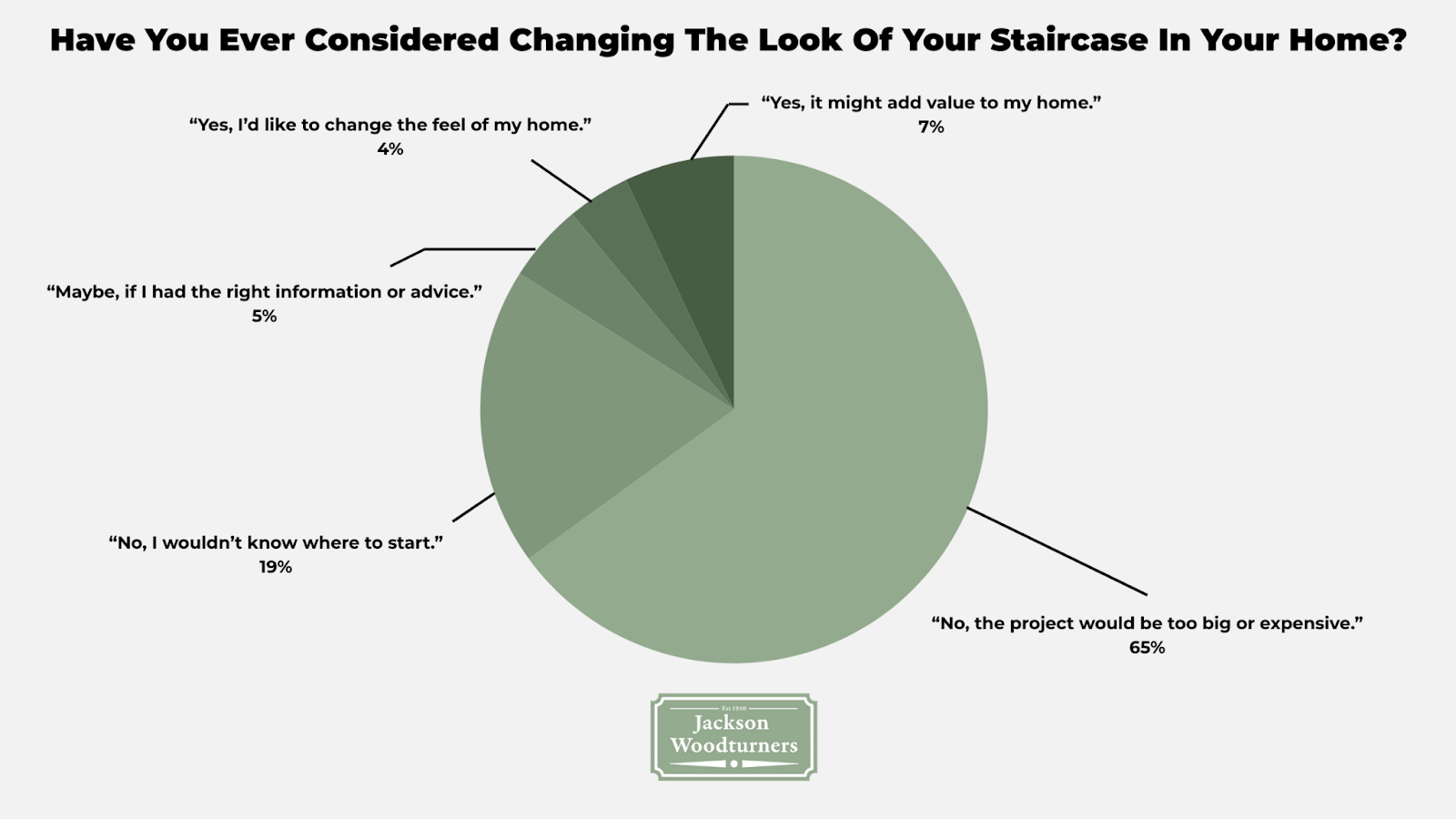
Here’s what we found out:
The results
- 84% of people wouldn’t even consider changing the look of their staircase.
- This feeling was unanimous across all age groups of both men and women.
Of the 16% who would consider changing their staircase:
- Those in the 35-44 age bracket showed the most interest in making improvements, citing the potential increase in house value as an incentive.
- Men would be most tempted to change the look of their staircase to increase the value of their home, while women would be more likely to do so to change the feel of their home.
- Over 65s expressed the least concern over ‘not knowing where to start’, although the majority still believed that the project would be too big or expensive.
- The 25-34 age group would be least likely to attempt the work, even with the right information.
Let’s bring in the experts
As with all renovation projects, the perception of the job isn’t always in keeping with the reality. To find out exactly what refurbishing a staircase really involves - and whether it’s ultimately worth the effort - we decided to seek advice from the experts:
- Steve Reading - Managing Director of Hill Reading Architects
- Lucie Jackson - Director of Jackson Woodturners
- Rebecca Dupere - Owner of Dupere Interior Design
- Phil Price - Managing Director of Crucible Sales and Lettings
What stops us from renovating our staircases?
As our survey has shown, there can be a number of reasons why we avoid refurbishing our staircases. Below, we’ll run through the main barriers, the advice our experts give on overcoming these hurdles, and the potential benefits of making your staircase look as good as possible.
A daunting project
Our survey revealed a large percentage of respondents (65%) who see staircase refurbishment as a huge, very expensive job. This isn’t always the case, however, as explained by Steve Reading:
“Relocating a staircase in its entirety is usually considered as a last resort, as it’s just too disruptive and can be a costly exercise. But the staircase handrail and balustrading can be replaced fairly easily, resulting in a visual transformation.”
Our very own Lucie Jackson, director here at Jackson Woodturners, couldn’t agree more:
“It’s amazing the impact that can be made by simply replacing the balustrade on an old staircase—maybe swapping traditional wood for a more modern material or design. As long as the stairs themselves are structurally sound, there’s no reason why you would need to turn a simple renovation into an extensive building project.”
Knowing where to start
Almost a fifth of respondents (19%) said they wouldn’t consider changing their staircase, simply because they wouldn’t know where to start. In fact, only 5% said they would consider tackling a renovation, as long as they had the right information.
Revamping the look of your staircase can be as simple as deciding on a style and locating suitable parts, as Lucie Jackson explains:
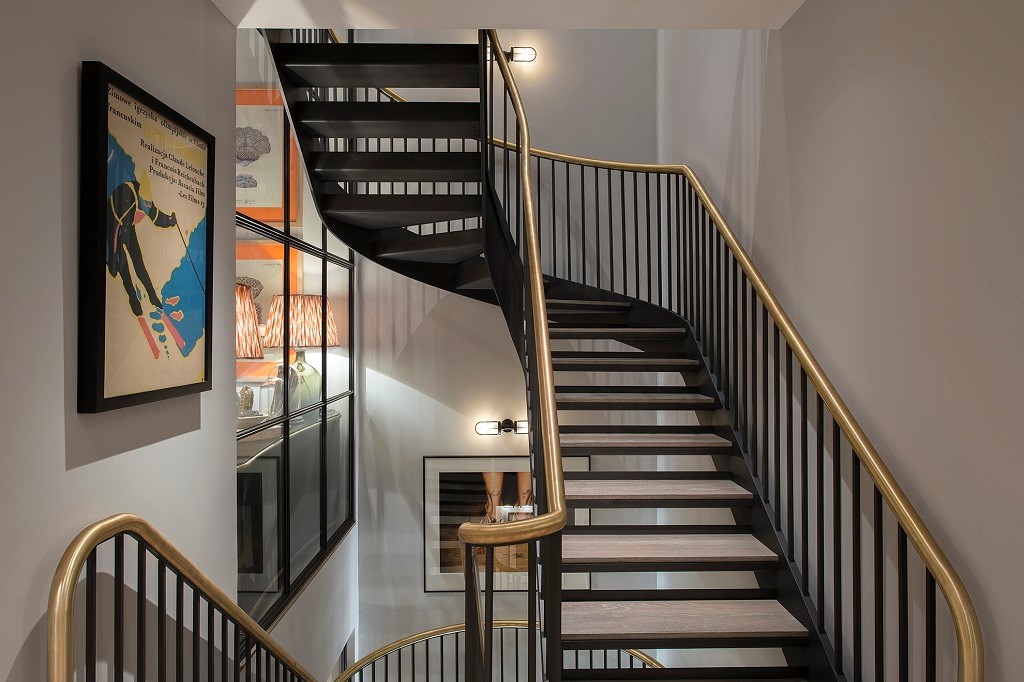
“Do your research on staircase styles and think about what would be in keeping with your hallway. If you have a dark hallway, you can create the illusion of space with glass panels, or you could introduce interest to an otherwise bland hallway by using contrasting metal spindles with a sleek oak handrail. If the stairs are sound but not looking their best, you could apply wooden stair clads to the treads and risers to give them a new lease of life.
Once you’ve decided on your style, you’ll need to take accurate measurements of your staircase—your stair part supplier will be able to advise you on this. Unless you’re experienced in DIY, it’s advisable to get the help and advice of a reputable joiner—this is likely to save you both time and money and will ultimately turn a potentially complicated job into a straightforward one.”
Added value
Despite the majority of respondents expressing concerns about the potential enormity of the job, 7% acknowledged that a new or repurposed staircase could add value to their property. Here, Phil Price explains how a run-down staircase can put off potential buyers or have a negative effect on your selling price:
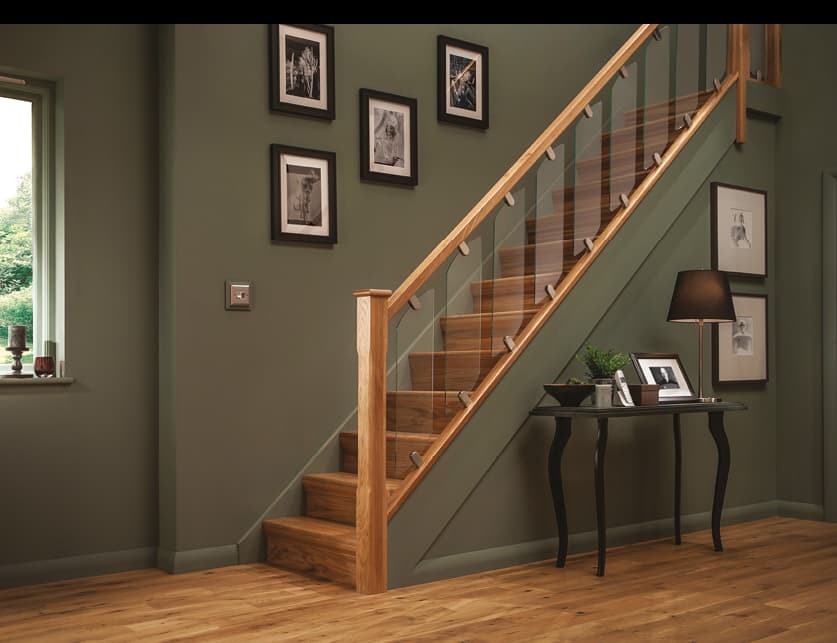
“A poorly presented staircase will certainly decrease a property's saleability, which is likely to result in it selling at a lower price. Potential buyers can't always see how they can put their own stamp on a property, and are often prepared to spend an extra £10k on a 'finished' property rather than buy an identical property for £10k less that will perhaps only need £1k of work to bring it up to the same standard.”
Steve Reading agrees that a well-designed staircase can add to a property’s appeal:
“A beautiful staircase can be a valuable feature if designed practically and proportionately within the space, especially if natural daylight can be incorporated into the design.”
Whilst she doesn’t necessarily agree that a staircase alone will increase property value, Rebecca Dupere does think that a well-designed staircase can be an asset when it comes to a property’s sale:
“A specially designed staircase will, without doubt, become a talking point and will add interest when selling a home. However, a staircase—designed or not—will not add value to a property, so I would advise against designing one purely to help sell a house.”
Improved aesthetics
Refreshing your staircase will undoubtedly give your hallway or living space a new lease of life and give visitors a much better first impression of your home. Of those people surveyed who would consider changing their staircase, 4% said they would do so to change the feel of their home.
Rebecca Dupere explains how a staircase can make a difference to a property’s aesthetics:
“The shape, style and materials used for a staircase will give an added dimension and define the look of wherever it’s located, which is usually in the hallway. A specially designed staircase will definitely create an impact and will have the same ‘wow’ effect as a beautiful sculpture or painting.”
Different types of properties and layouts will be more suited to particular materials and configurations, as Rebecca goes on to say:
“Wood is very versatile; a popular choice for most properties with a wide choice of finishes. Modern conversions lend themselves to using a variety of materials, including wood, metal and glass panels. Metal looks good, especially with spiral staircases. Glass panels are very effective and emphasise that wonderful feeling of space that conversions often have, as well as showing off the actual staircase. A really large open-plan space lends itself to using polished concrete balustrades, which will add to the contemporary feel of a modern property.”
Designing from scratch
There may be some cases where a full staircase replacement is necessary - if a property has undergone a sizable extension, or had a loft or basement conversion, for example. Every property is different, so there isn’t a ‘one size fits all’ approach. However, there are some common considerations to take into account when designing a staircase that will be built from scratch, as Steve Reading explains:
“When designing from scratch, the staircase usually needs to be located near to the entrance. However, this does depend on the project and whether an elevational feature is to be made of it—or if it’s to incorporate a galleried effect. The upstairs layout also needs to be taken into consideration so that efficient circulation can be achieved. Normally this means locating the stairs as centrally as possible.”
Lucie Jackson advises that it’s never too early to think about the end result:
“It’s advisable to consider the final look of the staircase at the original design stage. Think about what design and timber you’re wanting and discuss this with your architect, joiner or stair part supplier so they can cost and plan the staircase accordingly.”
You’ll also need to consider some other factors if you’re integrating a new staircase to access a loft or basement conversion, as Steve adds:
“Head height needs to be considered in the case of a loft conversion. A logical position that helps the flow through the property. Access to a basement is normally best under the main staircase for efficient use of space but depends on the property and client requirements.”
Lucie also offers some pointers on designing a new staircase for a conversion:
“If you’re commissioning a new staircase for an extension or loft conversion, you may want to consider whether you want the design of the new stairs to be in keeping with other staircases currently in the property. For example, if you have a period property featuring original stair parts, would you like the new staircase to match?”
So, what's stopping you?
As our experts confirm, there’s no reason why changing the look or feel of a staircase should be a huge job if the structure is sound. Not only is it possible to replace the balustrade with a completely new design without too much disruption, but you can also replace your spindles, handrails, and newel posts individually where necessary - either with more modern designs or replicas of the original.
Even staircases in period properties can be renovated to remain true to the original design of the home. Here at Jackson Woodturners, we offer a woodturning service that allows us to identically match new stair parts with vintage designs.
With the right advice, anything is possible - even working to a tight budget with minimal mess! Get in touch with the experts at Jackson Woodturners today, and we’ll help you to make your house a home.


