With so many different types and materials of handrails, it can be difficult to know which one will be the right fit for your home. So, what factors will you need to consider when making your decision?
When choosing a new handrail, you’ll need to consider the material. Do you prefer lighter woods such as pine or darker woods such as hemlock? You will also need to consider your preferred design. Handrails come in both modern and traditional options, and you’ll need to choose a design that suits the style of your home.
In the rest of this guide, we provide useful tips on the different types of handrails for stairs, including guidance on the different handrail accessories and how to choose the right size handrail.
Click on one of the links below to jump to that section:
Find out more about the main types of handrails, and the differences between grooved and ungrooved handrails.
Read our guide to the different materials available for handrails, including the differences between wood and metal handrails.
Find out what accessories you will need to prepare to fit wall-mounted handrails.
Find out what accessories and other stair parts are needed for integrated handrails.
Read our expert tips on restoring or replacing handrails.
We provide tips on choosing the right handrail size.
Find out what building regulations you need to be aware of when fitting handrails.
What types of handrails are available?
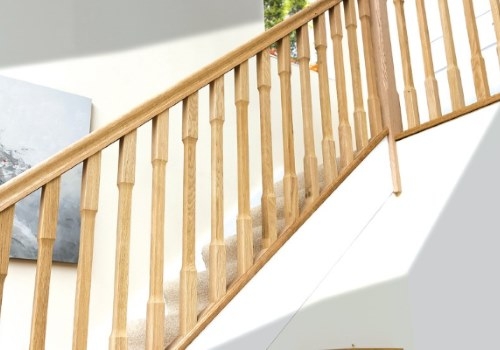
There are two main types of stairway handrails, integrated and wall-mounted. The style and layout of your staircase will determine which type of handrail will work best for you.
Integrated handrails
Integrated handrails run along the top of the spindles and form part of the balustrade.
When selecting a handrail to incorporate within a balustrade, there is a choice of either a grooved or ungrooved style. In both cases, the handrail is supported at either end by a newel post.
Grooved handrails are designed with a groove where glass panels or wooden spindles can sit. Stairway handrails with a 32mm or 41mm groove tend to be used with spindles.
Ungrooved handrails are best used with metal spindles, glass panels and clamps, or as a wall-mounted handrail.
Grooved handrails
The spindle sits within the groove of the handrail, for example, a 32mm spindle would sit in a 32mm groove.
The overall measurement of a handrail remains the same, it is the size of the groove that alters. For example, a 32mm or 41mm grooved handrail has the same overall dimension.
Glass grooved handrails have a deep channel running the length of the handrail to accommodate a glass panel.
Ungrooved handrails
These handrails are better suited to glass panels or metal spindles as the brackets/clamps or spindle foot can screw directly into the rail. Ungrooved handrail kits for stairs can also be wall-mounted.
Wall-mounted handrails
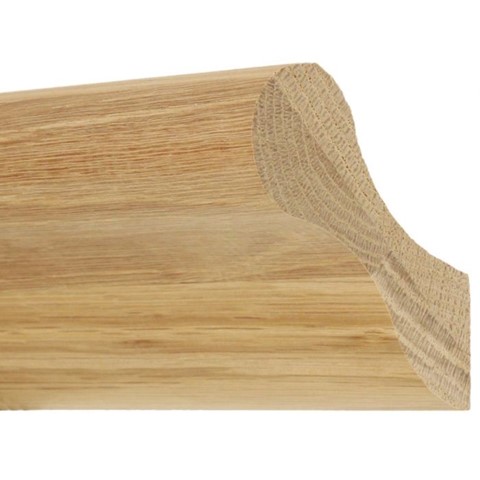
Wall-mounted handrails are separate from the balustrade and, as the name suggests, are attached directly to the wall. They can be used alongside a balustrade or in place of a balustrade in enclosed staircases. Two popular styles of wall-mounted handrails are pigs ear handrails and mopstick handrails.
Pigs ear handrails
Pigs ear handrails are a popular choice for wall-mounted handrails as they can be secured directly to the wall without the need for brackets.
These handrails offer an excellent grip and sit close to the wall, making them the ideal choice for narrow staircases. You can fill the screw holes created by fastening the handrail to the wall with a cross grain pellet (a tapered wooden pellet). You can view a range of cross grain pellets here.
Mopstick handrails
Mopstick handrails are secured to the wall by handrail brackets, making them a more decorative option.
Handrail end caps can also be added to finish the look, with styles ranging from beautiful filigree designs to modern octagonal styles. You can shop our full range of handrail end caps here.
Are you looking to buy a mopstick handrail? Read our guide to fitting a mopstick handrail.
If you’re not sure which handrail design is best suited to your staircase, read our guide Stair handrail designs: what are your options?
What are the different handrail materials?
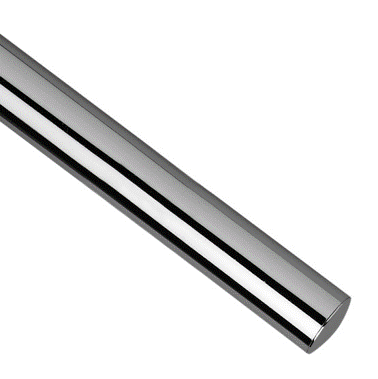
When it comes to handrail materials, you can choose between wooden or metal handrails. Wooden handrails are a more traditional choice However, there is a growing trend for sleek metal handrails and accessories to suit more contemporary settings. Metal handrails, such as our chrome plated handrails, are usually designed to be wall-mounted and form part of our modern stair part range.
Wooden handrails
Wooden handrails can be secured to the wall or the top of a balustrade. Some of the most popular integrated handrail styles include grooved HR and cottage loaf. Wood provides a classic, traditional look and is a popular choice for many homes.
Each different type of wood has its own unique colour and grain, making this material a versatile choice for modern and traditional houses. Popular timber choices for handrails include oak, hemlock, walnut and ash.
Oak handrails
Oak is a strong hardwood that is famous for its durability, making it a great material for handrails in busy family homes. It has a gorgeous pale brown appearance.
View our full range of oak handrails.
Hemlock handrails
Hemlock is North African softwood that has a unique straight and knot-free grain. It is a durable handrail material choice and looks beautiful when stained.
View our full range of hemlock handrails.
Walnut handrails
Walnut is a stunning choice for a handrail, especially in traditional homes. Its dark colour and robust appearance are matched by its durability and strength.
View our full range of walnut handrails.
Ash handrails
Ash is an American straight-grained hardwood with a beautiful pale brown colour with a hint of red. An ash handrail is durable and will make a gorgeous addition to any home.
View our full range of ash handrails.
You can read more about the options available for wooden handrails with our guide Wooden handrails for stairs: types, designs and how to treat them.
Metal handrails
Metal handrails are becoming more and more popular, especially in more contemporary homes. A sleek metal handrail can look stunning and add a real sense of character to your modern entryway. Chrome is one of the most popular materials for metal handrails.
Chrome handrails
A chrome handrail is guaranteed to make your staircase stand out. Chrome attracts and reflects light helping your stairway feel bigger and brighter.
View our full range of chrome handrails.
How to choose between metal and wooden handrails
Read our summary of the benefits of metal and wooden handrails:
|
|
Wood |
Metal |
|---|---|---|
|
Aesthetics |
Owners of older period properties may want to retain a traditional style, in which case a wooden balustrade is often favoured. Lighter woods or woods with white finishes can work in contemporary properties too. |
Tends to suit contemporary décor, or can make a striking contemporary feature in a more traditionally styled home. The reflective quality can help to increase light. Metal can be used in conjunction with both wood and glass, giving your balustrade a contemporary edge. |
|
Finishes |
Most woods can be varnished to emphasise the natural grain. Some can be finished with paint. |
No finishing required. |
|
Durability |
As a general rule, wooden staircases are very durable and will last a long time. Some woods are more susceptible to scratches and nicks so may not work in a busy, family household. |
Metal is naturally very durable. |
|
Cleaning and maintenance |
Easy to clean and maintain. Depending on the wood it can be polished and may need retreating with varnish over time. Treatex hardwax oil can protect and enhance wooden surfaces with just two coats. |
Very easy to clean and requires little to no maintenance. |
|
Cost |
A range of prices available meaning it can be very cost-effective. For example, a spindle can cost from as little as £1 up to £75. You can choose a less - expensive wood and still benefit from the sophisticated look and feel of this material. |
Like wood, a good range of prices available, from approximately £4 to £120. |
Fixing and accessories for wall-mounted handrails
If you’re purchasing a wall-mounted handrail, you will also need the correct fixings to secure it to your wall. Wall-mounted handrails can also be elevated with accessories, such as end caps and wall patrices.
Mopstick handrails
For mopstick handrails, you will require handrail brackets to attach the handrail to the wall and you have the option of adding end caps or wall patrices to further personalise the look of your handrail.
Handrail brackets
These are used to secure mopstick or ungrooved handrails to a wall. Wall brackets are made from metal and there are several different choices of metal available. At Jackson Woodturners, we offer a range of chrome, nickel and brass handrail brackets.
You can find out everything you need to know about wall brackets with our guide Handrail brackets: what they’re made from, what styles are available and how to install.
Shop our full selection of handrail brackets here.
End caps
Handrail end caps are ideal for adding a decorative finishing touch to a handrail. You can read more about the design options and materials available for end caps in our stair parts accessories guide here.
Shop our full selection of end caps here.
Wall patrices
Wall patrices add a decorative feature when attaching a handrail bracket to the wall. They are discs of wood that handrail brackets screw into before being fastened to the wall.
View our selection wall patrices.
Pigs ear handrails
Pigs ear stair handrails require very little in terms of fixings as they’re fastened directly to the wall. All you’ll need are cross grain pellets to fill in the screw holes created by fastening the handrail to the wall.
You can view our full range of cross grain pellets here.
What other stair parts are required to fit a handrail?
If you’re renovating your entire staircase, there are a number of other stair parts which you’ll require.
Base rails
Integrated handrails sit on top of the spindles on a balustrade, and, in most cases, the spindles will be supported by a base rail. Base rails hold either glass panels or spindles in place. You can view our range of base rails here.
Infill
Infill (also known as filler or spacer) comes with the handrail. These are then cut to size to sit between each spindle to give the impression the handrail is solid.
Newel post
The entire balustrade will be supported by a newel post. Newel posts not only support the structure of your balustrade, they also provide a focal point for your staircase. You can find out more about newel posts here or shop our range of newel posts here.
Handrail fixings
Larger or more elaborate staircase configurations may require handrail fixings—for example, horizontal turns for winding stairs, over easings or a volute.
You can shop our full range of handrail fittings here.
Glass clamps
Glass grooved handrails for stairs sit on top of a pane of glass. The glass also slots into a glass grooved base rail. The glass can be secured into place with clear silicone.
An ungrooved handrail, on the other hand, is designed to be used with glass clamps, which will hold the glass panels in place.
Shop our glass clamps here.
Restoring or replacing a handrail
Revamping a staircase can be as simple as replacing the handrail, especially as this area receives the most wear and tear from constant use.
Replacing a wall-mounted handrail
Replacing a wall-mounted handrail is a much more straightforward process than replacing a handrail that’s integrated into a balustrade. Assuming that the wall surface to which the rail is attached is in good condition, it’s as simple as selecting your new handrail and accessories (if necessary) and reattaching. For extra convenience, you can purchase wall mounted handrail kits, containing everything you need to quickly and effectively upgrade your staircase.
You can view a range of wall mounted handrail kits here.
Replacing an integrated handrail
Replacing a handrail which is part of a balustrade can be trickier, especially if the balustrade is covered in several coats of paint. Stripping the paint off the entire balustrade is often a good starting point, as it will highlight its overall condition.
In most cases, simply replacing an old handrail with a new one will make a big difference. However, if the spindles and newel posts are past their best, consider whether it is worth replacing them all at the same time, for safety as well as aesthetic reasons. This could be a great opportunity to modernise your staircase.
Read our guide "Why changing your staircase isn’t as daunting as you may think" for more tips on updating your stairs.
Handrail measuring guide
Stairway handrails need to be positioned carefully to ensure they’re the best possible height for your staircase. Measure the length of your staircase up the angle to determine the length of handrail you’ll need.
If the landing requires a balustrade, you must measure the distance needed to accommodate this additional length.
Handrails for stairs are generally sold in set lengths of 1200mm, 1800mm, 2400mm, 3600mm and 4200mm. Choose the best length which fits your measurements. In some cases, you may be able to get both your staircase and landing handrail out of one long length.
Read our guide to choosing a handrail size here.
If you are not sure which length is best for your job, please call us on 0114 2721228 or get in touch through our website and we’ll be happy to advise.
Building regulations for handrails
Building regulations state that a domestic property can have a handrail height of 900mm for both stairs and landings. Commercial properties should be a minimum of 900mm on stairs and 1100mm on landings.
To find out more about the regulations for handrail height and length, read our guide "What height should a staircase handrail be?"
Handrails by Jackson Woodturners
Jackson Woodturners provides the largest selection of contemporary and traditional stair parts in the UK. We offer a comprehensive selection of high-quality handrails, including ungrooved handrails, mopstick handrails and pigs ear handrails, as well as a selection of handrail brackets, end caps, fittings and wall mounted handrail kits.
You can view our full range of handrails on our website. If you need help choosing the right type of handrail for your home, please get in touch with our team. We’ll be happy to make some recommendations or answer any questions you may have. You can call our staircase experts on 0114 272 1228 or email [email protected]


