Learning more about the different types of stair parts available and their uses can make it easier to find the right stair parts for you. This guide will help you identify all of the individual stair parts and learn the names of staircase parts so that you can choose the right ones for your perfect staircase. Once you know which part you need, you can shop from our huge range of stair parts online.
So what are the individual stair parts? The individual parts of a staircase include:
- Balustrade
- Spindles
- Glass panels
- Base Rail
- Newel posts
- Handrail
- Brackets
- Treads
- Risers
- End caps
There are also multiple options of style, finishings, and accessories, as well as many different materials on offer from wood to glass.
Read on to find out more information about the names of staircase parts, what they do, and what options are available.
What is a balustrade on stairs?
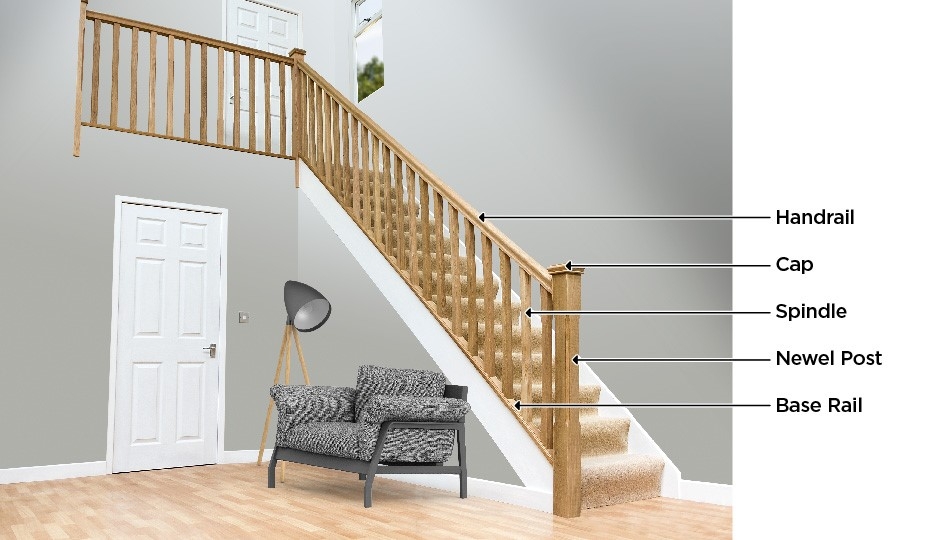
The balustrade is a collective name for the parts on a complete staircase, i.e. handrail, base rail, spindles, newel posts etc. Balustrade parts are available in wood, glass, and metal. Find out more in our blog about what material is best for your balustrade or see our balustrade parts diagram below.
- • Spindles - the vertical supports that sit between a handrail and base rail. Also known as a balustrade. Some staircases have glass panels, wooden panels or metal spindles instead of traditional timber stair spindles.
- • Base rail - sits on top of the string or along a landing. Base rails can come:
-
- ○ with a groove, so spindles fit into the track
- ○ or solid, so metal spindles or glass brackets can be screwed directly onto them.
- • Handrail - a rail that sits on top of the baluster/spindles. Can also be fitted to a wall.
- • Newel post - the vertical post that supports the handrail at the top and bottom of the stairs.

Glass and wood balustrades
Balustrades made from glass and wood stair parts are the ideal option for making the most of natural light in a contemporary home.
- Glass panels - a contemporary alternative to spindles that sit between the handrail and base rail.
- Glass brackets - used on base rails and handrails to secure glass panels in place without the need for drilling holes into the glass. Also known as glass clamps.
- Non-grooved handrails and base rails - solid, non-grooved handrails are designed to enable glass clamps to be screwed directly onto them.
- Grooved handrails and base railsmetre - glass panels can be fitted into the narrow groove on the handrail and base rail without the need for glass clamps.
To help with the terminology, we’ve included some stair parts terminology diagrams below. You can also read our guide to combining wood and glass here.

What is a newel post?
A newel post is the post at the head or foot of the stair that supports the handrail. The parts of a newel post include:
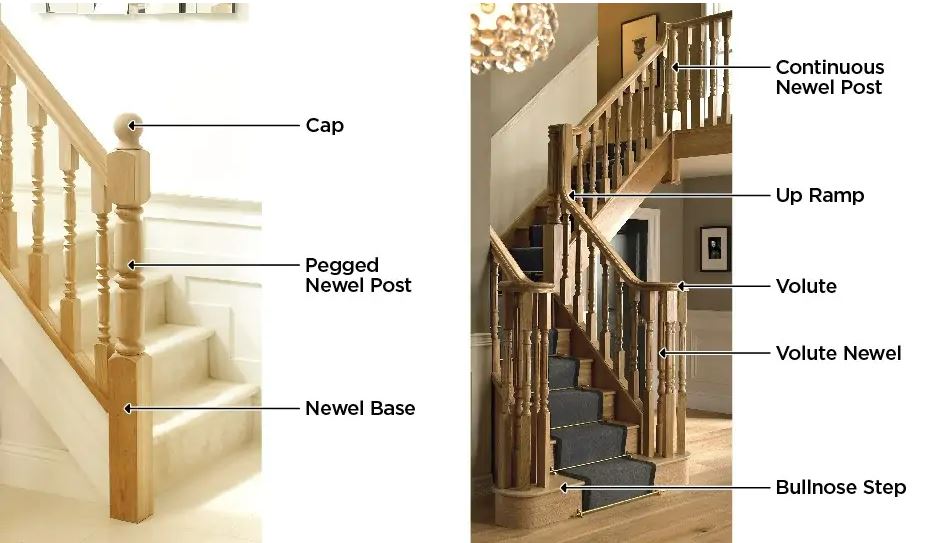
- Cap - the cap that sits on top of a newel post. Can be wood or metal, or a mixture of both. Also known as a newel cap.
- Complete newel posts - newel posts that are one complete piece of timber rather than the traditional three separate parts. They combine the newel base, newel turning and, in some cases, a newel cap.
- Newel base - the square block that forms the base of a newel post.
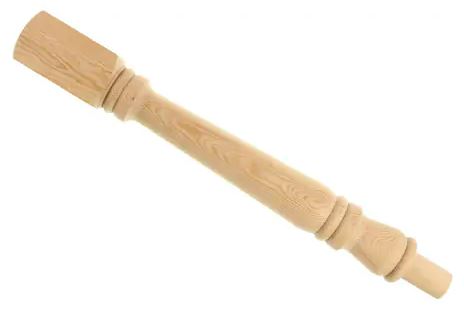
- Newel turning - often referred to as a ‘newel post’, the middle section of the post at the end of a handrail, with the newel cap being the top and the newel base being the bottom.
- Continuous newel posts - where the handrail runs continuously across the top of the newel post.
- Bullnose step - usually the bottom step on a flight of stairs. Either one or both ends of the step have a quarter-circle design. Usually done so a volute newel and volute can be used on the step. Also known as a curtail step.
- Volute newel - similar to a regular newel but often consists of a newel and spindles, with the handrail sitting on the top. Volute newels are usually used with a bullnose step.
- Volute - a curved ornamental handrail used with a volute newel.
- Pegged newel posts - a traditional wooden newel post that has a round (50 mm) peg at the bottom of the turning. The peg is then inserted into a newel base (which has a 50 mm hole) to form a complete newel.
For more detailed information about newel posts read our complete guide to stair newel posts. You can also shop our full range of newel posts here.
What handrail parts are available?
Handrails are available in various profiles (shapes) and sit on top of the spindles or can be attached to a wall. Handrails can also go on top of glass panels which are attached to the handrail with glass clamps.
Find out more about the options available for handrails here or see our handrail parts diagrams below. These include:
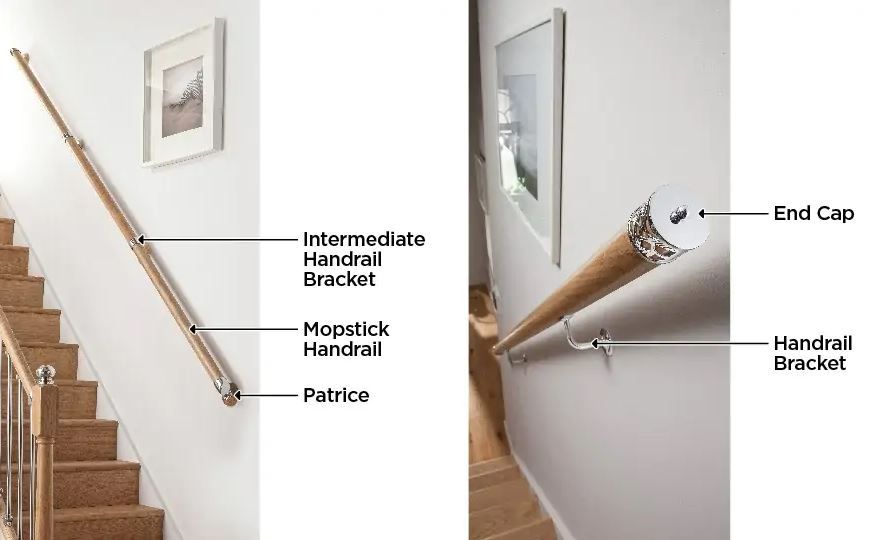
- End caps - decorative caps that sit on the end of wall mounted mopstick handrails and solid ungrooved handrails. Usually made of metal but can also be made of wood. Find out more about choosing end caps here.
- Handrail bracket - fastens a handrail to a wall.
- Mopstick handrail - a traditional round handrail (usually with a flat underside) mounted to a wall with handrail brackets and wall patrices. Find out more in our guide to fitting mopstick handrails.
- Patrice - a wooden disk fitted to a wall so a wall bracket can be mounted.
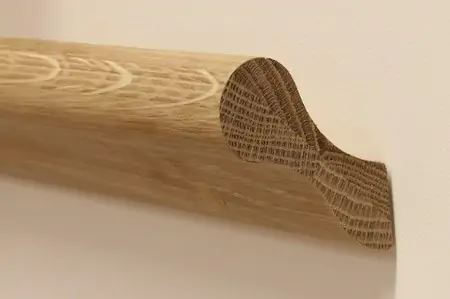
- Pig’s ear handrail - a wooden, moulded handrail (in the shape of a pig’s ear) fastened directly to a wall. You can read our full guide to choosing pig’s ear handrails here.
- Ungrooved handrails - can be wall mounted with brackets or fixed to the top of glass panels with glass clamps. Also suitable for use with metal spindles.
- Grooved handrails - grooved to allow spindles or glass panels to be slotted within the groove.
At Jackson Woodturners, we have many traditional styles of timber handrails in stock and ready to ship, as well as some more contemporary styles. Our handrails come in pine, white primed, hemlock, dark hardwood, white oak, ash & walnut.
View our full selection of handrails.
What are the banister parts?
While a bannister uses some of the same parts as a balustrade, a bannister differs from a balustrade in that it attaches directly to the wall as a handrail instead of standing on newel posts and spindles. The parts of a bannister can include:
- Handrail - the rail that sits attaches to the brackets and allows the user to hold on as they use the stairs.
- Brackets - fastens the handrail to the wall.
- End caps - decorative caps that sit at the end of the handrail to provide extra finish. Usually made of metal but can also be wood.
Glass stair panels and metal brackets
Stair panels provide the vertical infill between the base rail and handrail on a balustrade, providing an alternative to spindles.
Glass stair panels are made from clear, toughened glass which is typically 8mm or 10mm thick. They usually differ in the width of the panel or in the type of brackets used to secure them to the base rail and handrail. They are available to buy off the shelf and tend to be panels between 200mm and 300mm, which are available in a variety of styles.
If you’re looking for wider panels or have an unusual staircase configuration, it’s best to consider having bespoke panels made to fit the space you are renovating. This can be done by fitting the frame that the glass will sit into and then making a template for the glass out of plywood. This template can then be given to the glass manufacturer to ensure an accurate fit.
A common material combination in staircases is combining glass and oak. You can find out more about this in our guide to designing oak and glass staircases.
Glass clamps can be used with a solid or ungrooved handrail or base rail. If you’re using a glass bracket or clamp, you’ll need to know the thickness of the glass to ensure the clamp has the correct sized rubber insert to hold the glass in place.
Shop our range of glass brackets and clamps here.
What are the parts of a step?
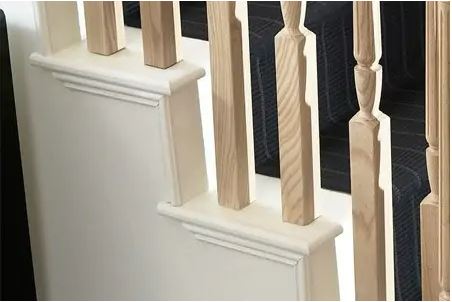
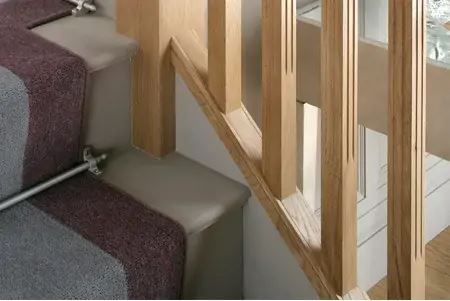
As you can see in our parts of a step diagram below, treads refers to the top or horizontal surface of a step (the bit you put your foot on). Risers are the vertical part of the step at the back of the tread. Closed string is where staircase treads and risers are enclosed.
What Is stair cladding?
Stair cladding gives you the beautiful look of a new staircase without the expense or hassle of replacing your stairs. It is fixed into place with adhesive, making it really easy to refurbish your staircase.
Find out more about our stair cladding here.
Accessories
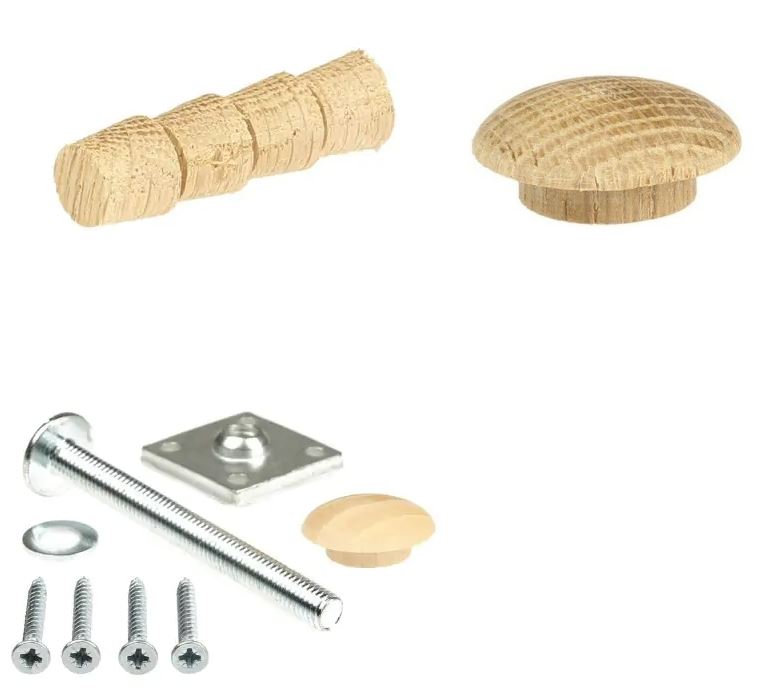
- Cross-grain pellets - tapered timber plugs used to fill in drill holes. They are available in a range of different woods so you can match the correct cover button with your newel post. You can shop our full range of cover buttons here.
- Cover buttons - caps used to conceal drill holes in timber stair parts.
- Fixing kits - kits that include all the accessories needed to fix a handrail to a newel post. View our full range of fixing kits here.
Staircase Measurement and Configuration Terminology
On top of all the different stair parts, there’s a lot of terminology used when designing a staircase. We’ve included this list with terminology diagrams to make you an expert in staircase design. For more help with staircase spacing and configuration, see our detailed staircase configuration diagrams.
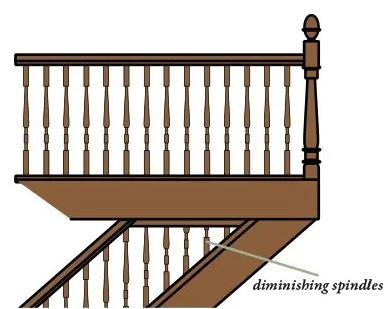
- Diminishing - when a handrail meets the underside of a ceiling line. It is advised to run a length of handrail or base rail along the ceiling and mitre this into the handrail that meets the ceiling. Spindles that run along the underside of the ceiling become shorter and are cut down from the top to create a diminished look.
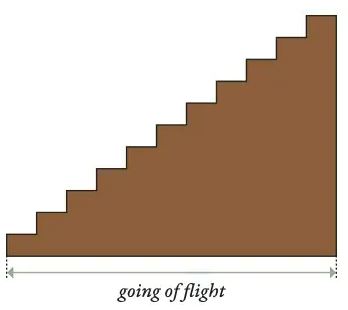
- Going - the horizontal distance between the face of the first and last risers. The individual going of the step is measured from face-of-riser to face-of-riser and for domestic use should be a minimum of 220 mm.
- Pitch - the angle between the pitch line and the horizontal line of the stairs.
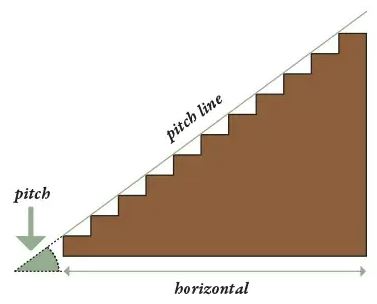
- Rake - the pitch of the stairs.
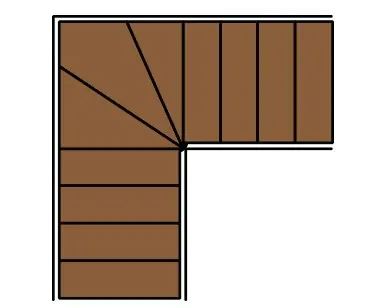
- Winder - radiating steps which are narrower at one end and change the direction of the stairs through 90 or 180 degrees.
You can shop for a range of stair parts in timber, metal and glass on our online shop.
Find out more about stair parts with our detailed stair part guides and FAQs and see how much you can expect to pay for stair parts with our average cost price list.
Bespoke staircase installations with Jackson Woodturners
At Jackson Woodturners, we know the importance of creating the staircase of your dreams. Our team of staircase experts can advise and help you plan and design your stairs to make this a reality.
We offer trade prices to everyone, and can help you build your staircase project efficiently and affordably. Our price promise guarantees that we’ll beat any like-for-like quote.
Get in touch with a member of our team today to discuss your staircase project.


